Author: Gracie Thornham

  • Week 2 Process


    As I started to observe ‘Maker’s Marks’ along my defined route through Somers Town, I became fascinated with the history of the site and the cause for the variation in it’s building typologies’. To gain a better understanding of how the area has developed over time, I began to research where urban regeneration had taken place. 


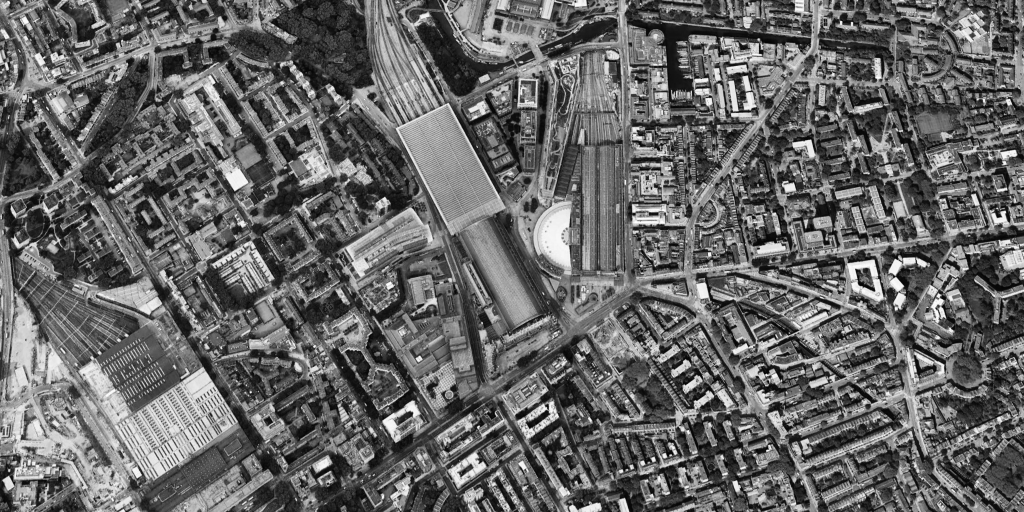
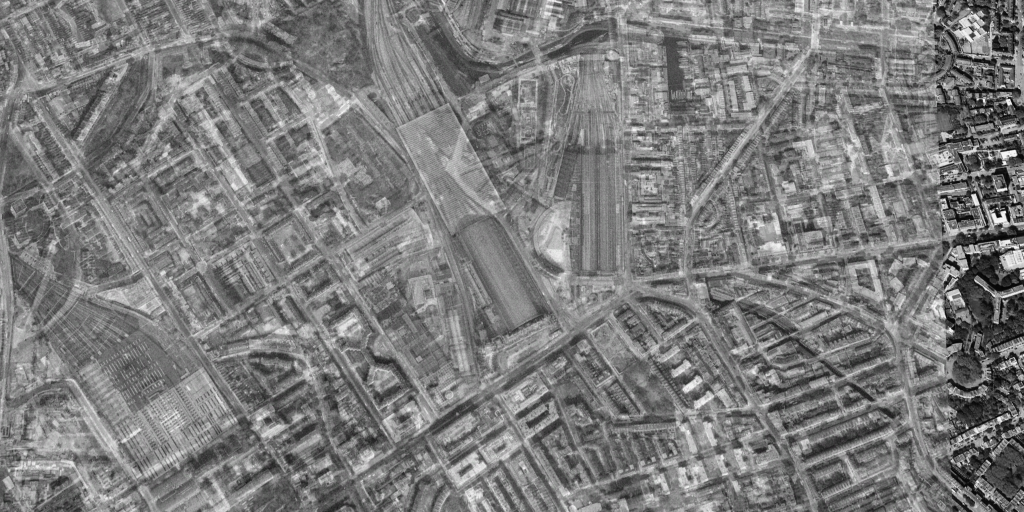
    Firstly, I used Google Earth Pro as a tool to delineate the buildings that had been demolished and subsequently redeveloped. I utilised the time-stamped aerial images of Somers Town in 1945 and 2025, to determine where had experienced urban regeneration (Google Maps, 1985, 2025).  
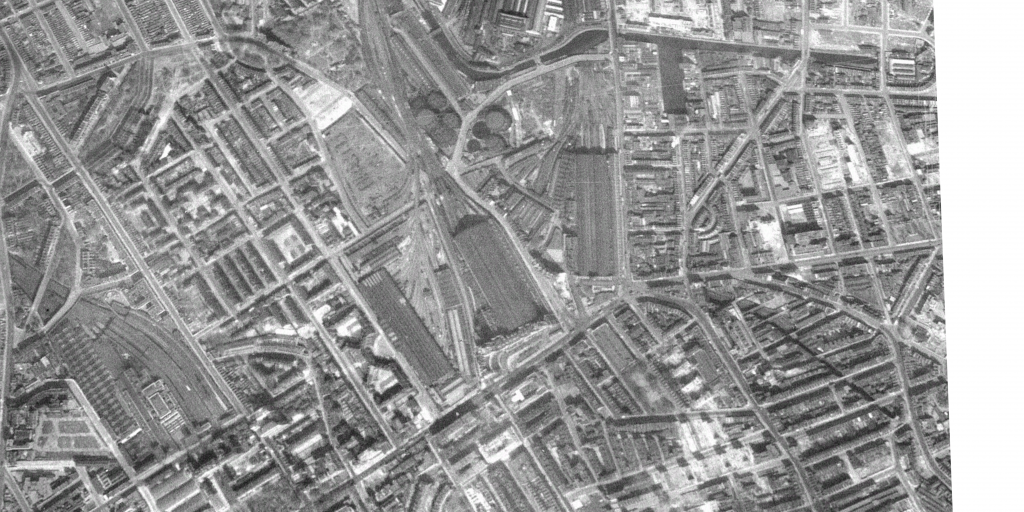
    Fig. 1. Google Earth Pro map of Somers Town (1945).
    Fig. 2. Google Earth Pro map of Somers Town (2025).
    Fig. 3. Overlaying the 1945 and 2025 maps.


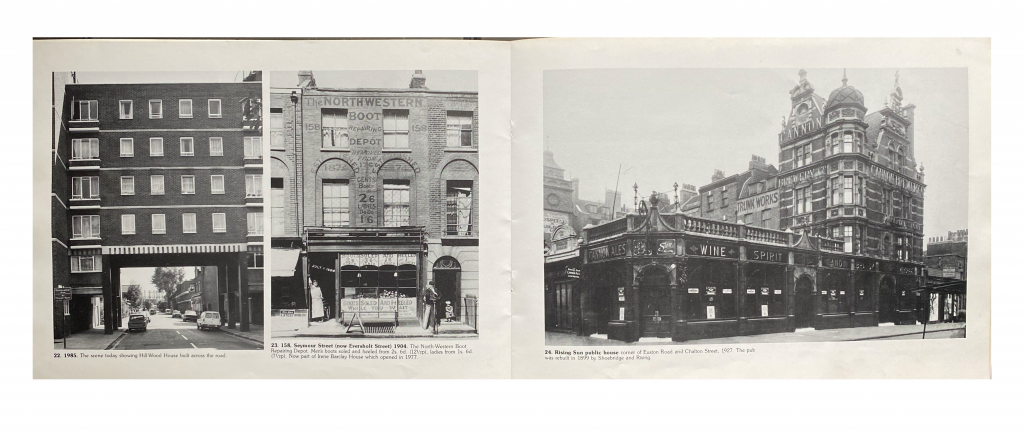
    Somers Town: A Record of Change by Malcolm J. Holmes (1985) also provided key historical context to the change experienced in the immediate area. Ordnance Survey Maps, dating from 1870, alongside photographs from the early 20th Century, revealed the extreme extent of change in the area (Holmes, 1985).
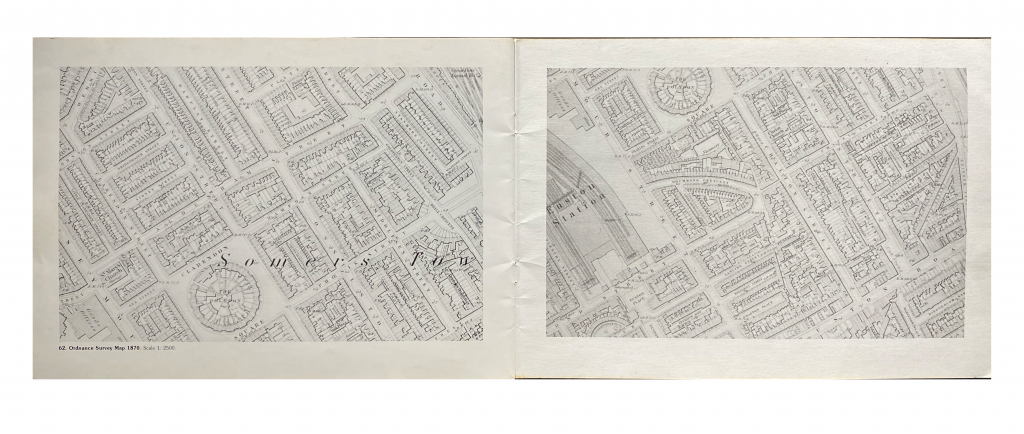
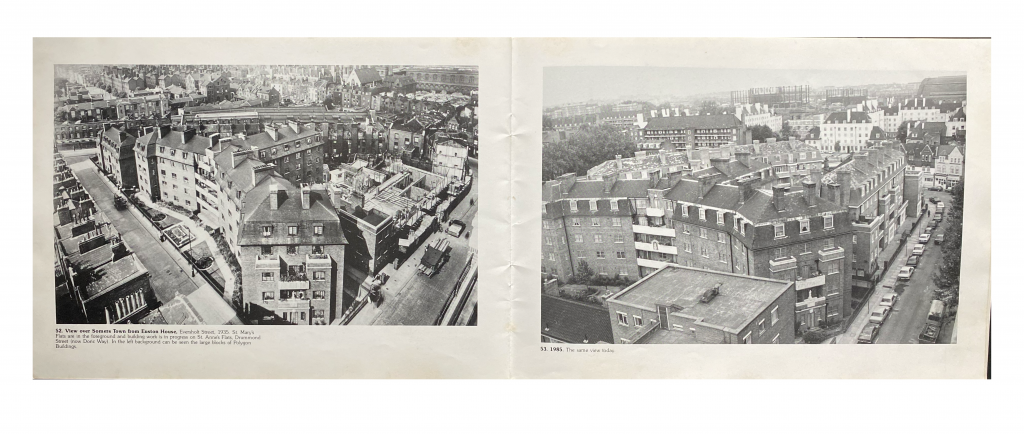
    Fig. 4. Ordnance Survey map from 1870 (Holmes, 1985).
    Fig. 5. Two images showing the development of Somers Town from Euston House. Left page shows 1935, right page shows 1985 (Holmes, 1985).
    Fig. 6. Left page, left image shows Hill-Wood House in 1985. Left page, right image shows Hill-Wood House in 1904. This pair of images really interested me as it is a clear example of a lost ‘Maker’s Mark due to urban regeneration. the hand painted sign writing of ‘The Northwestern Boot’ has been eradicated, and a newer social housing typology stands in its place. This image guided my line of emquriy into considering the lost of ‘Maker’s Marks’ due to the architectural development in Somers Town. Right page shows Rising Sun public house (1927). (Holmes, 1985).
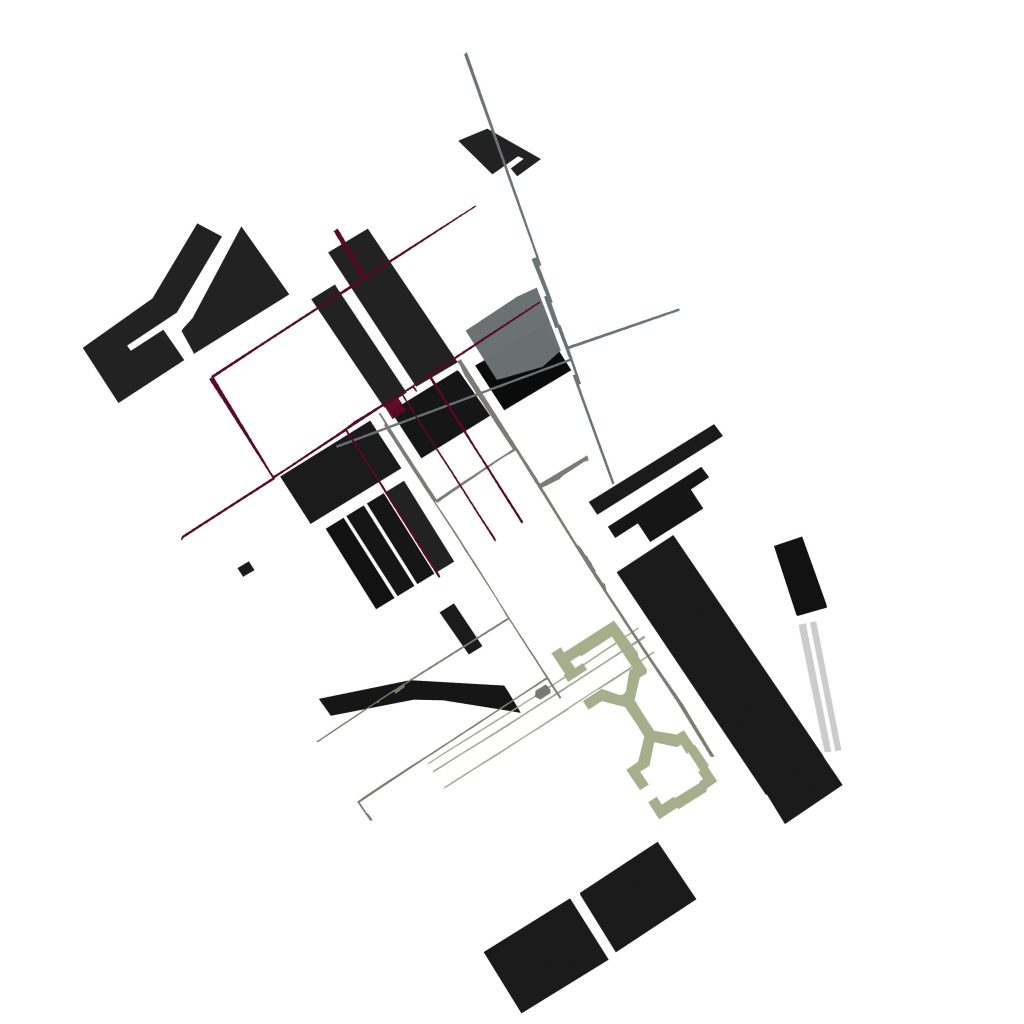
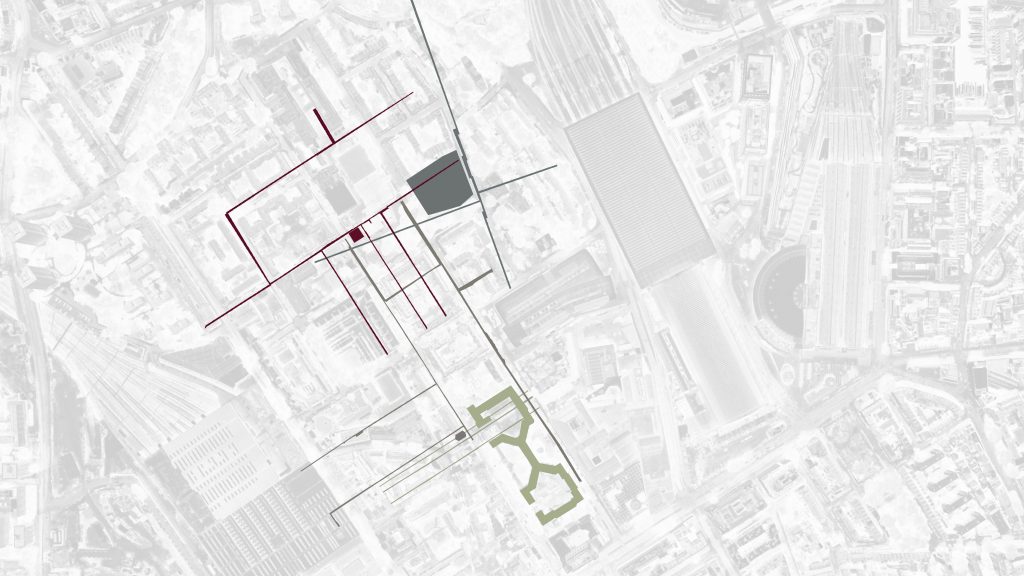
    Fig. 7. Mapping the buildings in black that have been demolished between 1945 and 2025. The coloured lines show my defined route through Somers Town.


    It is impossible to overlook the history associated with Somers Town, as it has affected all aspects of life, creating a melting pot of people and architectural typologies alike. This brief historical into area aided me in contextualise my research and informed my line of enquiry, which focused on the relationship between ‘Maker’s Marks’ and urban regeneration. 

    Reference List:

    Google Earth Pro (1945) ‘Somers Town, London’. https://earth.google.com/web/@51.53157117,-0.1314429,19.85086413a,1537.82259227d,35y,359.9980991h,0t,0r/data=ChYqEAgBEgoxOTQ1LTEyLTMxGAFCAggBQgIIAEoNCP___________wEQAA?utm_source=earth7&utm_campaign=vine&hl=en (Accessed October 1 2025).

    Google Earth Pro (2025) ‘Somers Town, London’. https://earth.google.com/web/@51.53157117,-0.1314429,19.85086413a,1537.82259227d,35y,359.9980991h,0t,0r/data=CgRCAggBQgIIAEoNCP___________wEQAA?utm_source=earth7&utm_campaign=vine&hl=en (Accessed October 1 2025).

    Holmes, M. J. (1985) Somers Town: A Record of Change. London: London Borough of Camden Libraries and Arts Department.
  • Week 3 Process

    I took week three as an opportunity to critically reflect on my work. I felt that there were too many concepts emerging, and that the project would read more cohesively if I focused my research. Pausing for reflection allowed me to consolidate my ideas thus far into three key terms – Mark-Making, ‘The Maker’s Mark’, Marks Made. 

    Reflecting on Bell Hooks’s ‘Cultural Criticism & Transformation’ (1997) reinforced my desire for critical thinking about my own work. The concept of being critical has allowed me to weave a coherent narrative through my Methods of Investigation project, and has allowed me to consider what I have learnt through the process.

    Fig. 1. Defining a site within Somers Town.

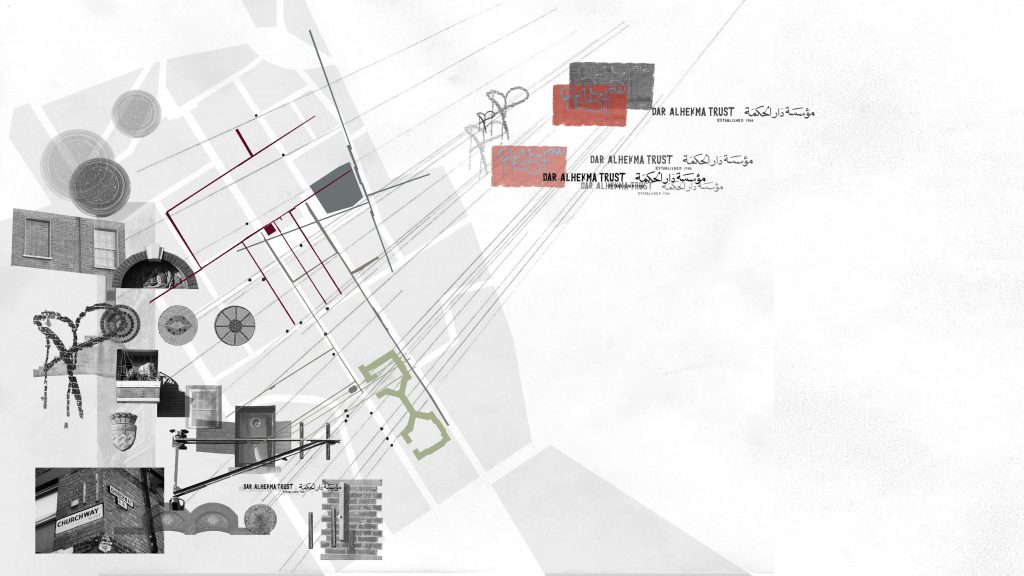
    Mark-Making was my most prominent and consistent method of investigating throughout the project. The term mark-making has many facets which encapsulate my methodology throughout the project including my initial experimentation of mapping journey to my refined route through Somers Town, curated by the spaces between the hues in my colour palettes.

    Fig. 2. Mapping the locations of ‘Maker’s Marks’.

    ‘The Maker’s Mark’ is representative of my primary focus throughout the investigation. During the project, I have defined ‘The Maker’s Mark’ as an architectural feature that has a human-made quality to it, and displays a level of craftsmanship that is often overlooked in contemporary building practice.

    Fig. 3. Documenting urban regeneration.

    Marks Made has been used to frame the discussion surrounding urban regeneration of Somers Town. My primary observation throughout my research has been the correlation between the preservation of ‘Maker’s Marks’ and areas which have seen total urban regeneration over the past 80 years. I have observed that where regeneration has taken place (and Marks Made on the urban environment), very few ‘Maker’s Marks’ can be seen. 

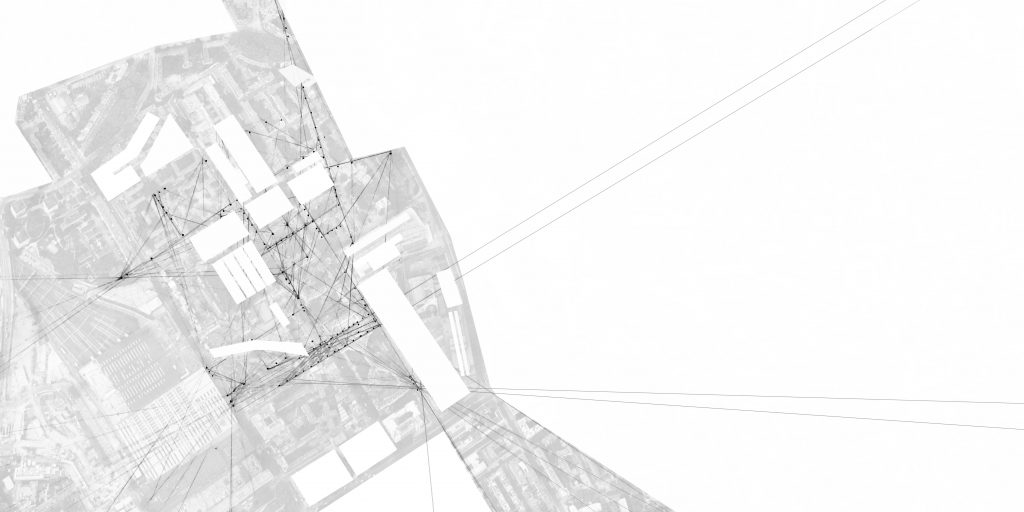
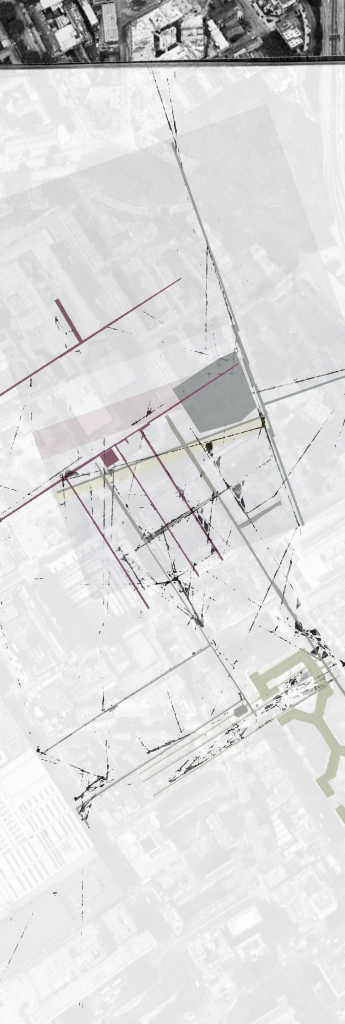
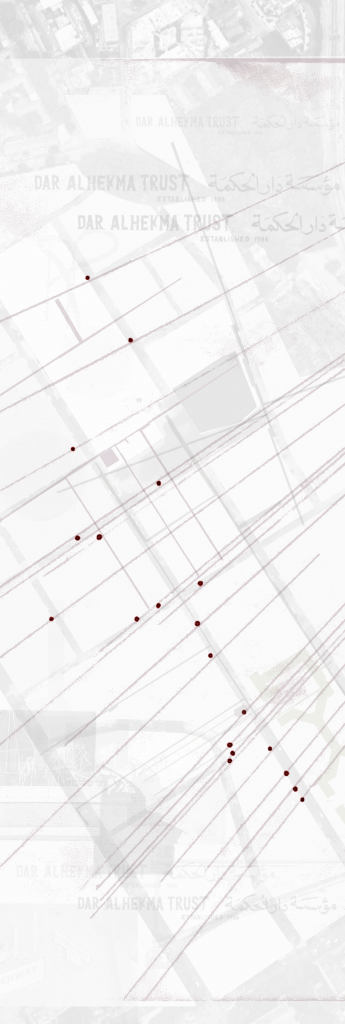
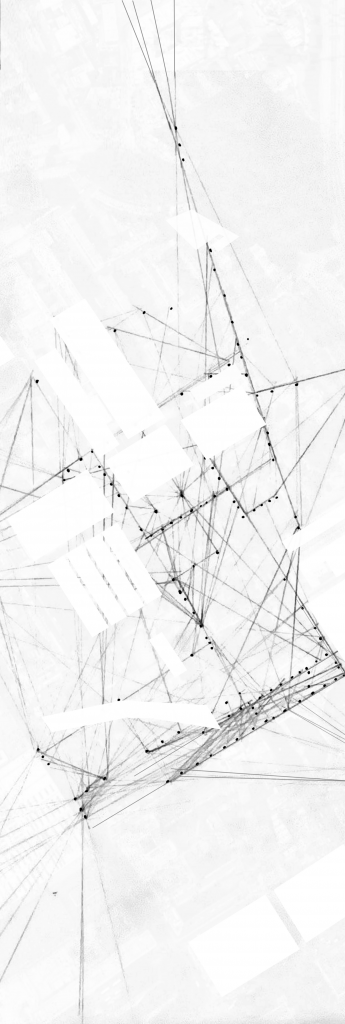
    Utilising a triptych of layered maps provided a summary for my method of investigation. Layers from my previous explorations have been deconstructed and reordered, corresponding to the three key terms – Mark-Making, ‘The Maker’s Mark’, Marks Made.

    This iterative process of investigation has begun to frame the question ‘Does urban regeneration cause the regeneration of ‘The Maker’s Mark’?’. As seen throughout my observations, ‘Maker’s Marks’ have been lost where buildings have been demolished and replaced with modern developments. The research poses questions about whether new ‘Maker’s Marks’ will begin to emerge, as the people occupying the space further integrate themselves with the architecture over time and make their own mark on the space. 

    Fig. 4. Mark-Making, ‘The Maker’s Mark’,
    Marks Made.

    Reference List:

    Hooks. B. (1997) Cultural Criticism & Transformation.

  • Captioning

    In the first Text & Writing cross year studio this term, I was prompted to write 16 different captions for the same image, lifted from my Methods of Investigation research. Each caption framed the work in a different way, ranging from function, tense, point of view, scale and visual form. The exercise was useful in consolidating my own notions of what I had learnt from the studio brief in Methods of Investigating, as well as how I imagine my work is situated in its’ wider context. 

  • Week 1 Process

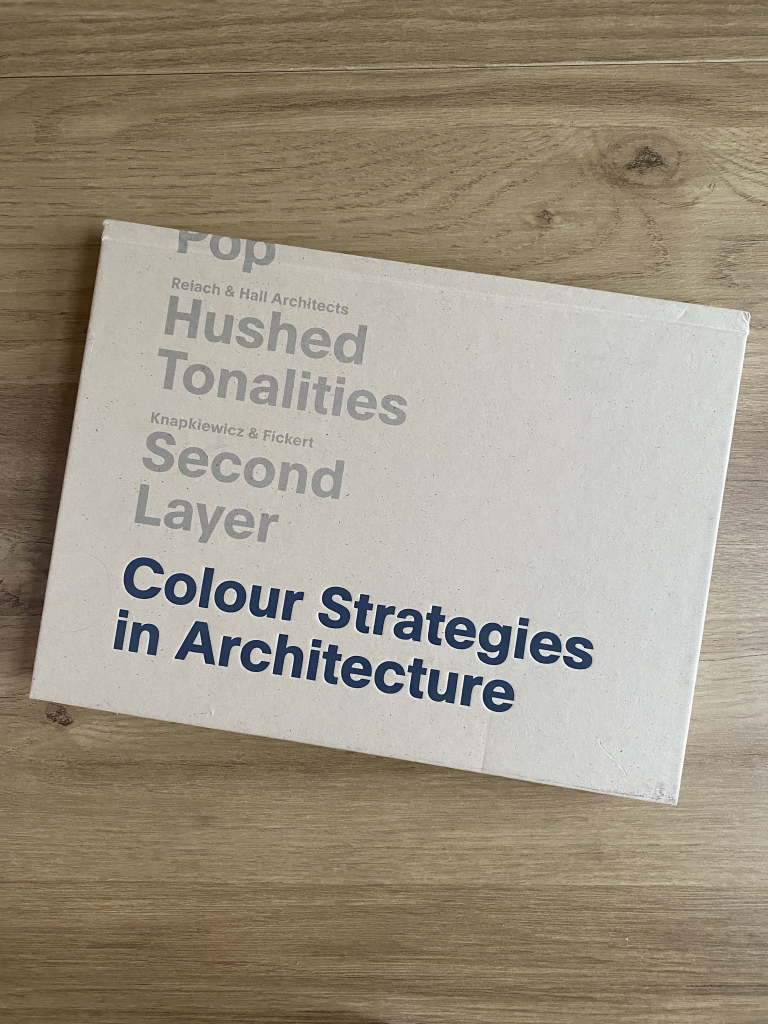
    Fig. 1. ‘Colour Strategies in Architecture’ Front Cover (McLachlan et al., 2015).

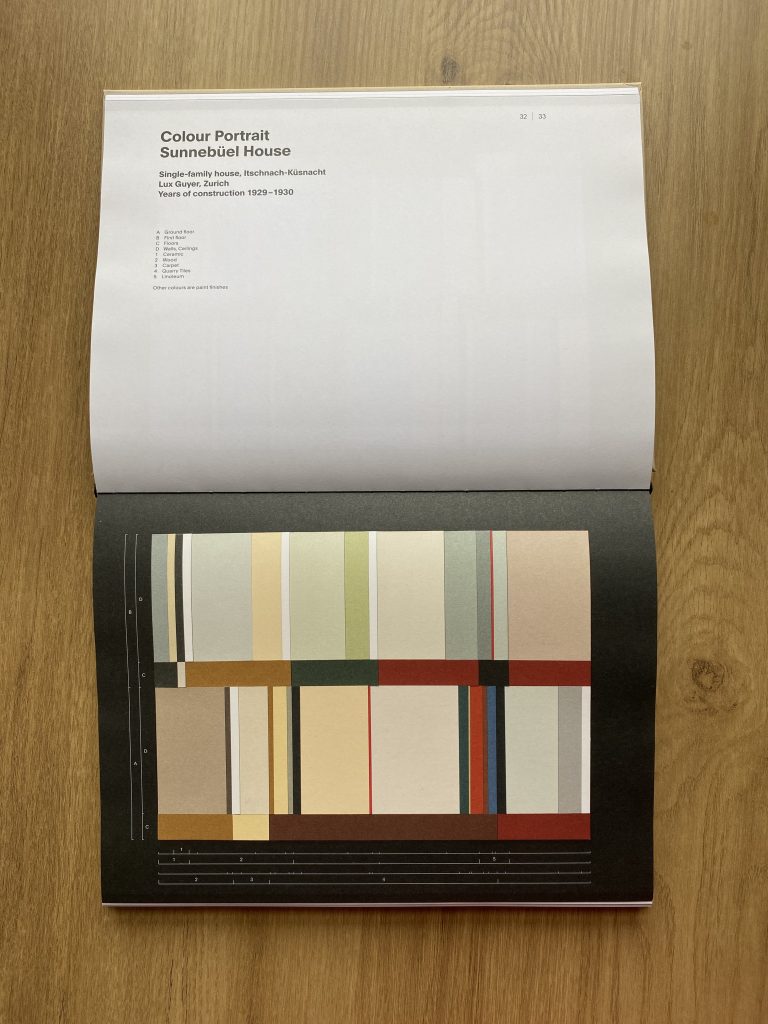
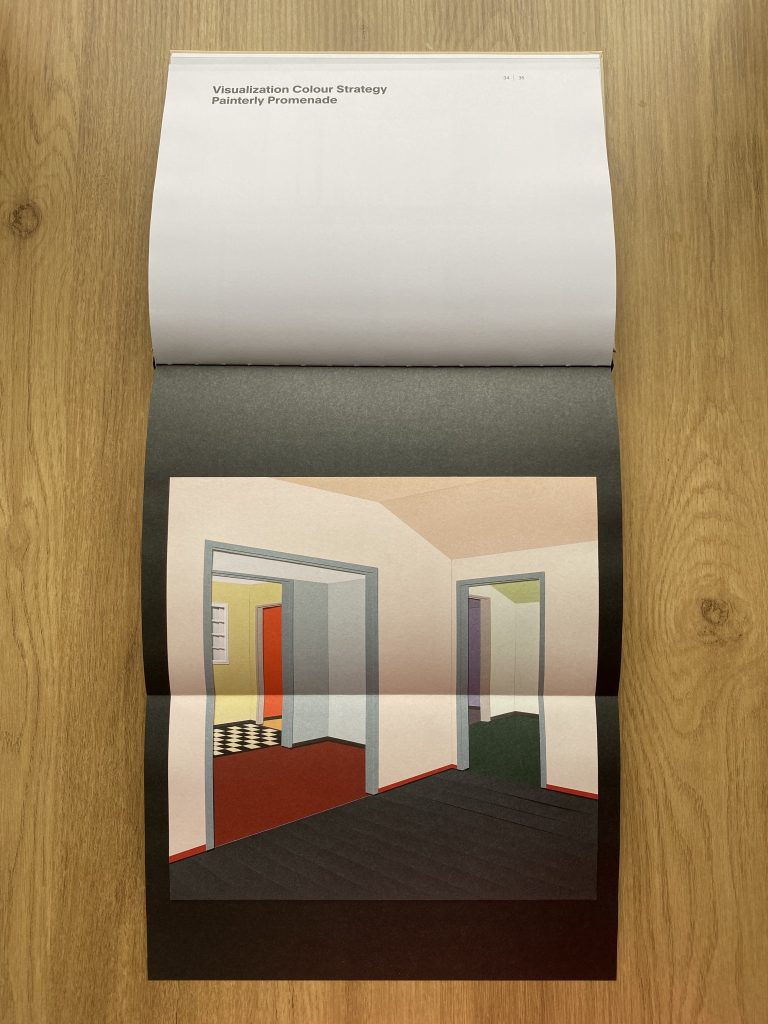
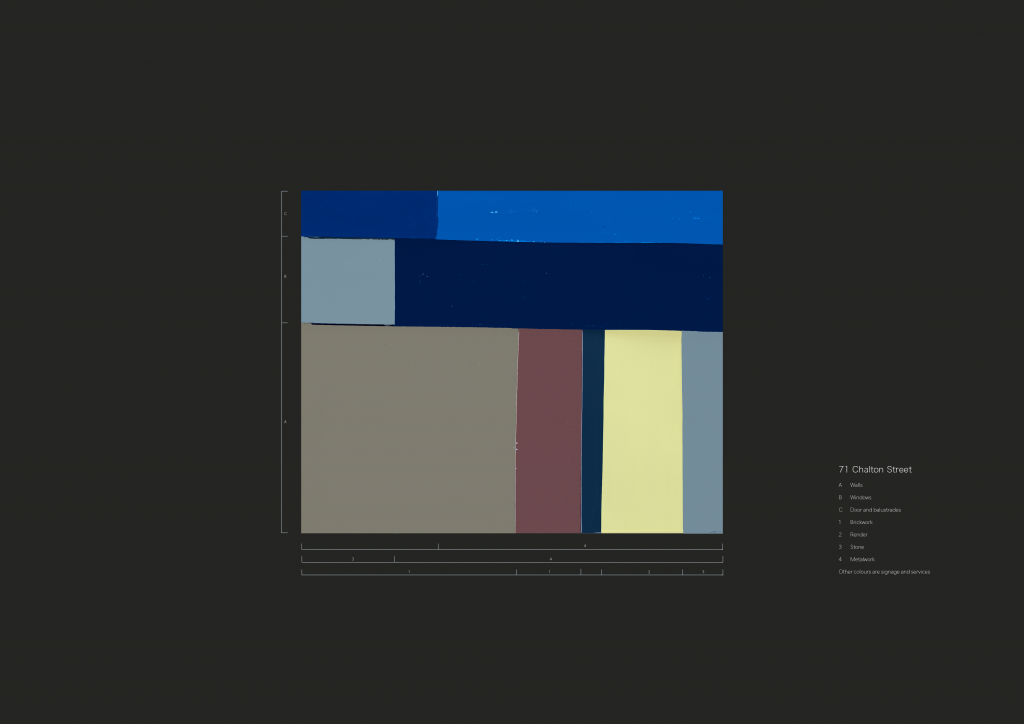
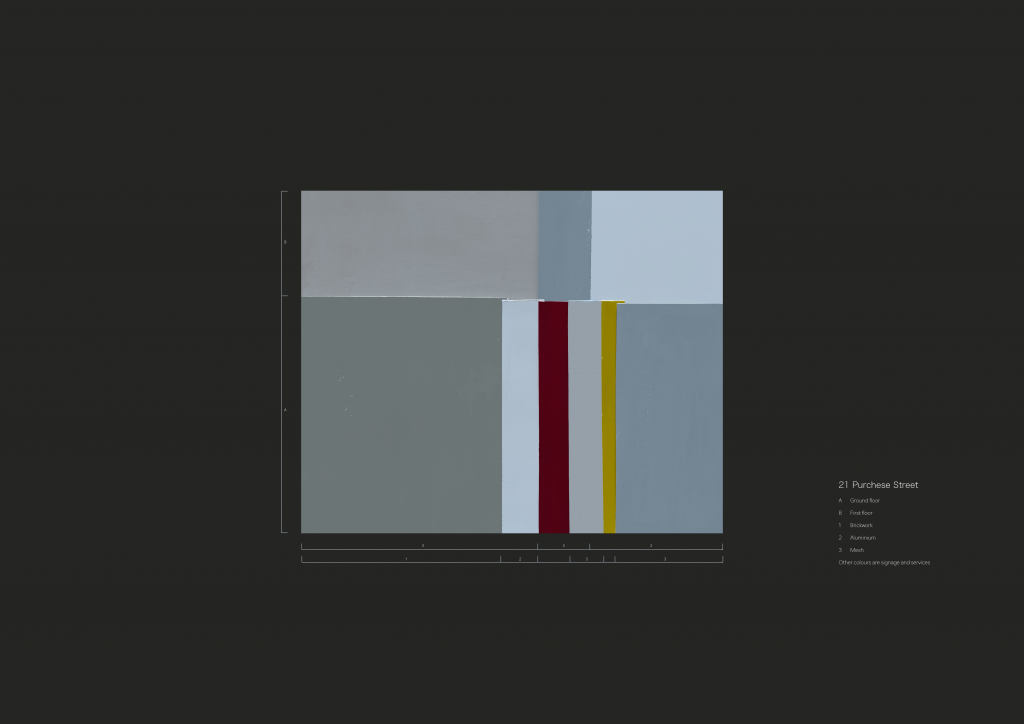
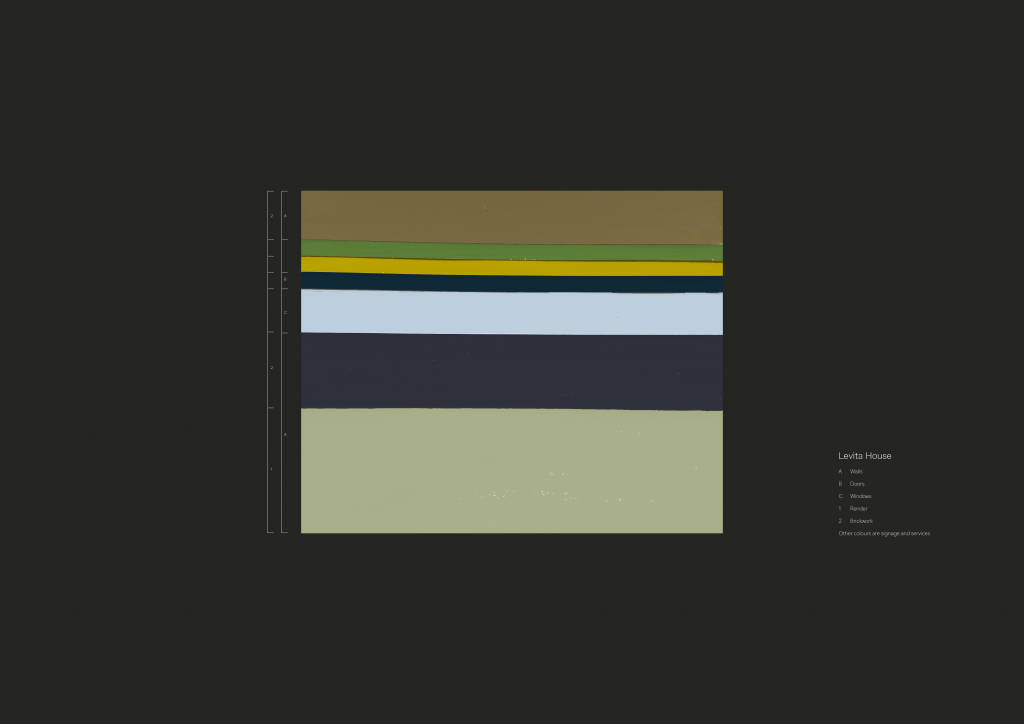
    ‘Colour Strategies in Architecture’ was instrumental in my process of observation throughout week one (McLachlan et al., 2015). The methodology of documenting buildings within ‘Colour Strategies in Architecture’ utilises a system of collecting accurate colour palettes, mixed and matched on site, and the re-representation of these hues within an established framework of graphical mapping (McLachlan et al., 2015). This allows the use of colour in architecture to be captured, obtained through a critical investigation of perception and observation. 


    (Above) Fig. 2. Colour palette of Sunnebüel House (McLachlan et al., 2015).

    (Right) Fig. 3. Graphical visualisation of Sunnebüel House utilising colour palette (McLachlan et al., 2015).

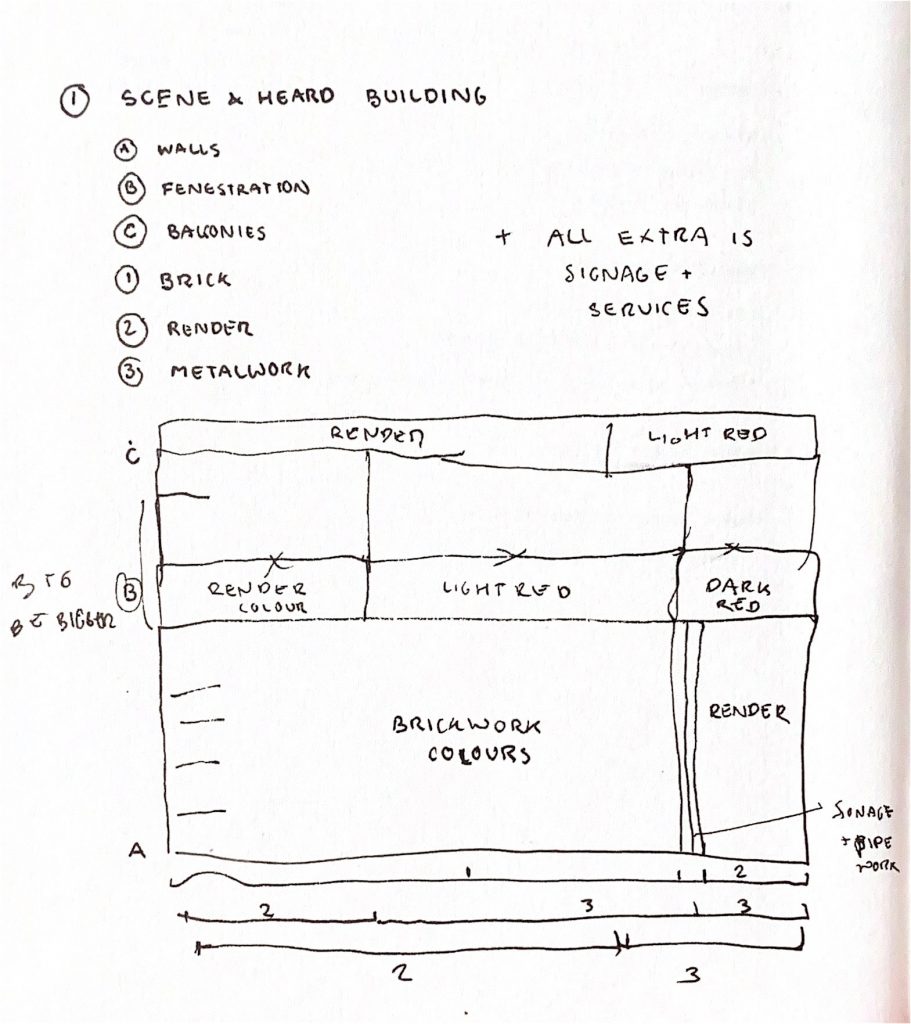
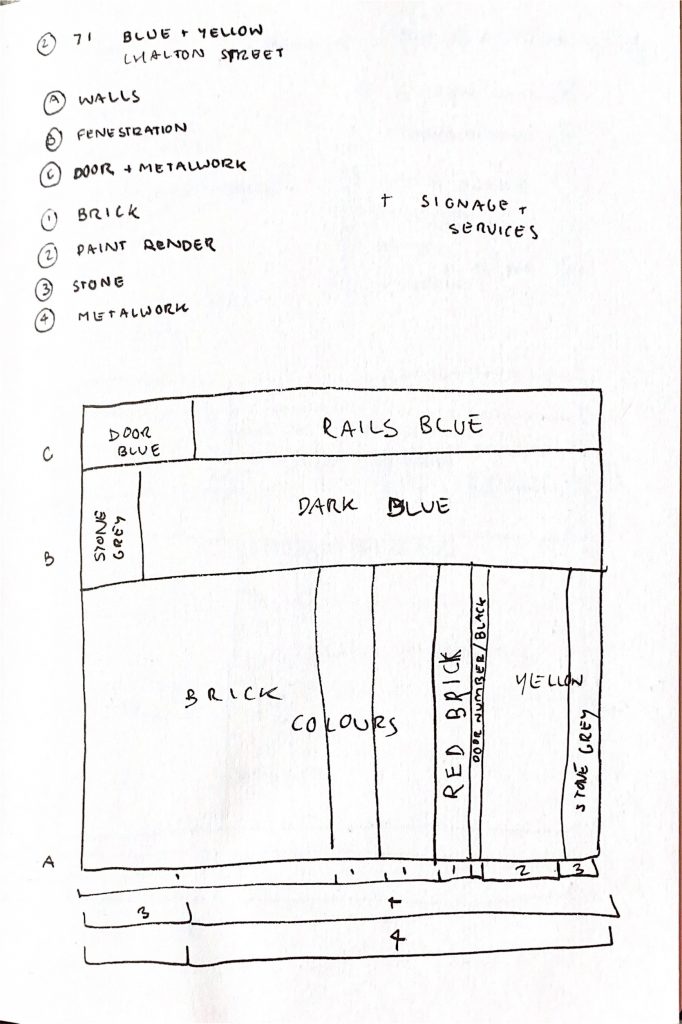
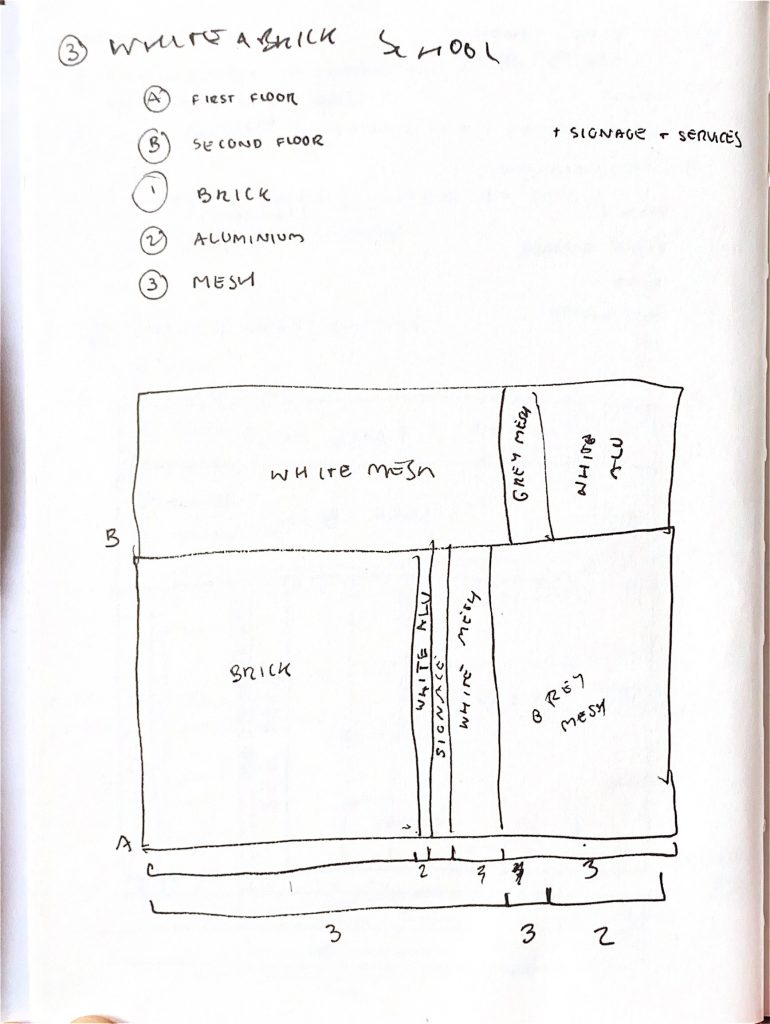
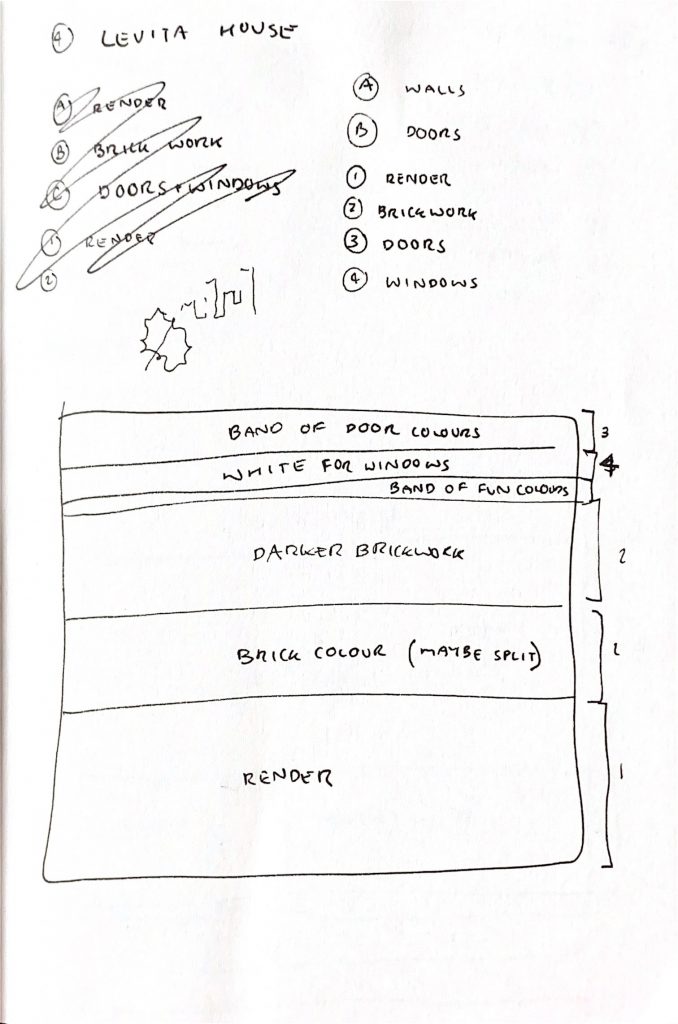
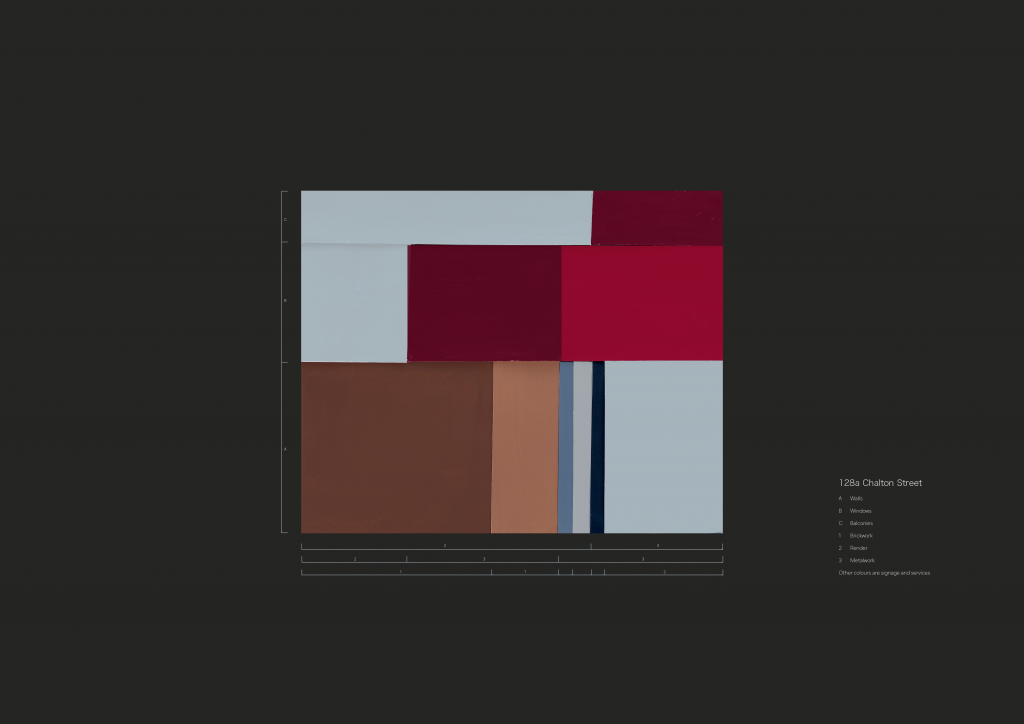
    Following the methodology proposed in ‘Colour Strategies in Architecture’, I collected colour samples of four buildings’ facades within Somers Town (McLachlan et al., 2015). I mapped out the ratios of the colours used across the facades, prior to creating the graphical representation of the palette following a graph-like system.

    Fig. 4. Sketches showing planning of colour palettes.


    The method of investigation provides a succinct and accurate observation of the buildings’ facades, and explores how architecture can be portrayed using graphic visualisations. Although I did not proceed with further research into mapping colour in this studio project, the iterative process of observing and re-representing building facades proved instrumental in the progression of my work. The concept of The Maker’s Mark (see Prompt One for definition) was enquired through a framework, created by the form of these initial investigations. The hand-made quality to the palettes can be seen as the swatches do not lay flat, revealing the physicality of them. Isolating these hand-made marks informed the map which refined my area of research, and focused my investigation further.

    Reference List:


    McLachlan, F. et al. (2015) Colour Strategies in Architecture. Translated by I. Boyd White. Basel: Farbstrategien in der Architektur.

  • Prompt One


    Identify two readings from the course reading list that relate to your investigation, and then describe and expand on these connections through writing. To help you be specific, describe the connection to each reading in the context of one of the following types of relationship; theme, form, process.

    Thematic parallels can be drawn between ‘The Street’ in Georges Perec’s ‘Species of Spaces and Other Pieces’ (1974, pp. 46-56), and my methods of investigating project, Somers Town: An Enquiry into the Relationship between ‘The Maker’s Mark’ and Urban Regeneration. Perec (1974, p. 51) astutely presents a system to ‘decipher a bit of the town’. The methodology entails a detailed observation of space through note-taking, to capture both the architecture and the movements of the inhabitants. Although note-taking was not my primary mode of surveying, the concept of reading ‘what’s written in the street’ (Perec, 1974, p. 51), focused my research into a consolidated line of enquiry to study and represent Makers Marks along a prescribed route through Somers Town.1 The notion of reading the street remained central throughout my process as Makers Marks were identified, photographed, located, and re-represented through iterative map-making.

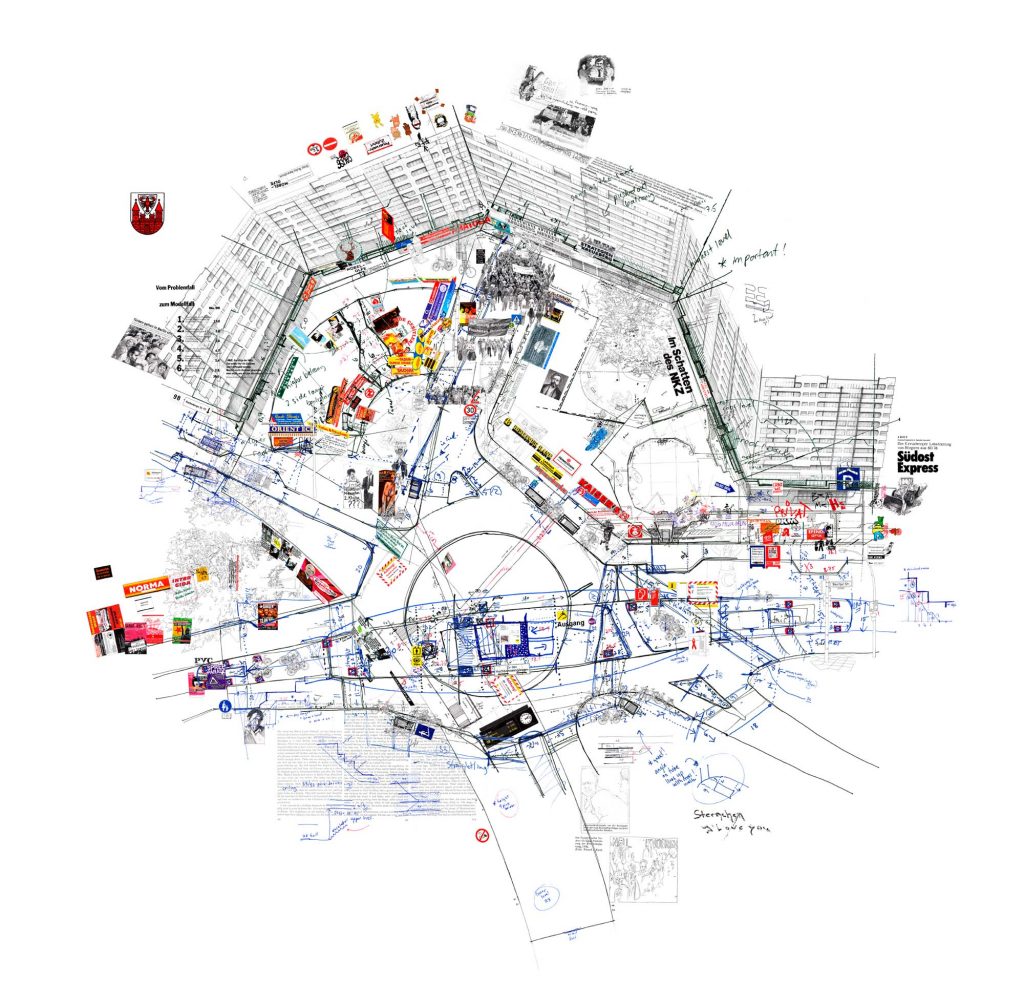
    ‘Kottbusser Tor’ by Larissa Fassler (2008, 2010, 2014) acted as a primary point of reference that inspired the visual quality of my research. Fassler’s (2008, 2010, 2014) work is characterised by architectural and diagrammatic mark-making. Mark-making is the primary method of investigation adopted throughout my studio project as a critical tool to understand the spatial qualities of Somers Town. Key terminology, including Mark-Making, guided the experimentation and formed an index of structured chapters. ‘Kottbusser Tor’ utilises layering as an instrument of observation, conveying a variety of different ideas within the framework of a fixed composition (Fassler, 2008, 2010, 2014). This is best exampled in my own project at the denouement of the narrative, as all the layers created throughout were deconstructed and reordered to effectively represent the three key terms used to index the body of work: Mark-Making, The Maker’s Mark and Marks Made. Furthermore, a cohesive connection between Fassler’s ‘Kottbusser Tor’ (2008, 2010, 2014) and my research can be drawn in the approach to representing space through an abstracted cartography. Both Fassler and myself use map-making as a form of representation of personal experience of space, allowing places of importance to be promoted within the hierarchy of the map. Although this does not create a true reflection of the space, it is reflective of one’s phenomenological experience of place. 

    Fig. 1. Larissa Fassler. Kotti (Kottbusser Tor). 2008, 2010, 2014 [Fine Art Print]. FAIL!, Node Curatorial Center, Berlin.

    In conclusion, the thematic parallel between Perec’s ‘The Street’ in ‘Species of Spaces and Other Pieces’ (1974) and my method of investigation can be synthesised into the idea of reading the street. Fassler’s (2008, 2010, 2014) work is more similar to my exploration in theme, form and process than Perec’s (1974) writing. The detailed exploration into inhabitants repurposing of their own space within the building, Kottbusser Tor (Fassler, 2008, 2010, 2014), is an alternative form of a Makers Mark, whereby residents have modified homes to suit their human needs. Although a parallel can be drawn between my research and Perec’s (1974) text, Fassler’s (2008, 2010, 2014) body of work defined my own line of enquiry.

    1. Within the context of this discussion and my studio project, The Makers Mark is defined as an architectural feature that has a human-made quality to it, and displays a level of craftsmanship that is often overlooked in contemporary building practice.
      ↩︎

    Reference List:

    Fassler, L. (2008, 2010, 2014). Kottbusser Tor. [Fine Art Print]. FAIL!, Node Curatorial Center, Berlin. Available at: http://www.larissafassler.com/kottidraw_1.html (Accessed: 12 October 2025).

    Perec, G. (1974). Species of Spaces and Other Pieces. Reprint, London: Penguin Books Ltd, 1997.