Working quickly and intuitively, 12 iterations were created by binding the architectural drawings of my family home under the lens of the selected terms; constraint, trace, trace, sequence and friction.
This blog post acts as a catalogue of the iterative experiments into the bound outcomes within bookbinding.
CONSTRAINT
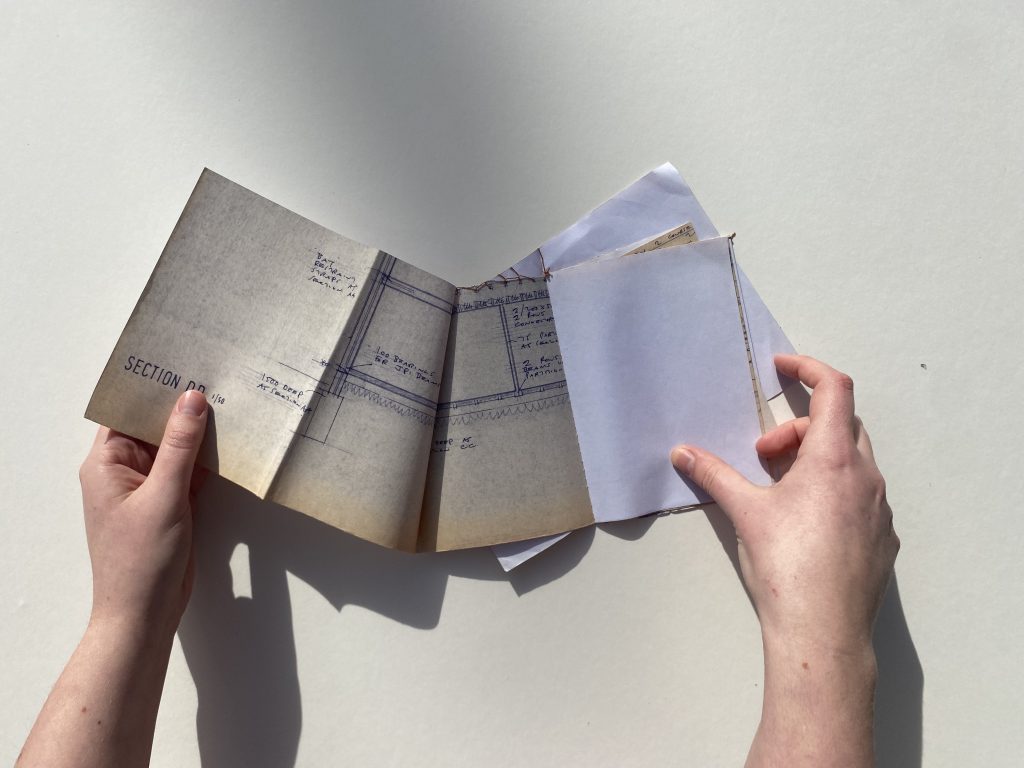
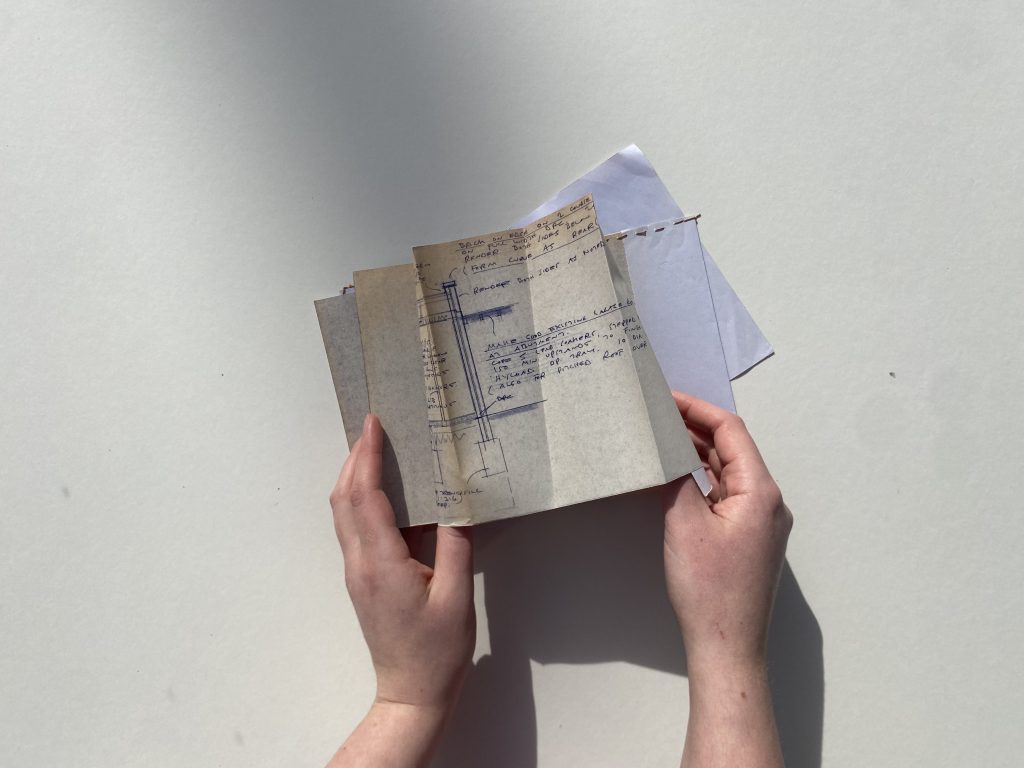
The first set of experiments looked into the term constraint. Here, the pages were folded and bound so that the sectional drawings were partially concealed, forcing the reader to engage more deeply with the object to view the content.
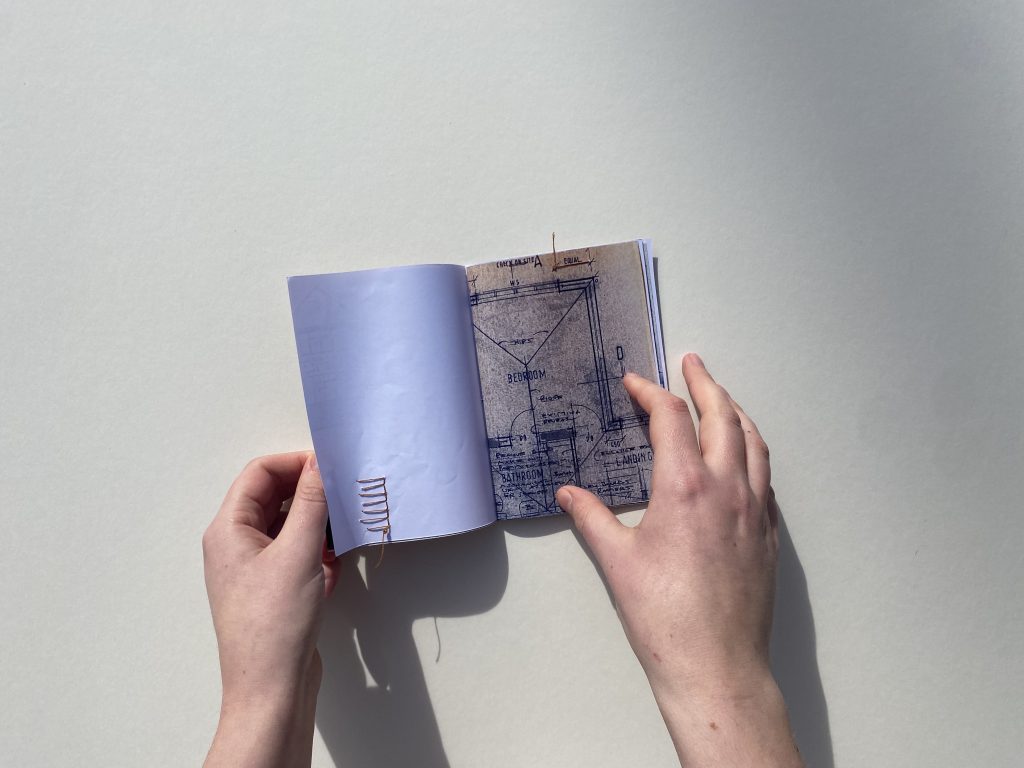
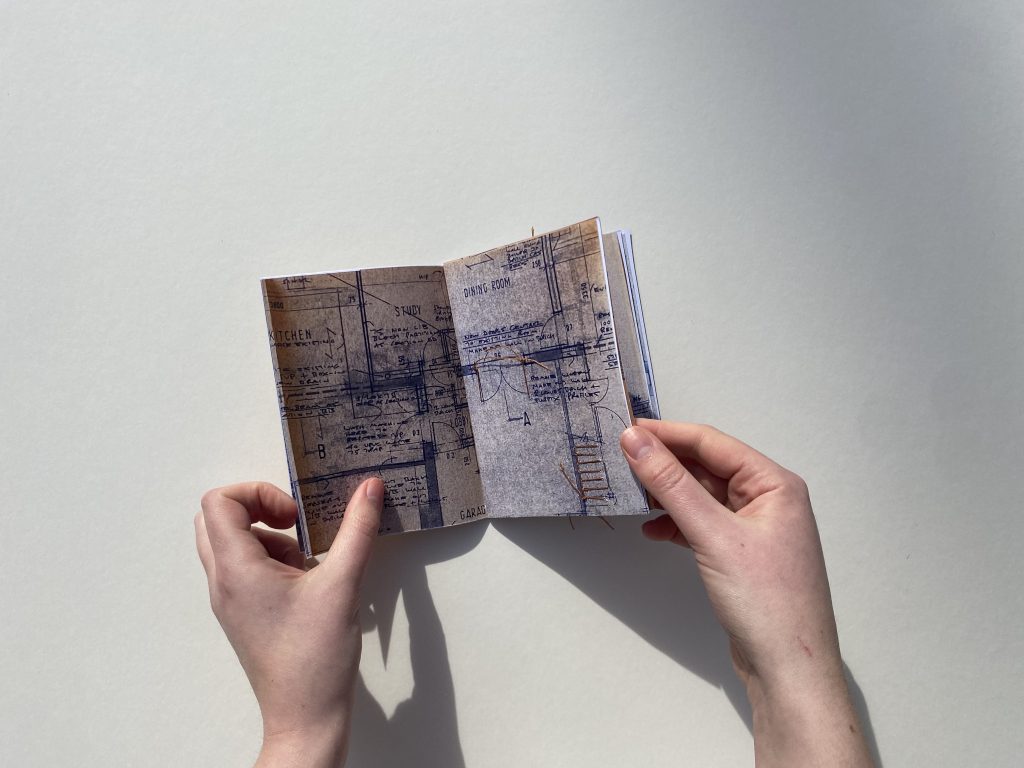
The second iteration saw the binding following moments of constraint within the architecture of the home, as well as the architectural notation. Dimensions on the drawing are bound, as they cannot be changed, therefore they are amplified here within the binding itself.
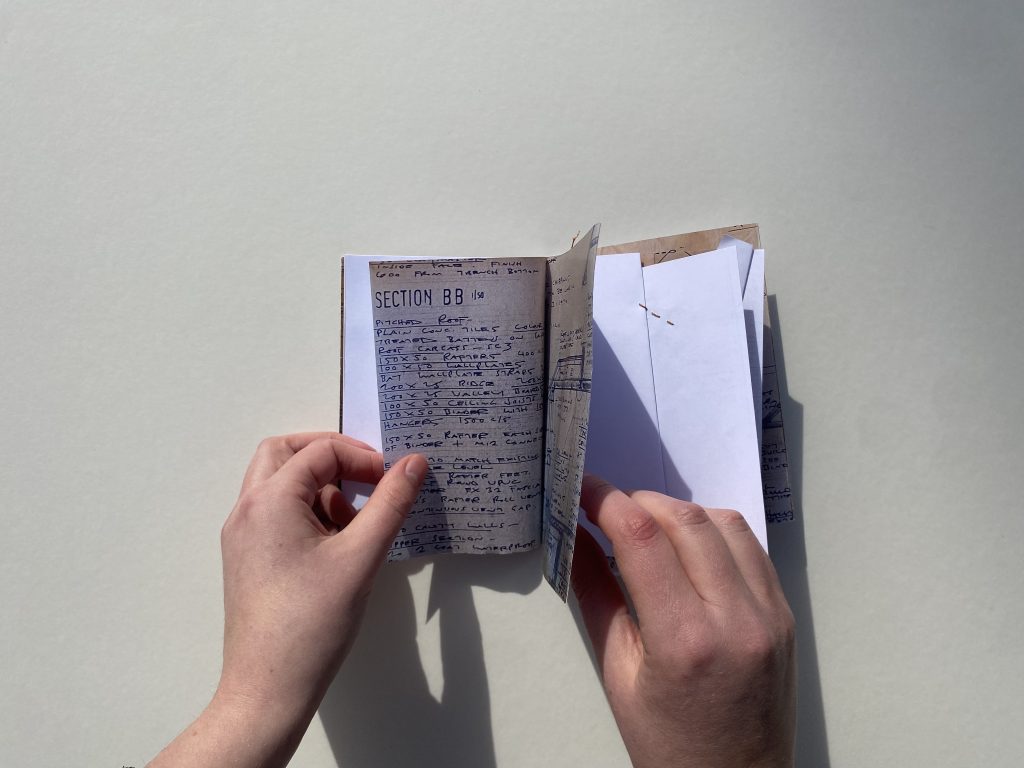
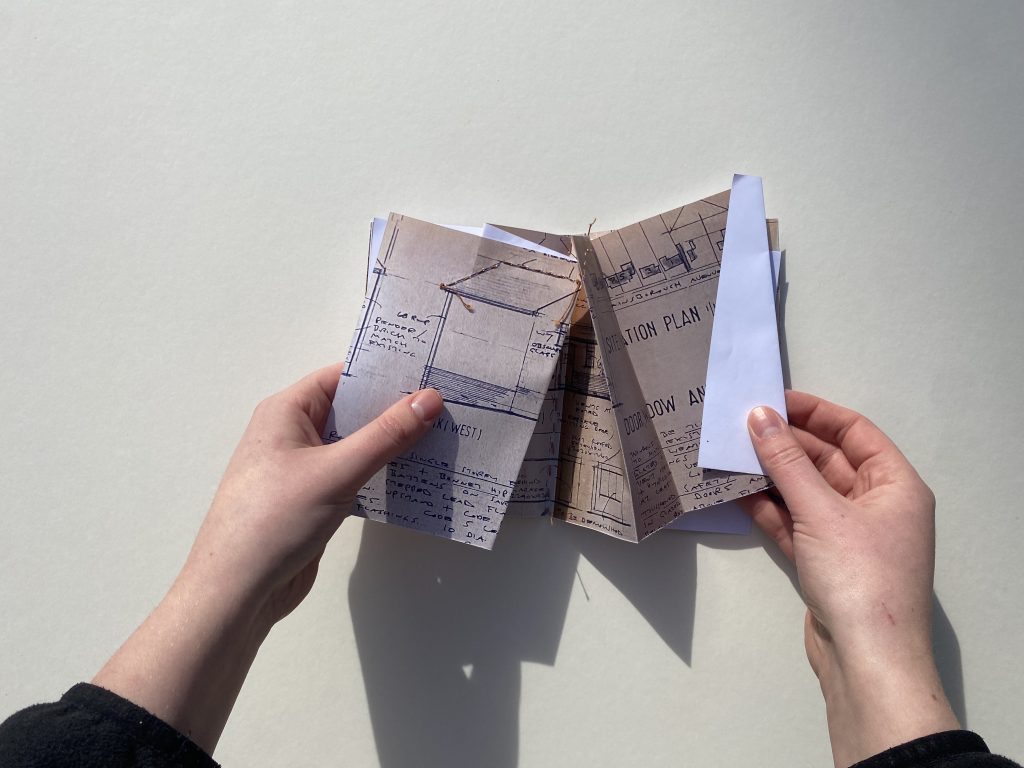
Similarly to the first experiment, this interpretation of constraint focused on the folding of the paper to constrain the knowledge that was visible. The notion of constraint was stitched into the investigation as the binding followed fixed architectural elements, such as the roofline of the building.
TRACE
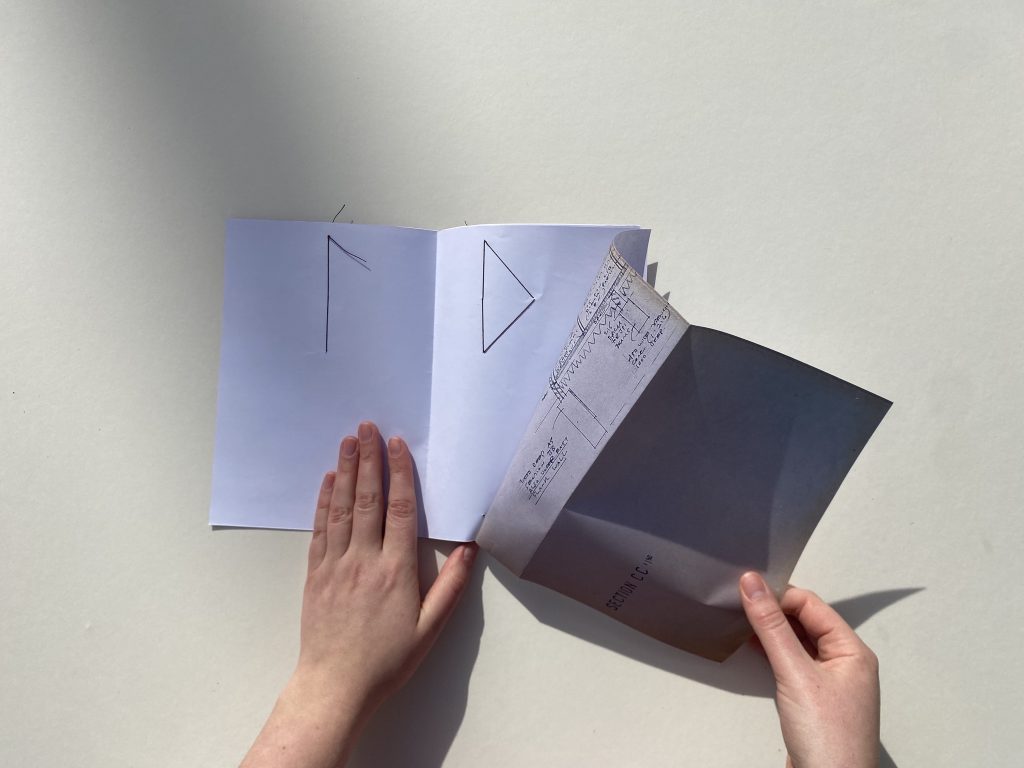
Building upon the techniques used in the first set of iterations, this experiment exclusively bound the drawings together along the spaces within the home that my family have altered since moving in. Trace of human life, and our own experience of the house, has fuelled this trial.
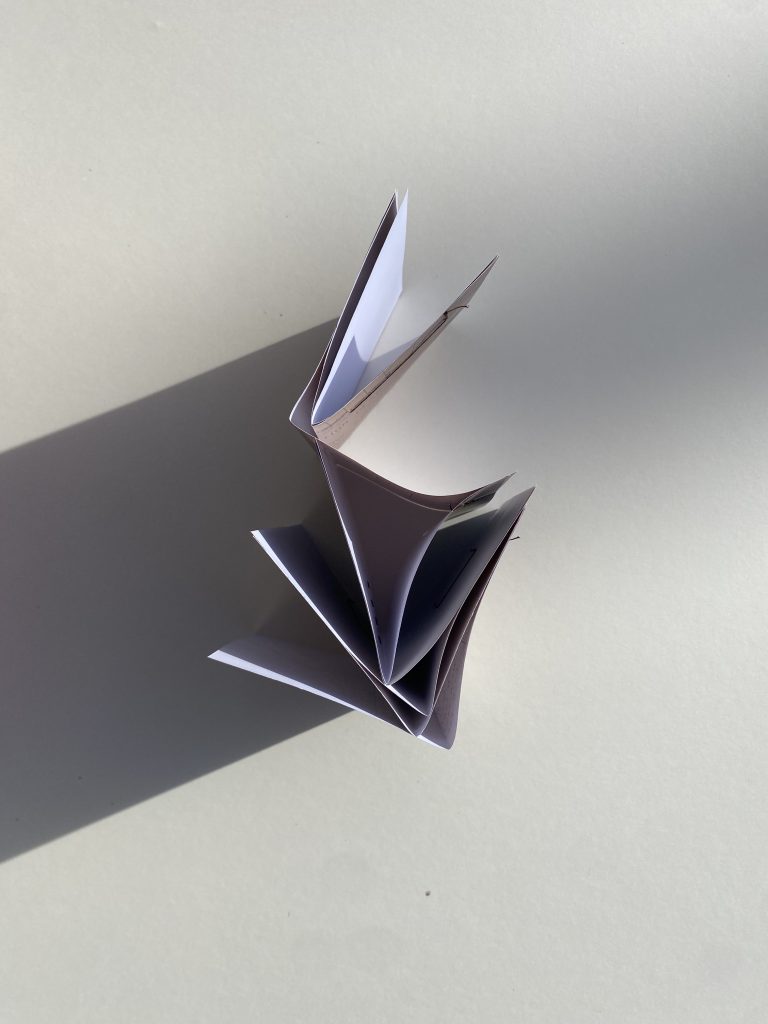
Similarly to the previous investigation, this iteration adopts a similar methodology, albeit looser. This means that the binding is not so rigid and is further away from our understanding of conventional bookbinding practices.
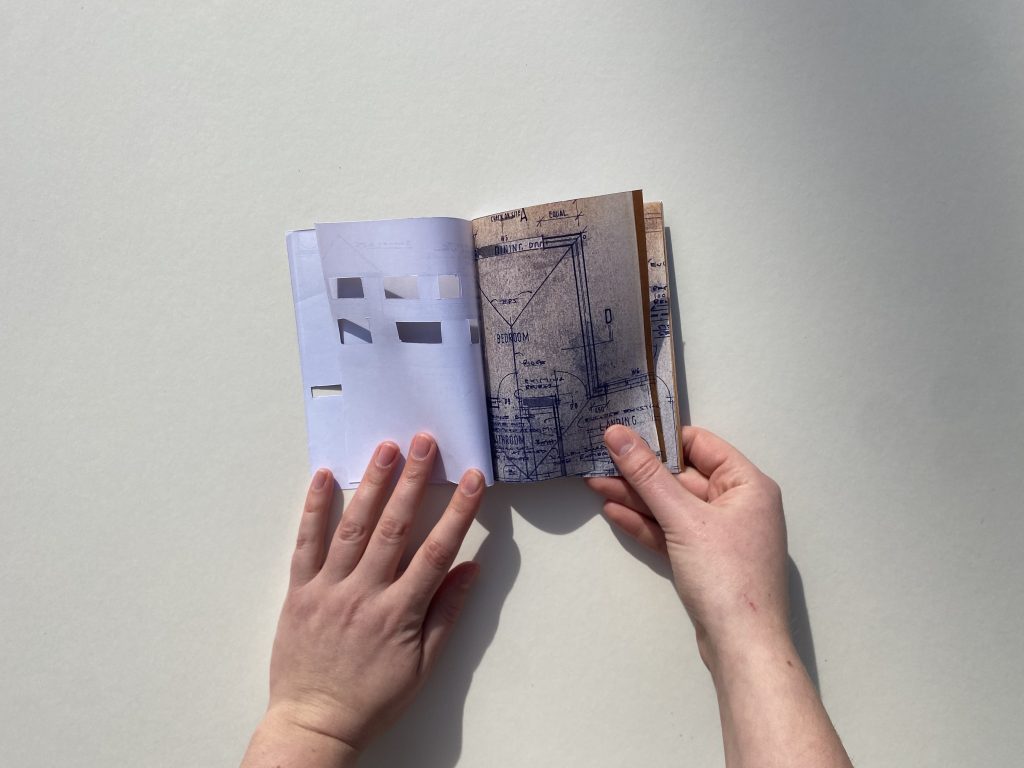
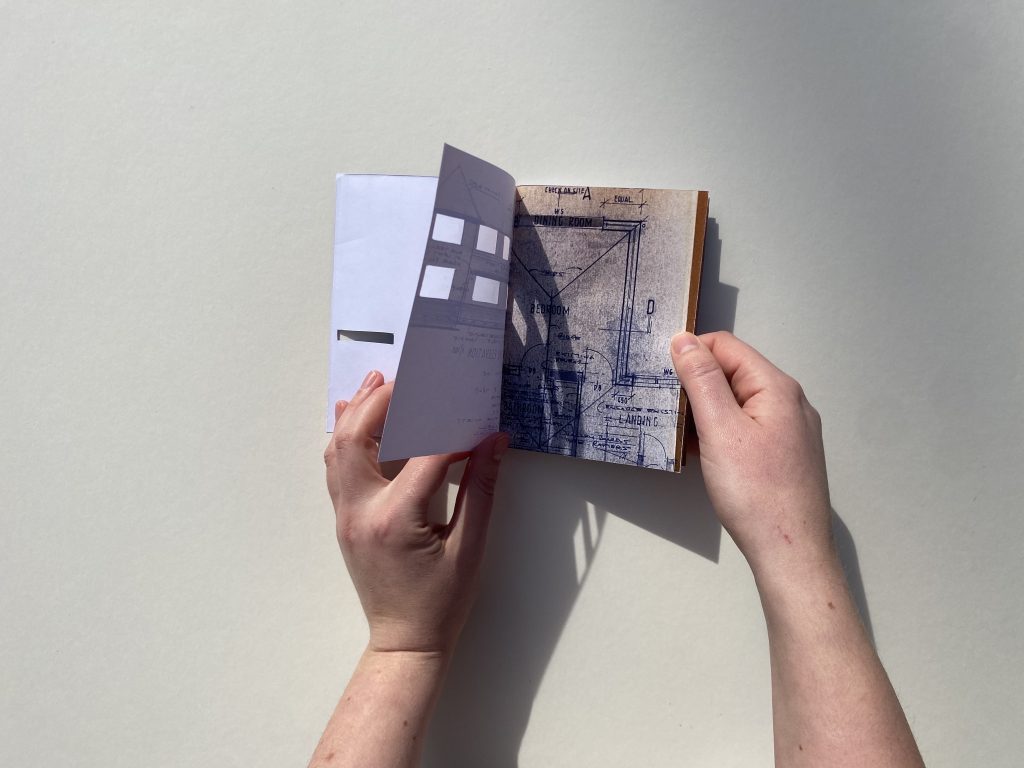
Within architecture, trace has an alternate meaning which can be defined by the structure used to subdivide windows into sections. In this spirit, this inquiry focuses on tracing the locations of the windows in plan onto over areas of the building.
SEQUENCE
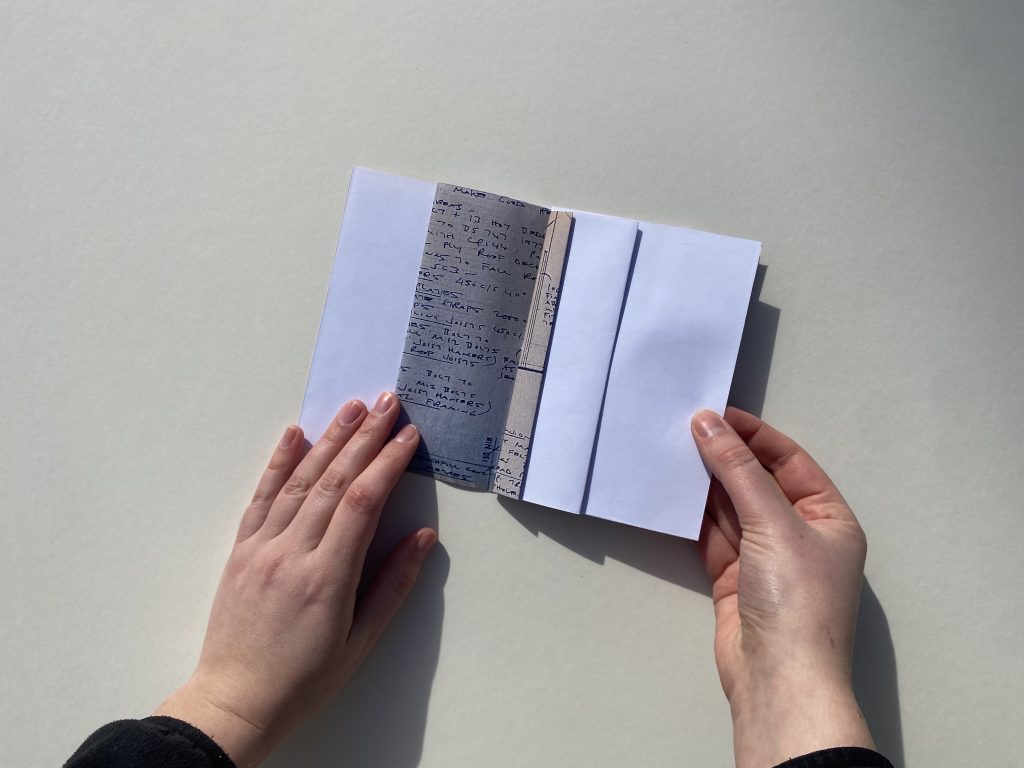
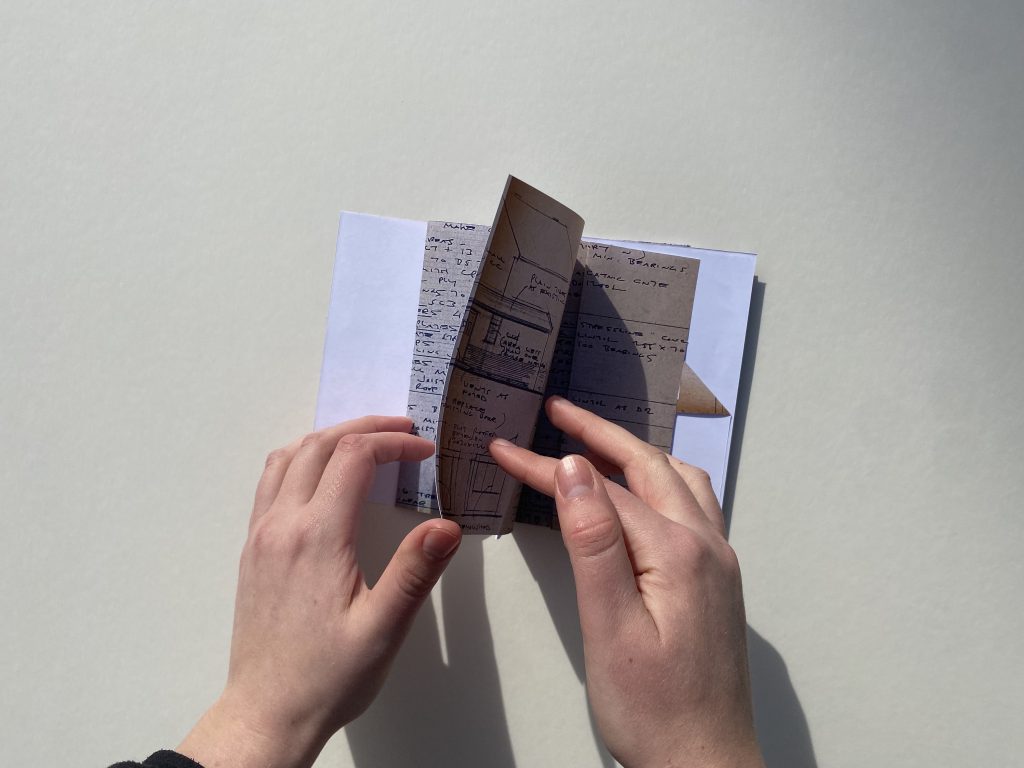
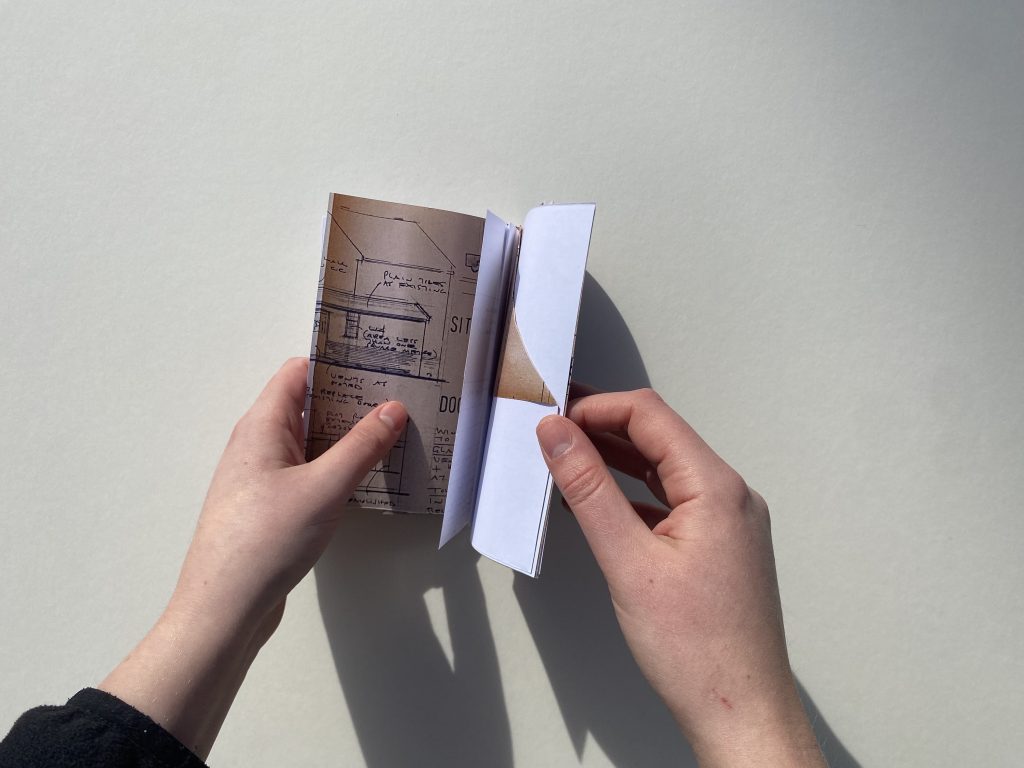
Folding is a key process within bookbinding, and heavily alters the readers experience of the book. The folding of this publication sequences the information, concealing large portions of the drawings.
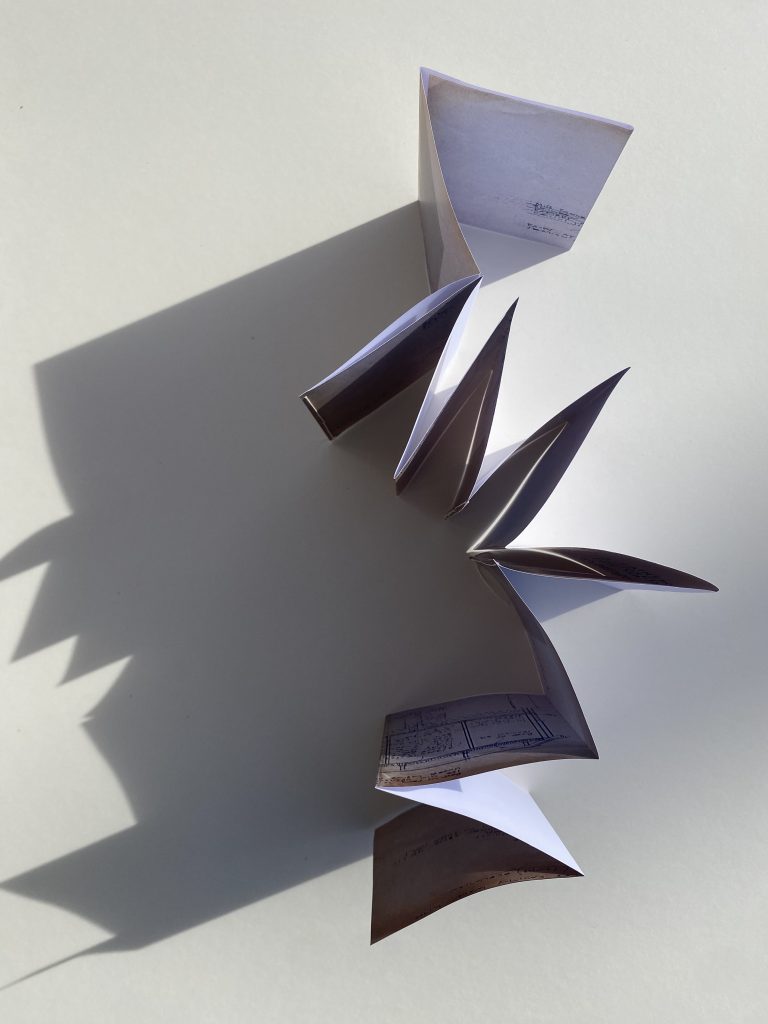
Interpreting the term more literally, this trial sequentially binds together the pages of the booklet in a concertina format.
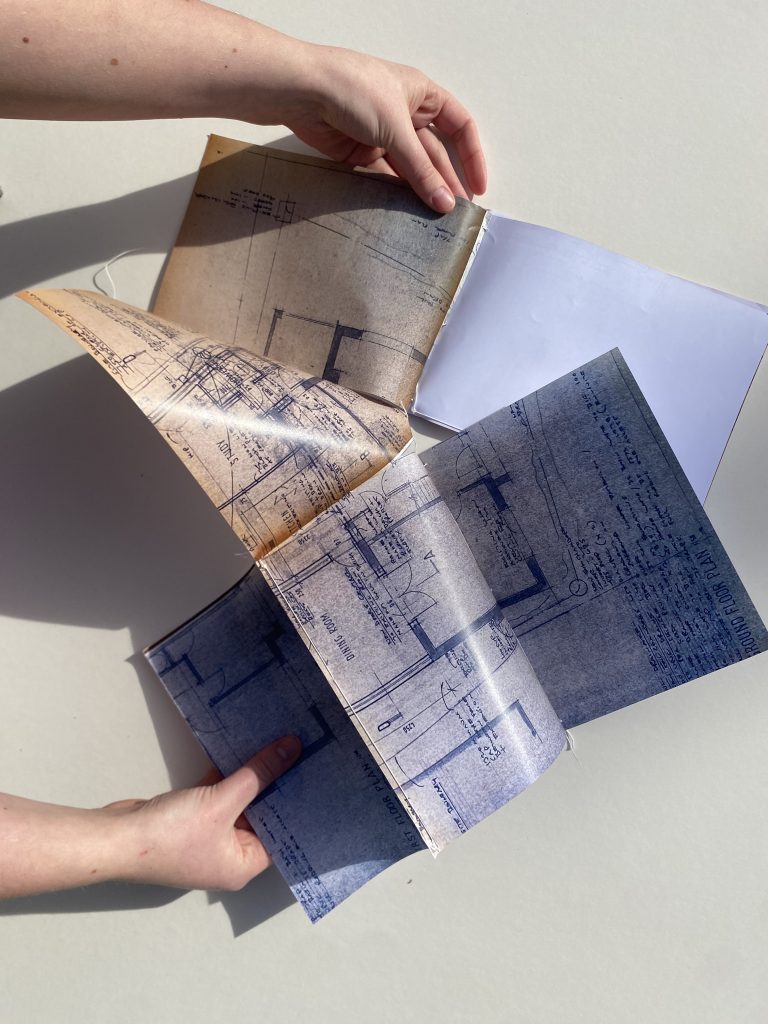
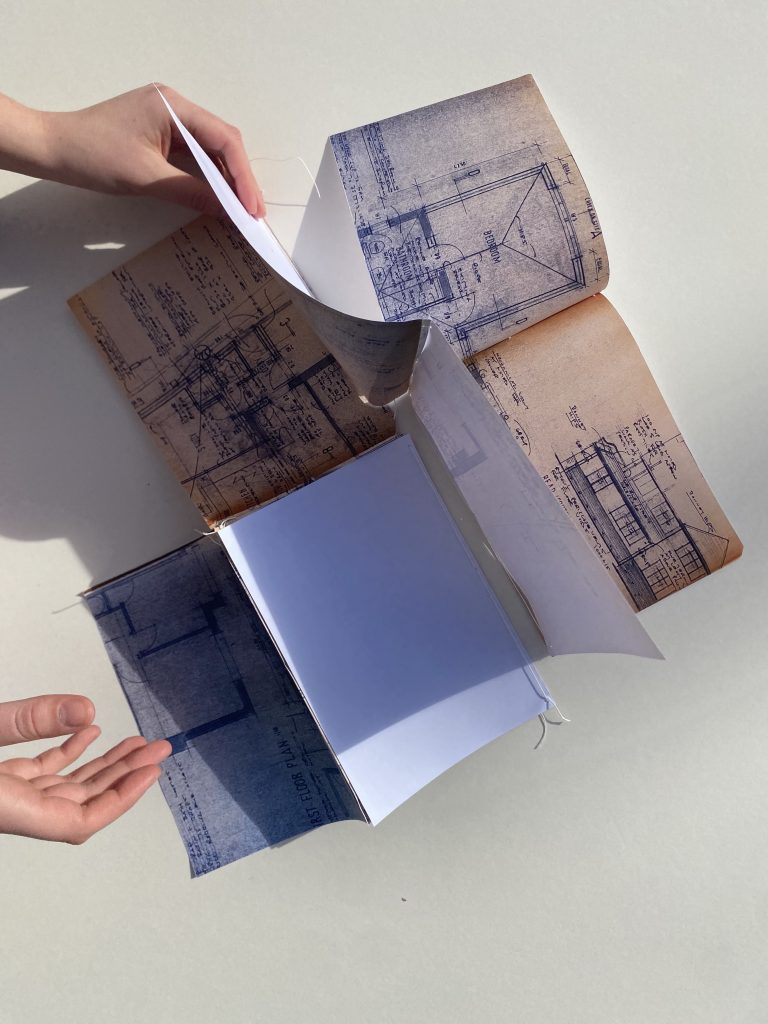
Within architecture, sequence is defined by the ordered progression of spaces, experiences or elements within a building. This iterative investigation follows the natural entrance sequence around my family hone, initially entering at the front door, moving through the ground floor, then traversing the stairs and exploring the first floor. The binding of the architectural plan amplified this sequential journey through the space.
FRICTION
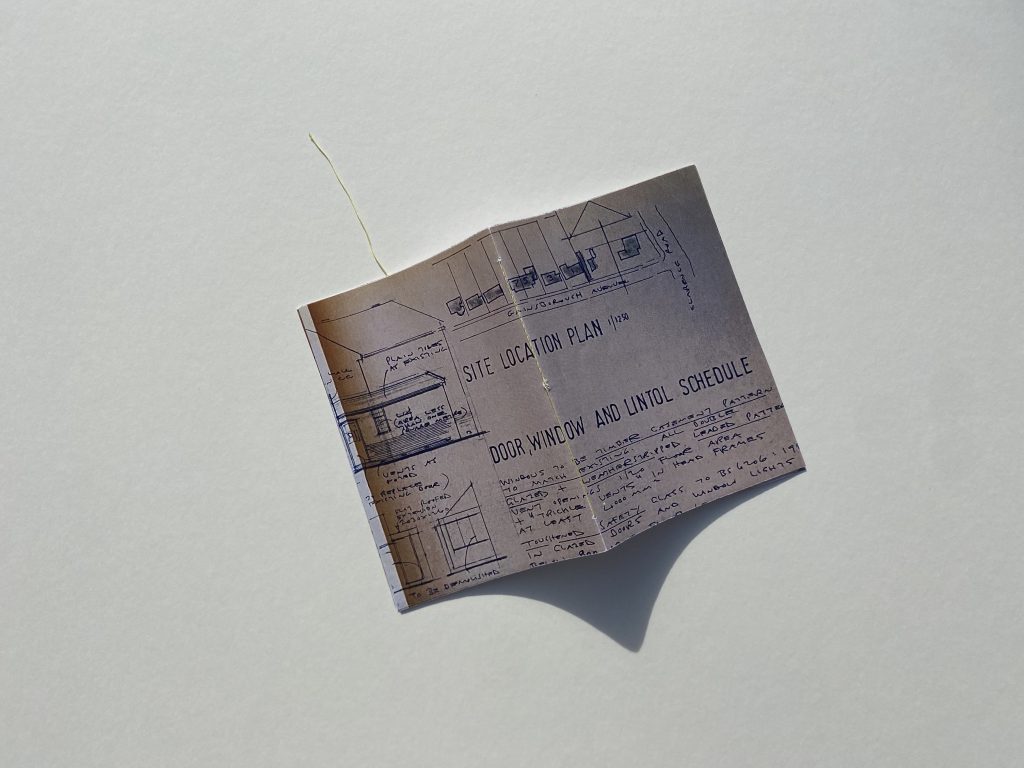
The first iteration looked into the friction caused by the process of binding itself. A three hole sewn technique was used to bind the pages together. The publication was subsequently taken apart and put back together ten times, revealing the friction caused by the process.
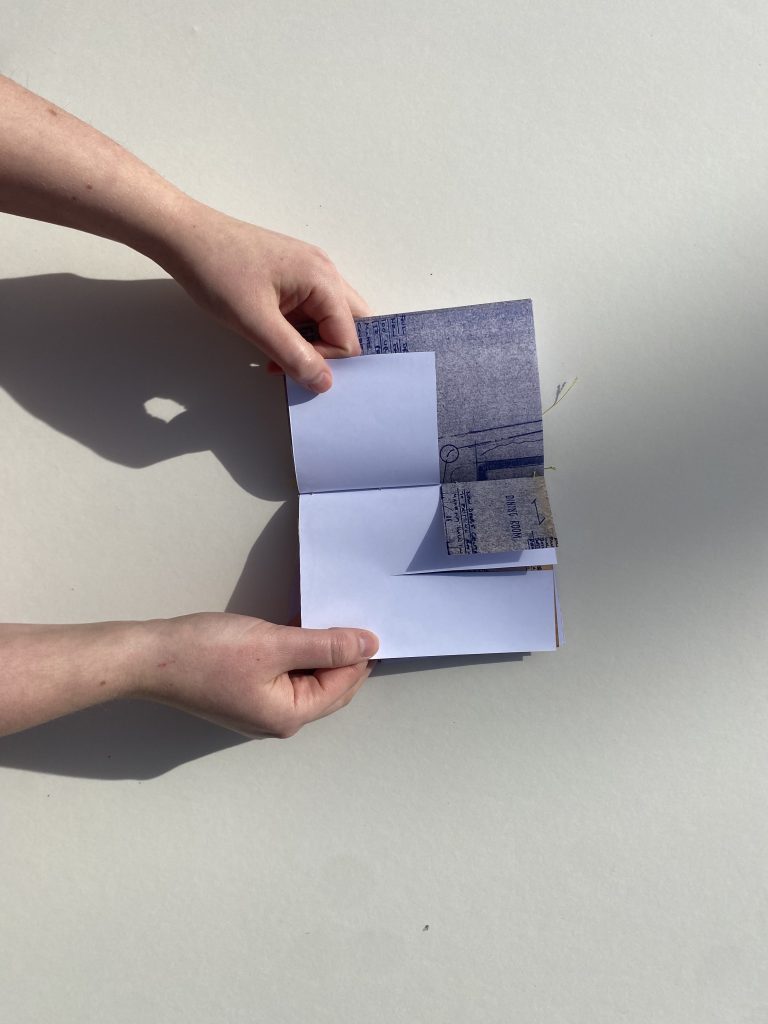
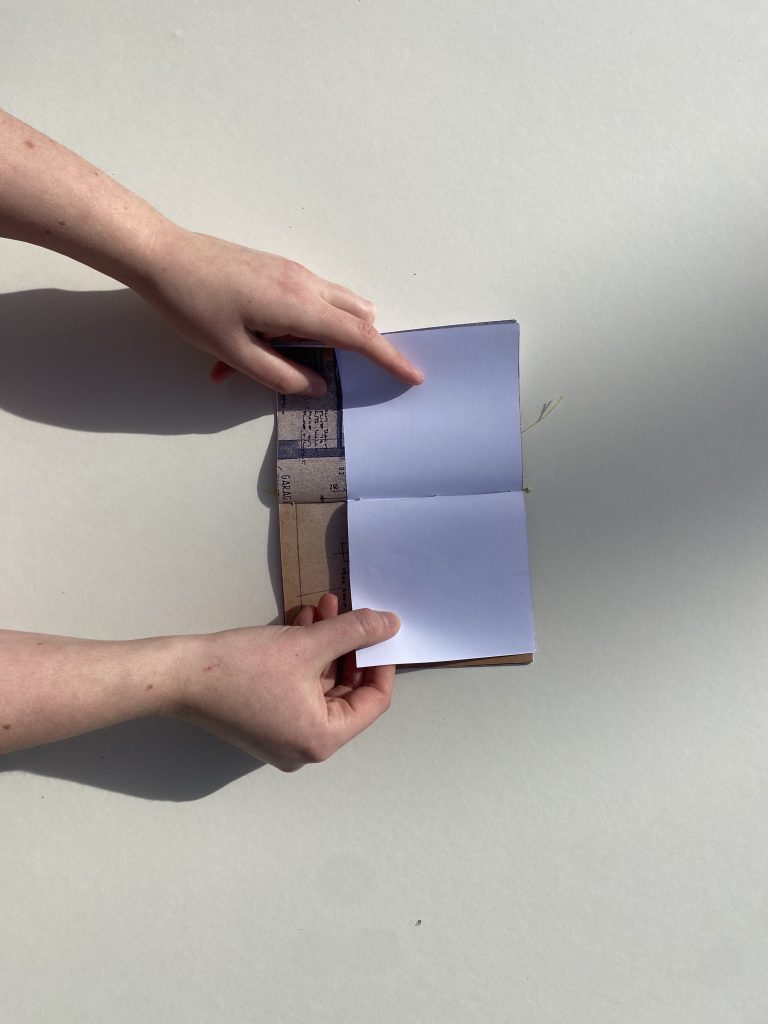
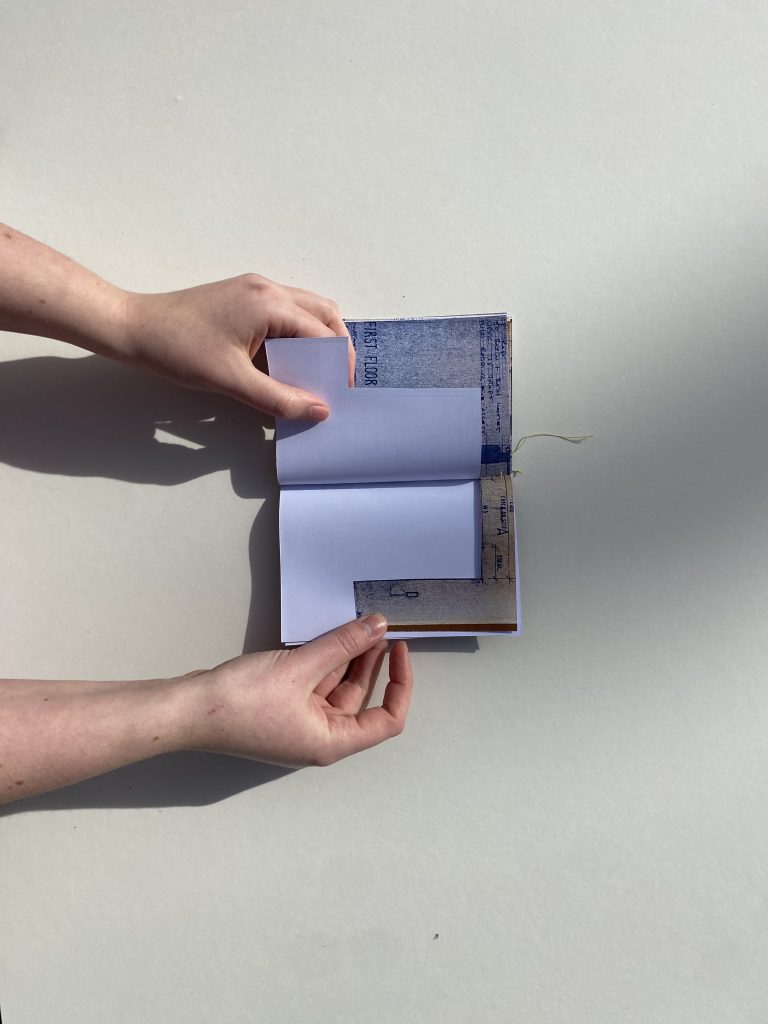
The second version of friction sliced the pages along lines that correlated to friction within the architecture, such as level changes, external boundaries and roof eaves.
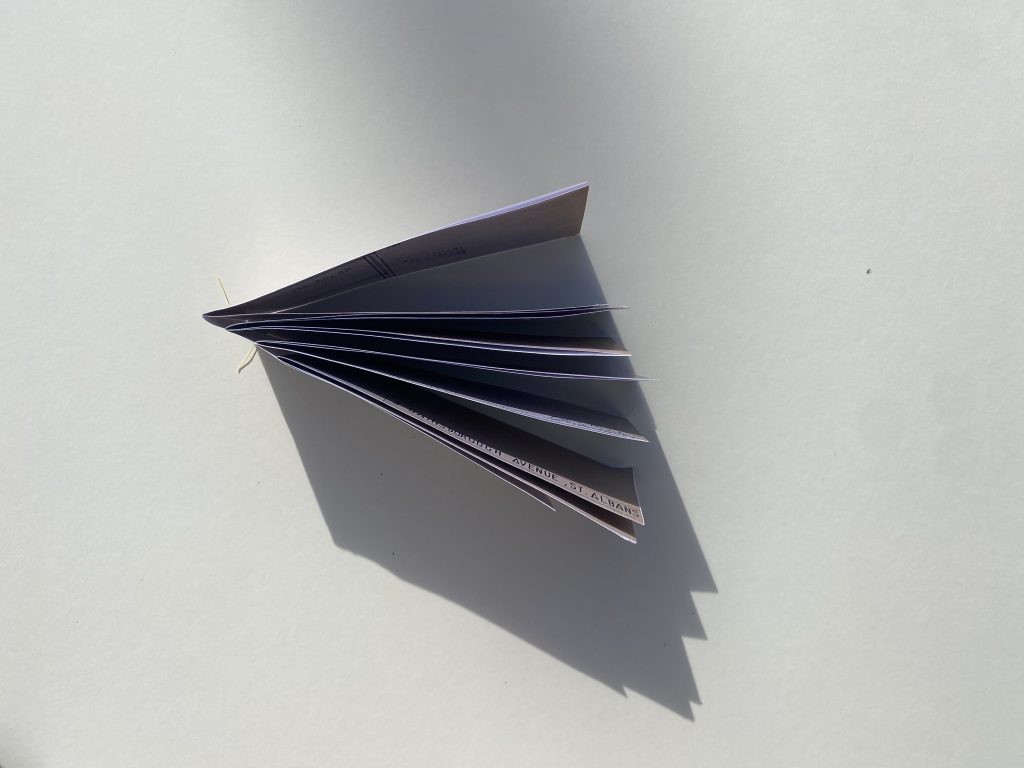
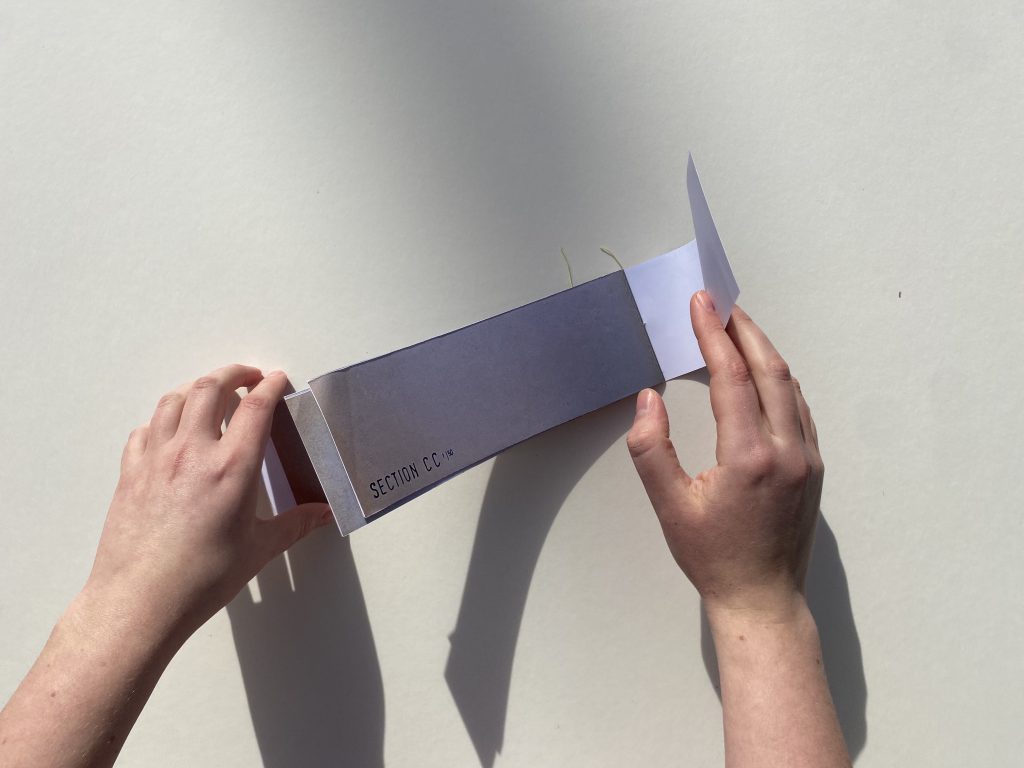
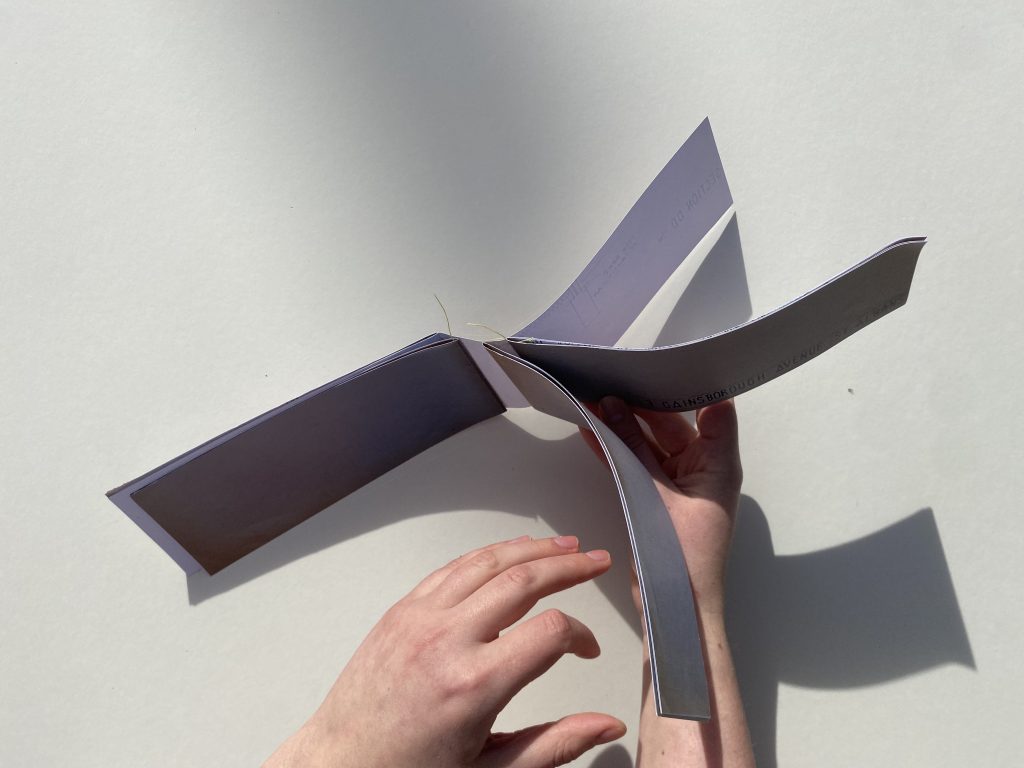
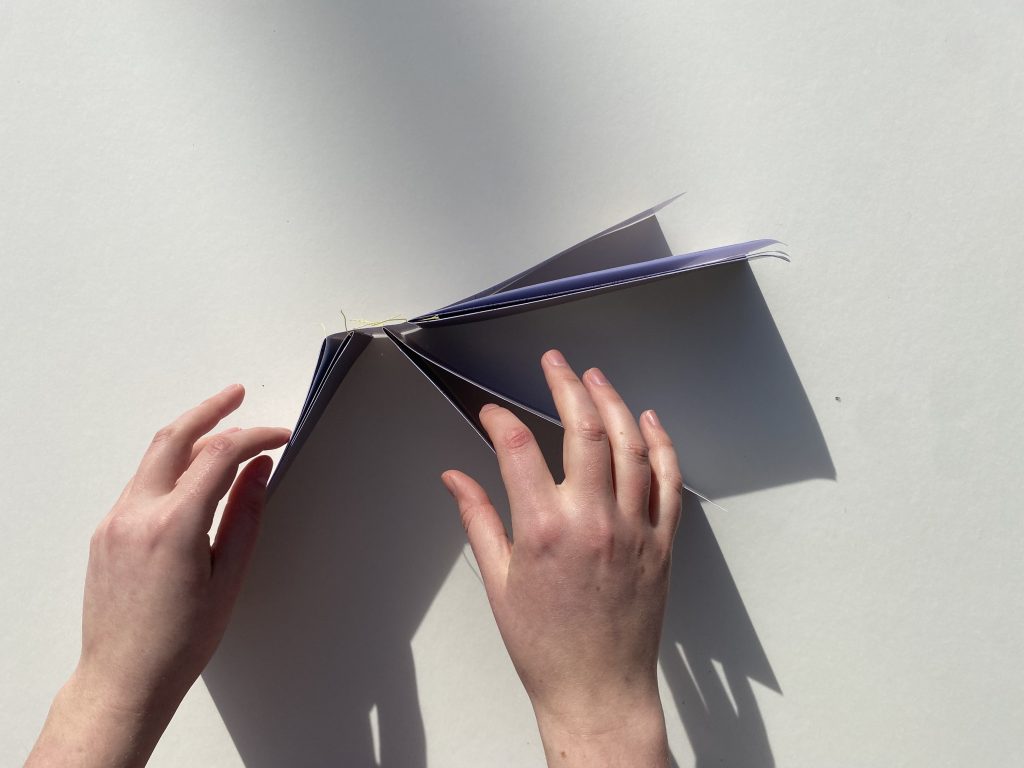
The final iteration creates friction as the pages are turned, as the binding is displaced every few pages. The booklet does not turn easily, creating friction between the object and the reader.
Leave a Reply