“This project is positioned within The Stone Cottage, Finned, Easkey, County Sligo, the rural West Coast of Ireland.
The Palimpsest Archive contains multiple histories, existing concurrently. This essay explores The 1922 Fire that destroyed the Public Records Office of Ireland in Dublin, shaping the historiography of the nation. Simultaneously, the archival material is re-layered to reveal the past, present and future of The Stone Cottage.
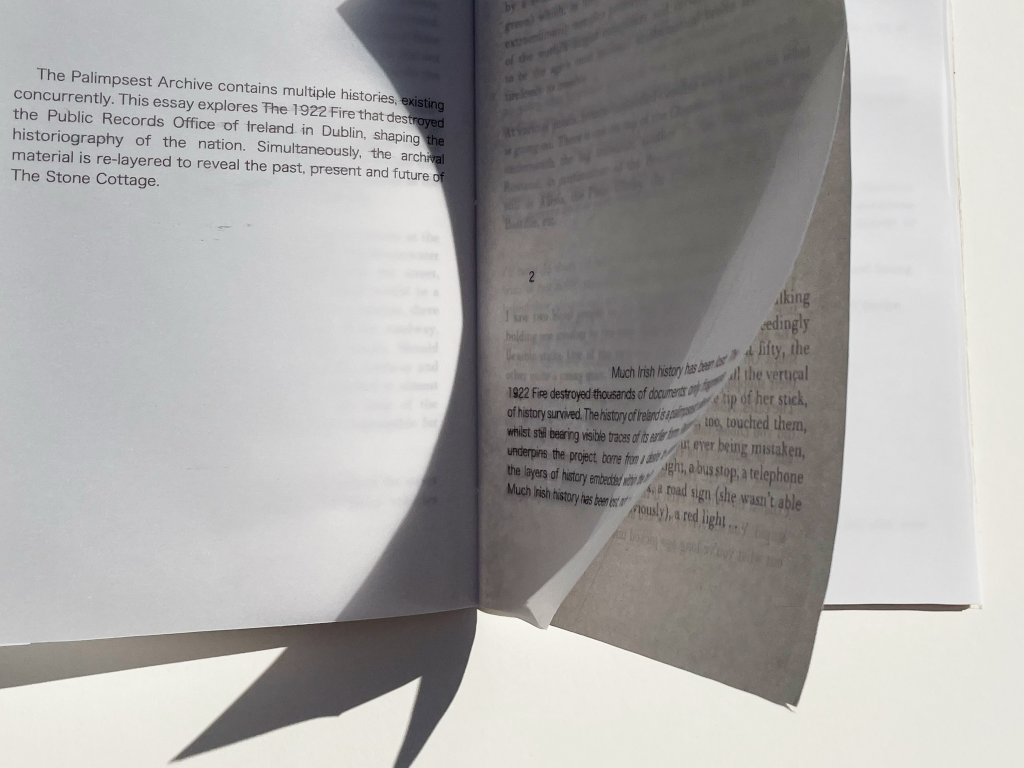
Much Irish history has been lost. The 1922 Fire destroyed thousands of documents; only fragments of history survived. The history of Ireland is a palimpsest: altered, whilst still bearing visible traces of its earlier form. Palimpsest underpins the project, borne from a desire to understand the layers of history embedded within the built environment. Much Irish history has been lost, not erased…
I am merely the collector, the archivist, An Chartlannaí.
You are the curator, the interpreter, An Ateangaire.
An Ateangaire,
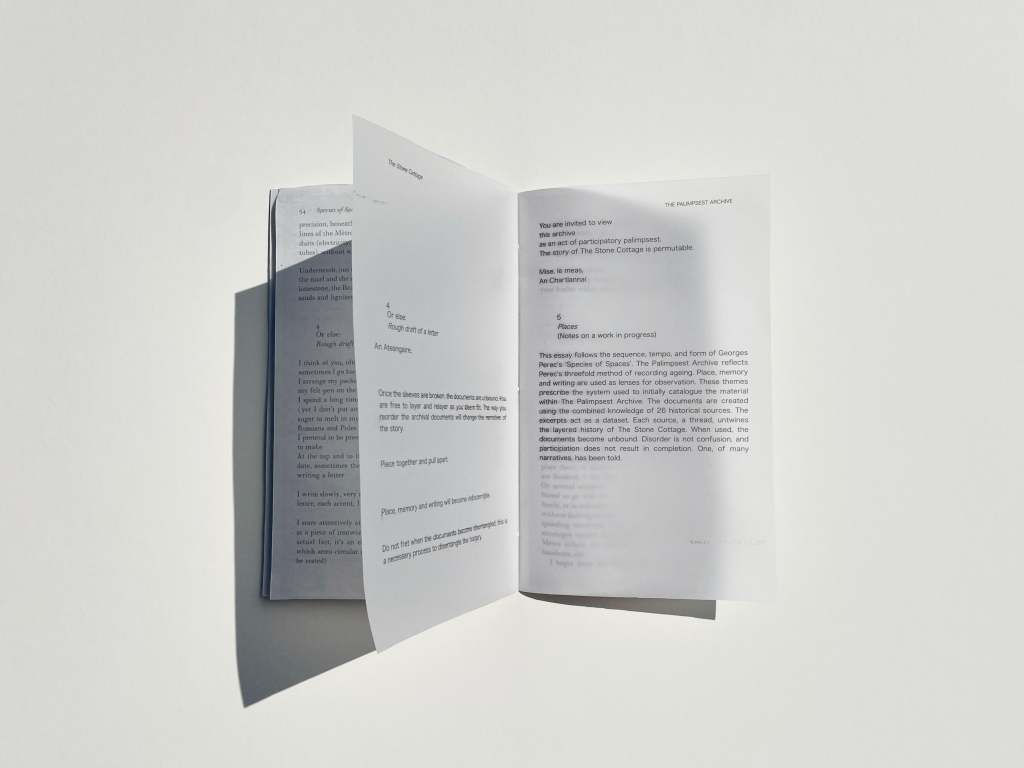
Once the sleeves are broken, the documents are unbound. You are free to layer and relayer as you deem fit. The way you reorder the archival documents will change the narrative of the story.
Piece together and pull apart.
Place, memory and writing will become indiscernible.
Do not fret when the documents become disentangled; this is a necessary process to disentangle the history.
You are invited to view this archive as an act of participatory palimpsest. The story of The Stone Cottage is permutable.
Mise, le meas,
An Chartlannaí
This essay follows the sequence, tempo, and form of Georges Perec’s ‘Species of Spaces’. The Palimpsest Archive reflects Perec’s threefold method of recording ageing. Place, memory and writing are used as lenses for observation. These themes prescribe the system used to initially catalogue the material within The Palimpsest Archive. The documents are created using the combined knowledge of 26 historical sources. The excerpts act as a dataset. Each source, a thread, untwines the layered history of The Stone Cottage. When used, the documents become unbound. Disorder is not confusion, and participation does not result in completion. One, of many narratives, has been told.
What I hope for from it, in effect, is nothing other than the record of a threefold experience of ageing: of the places themselves, of memories, and of writing.
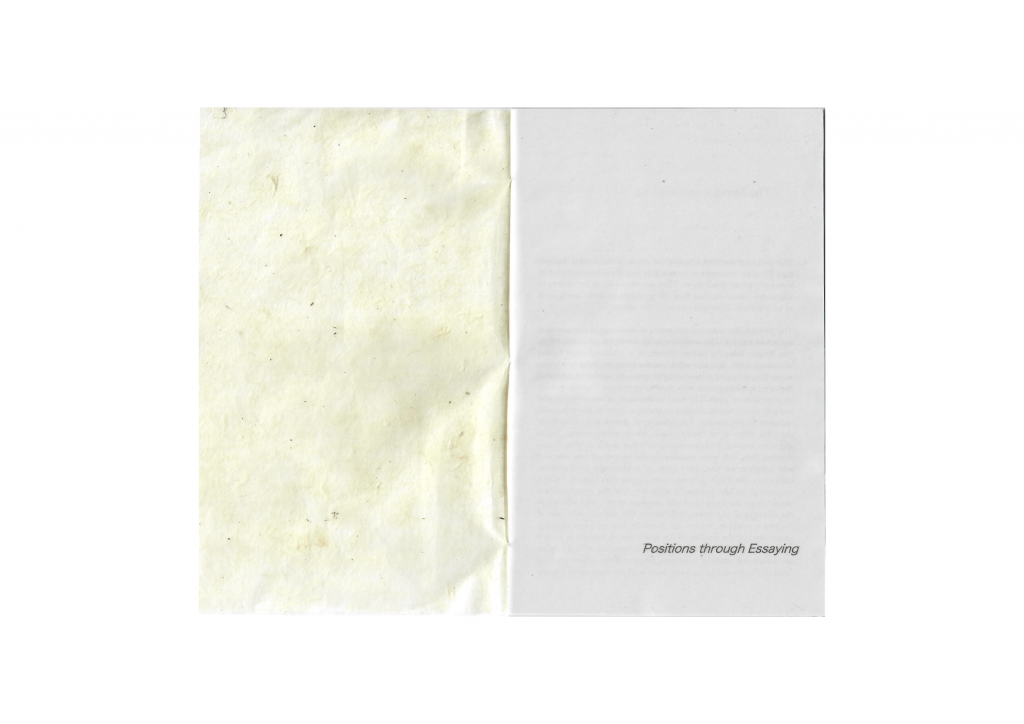
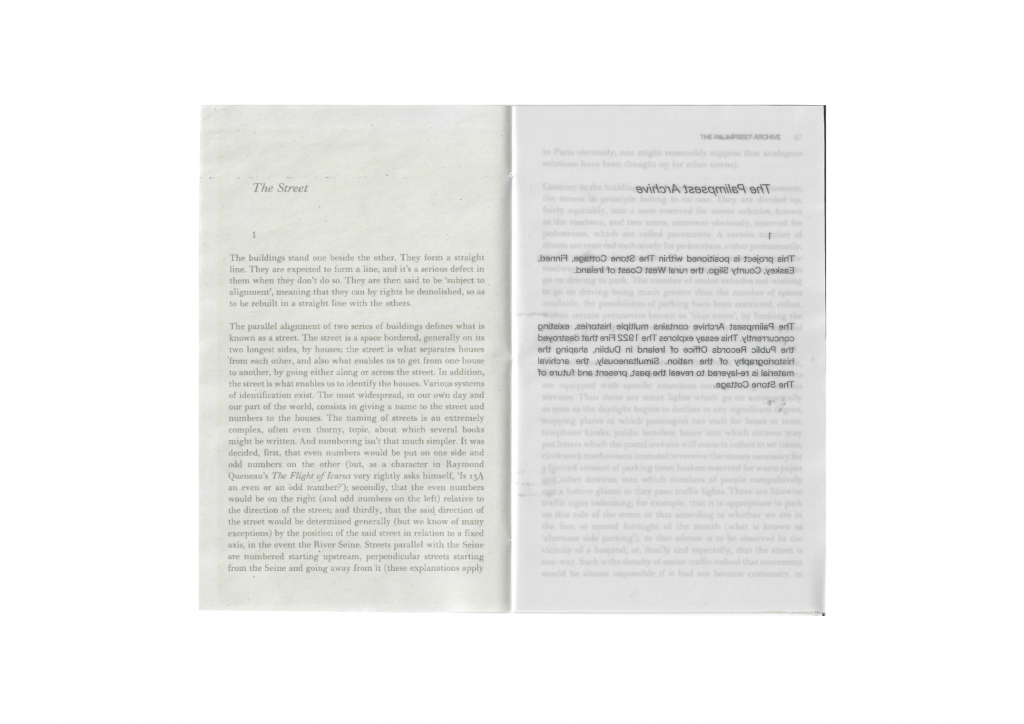
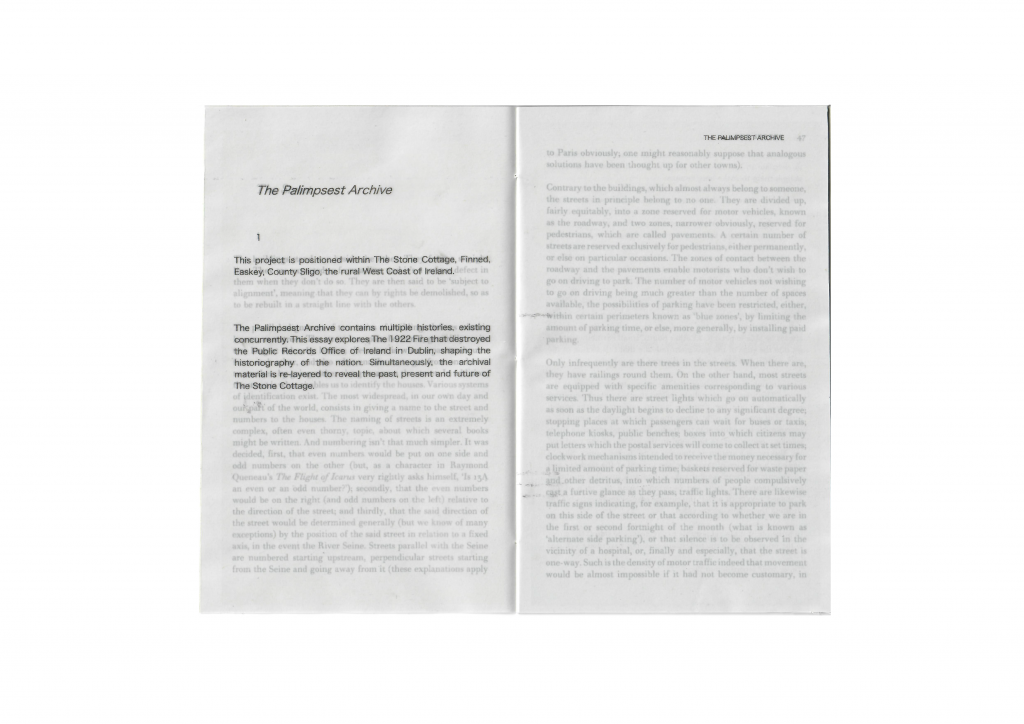
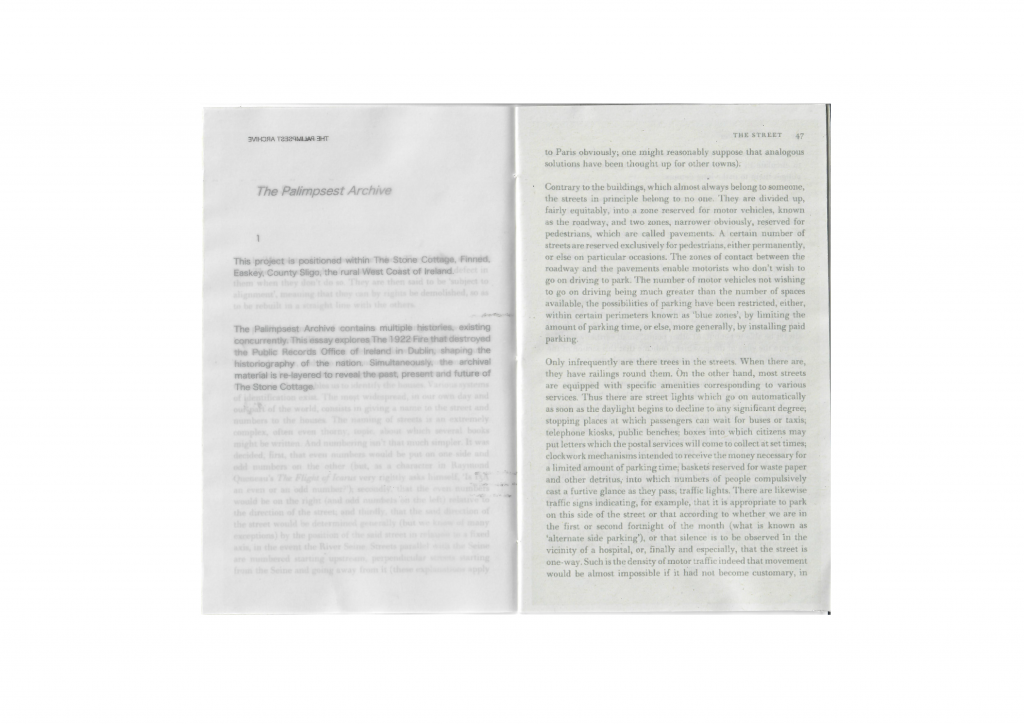
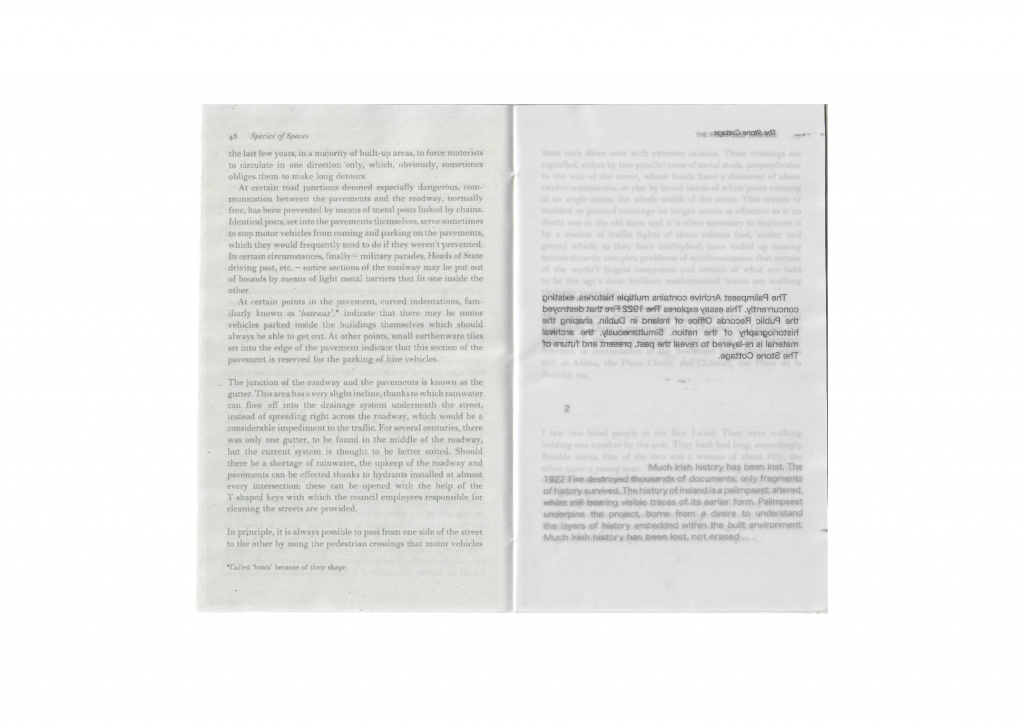
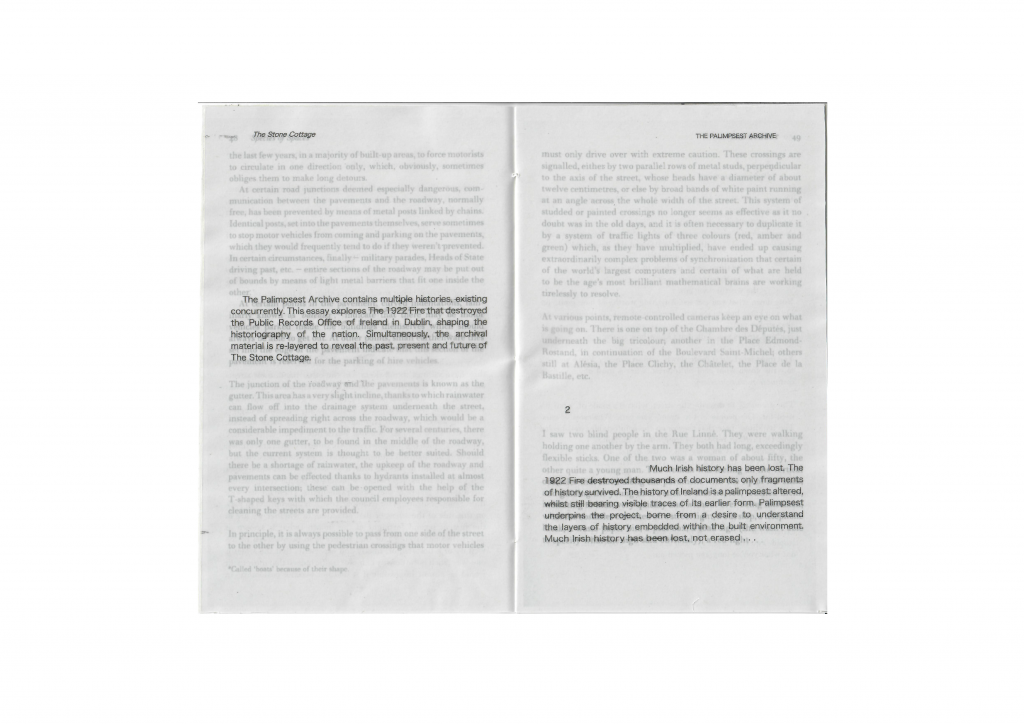
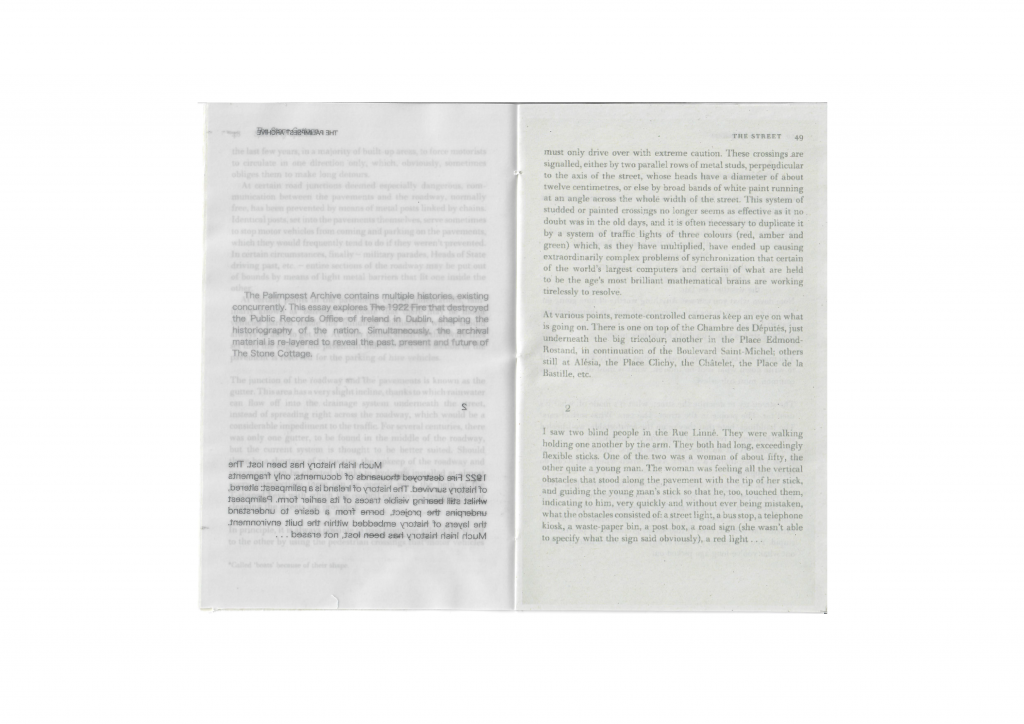
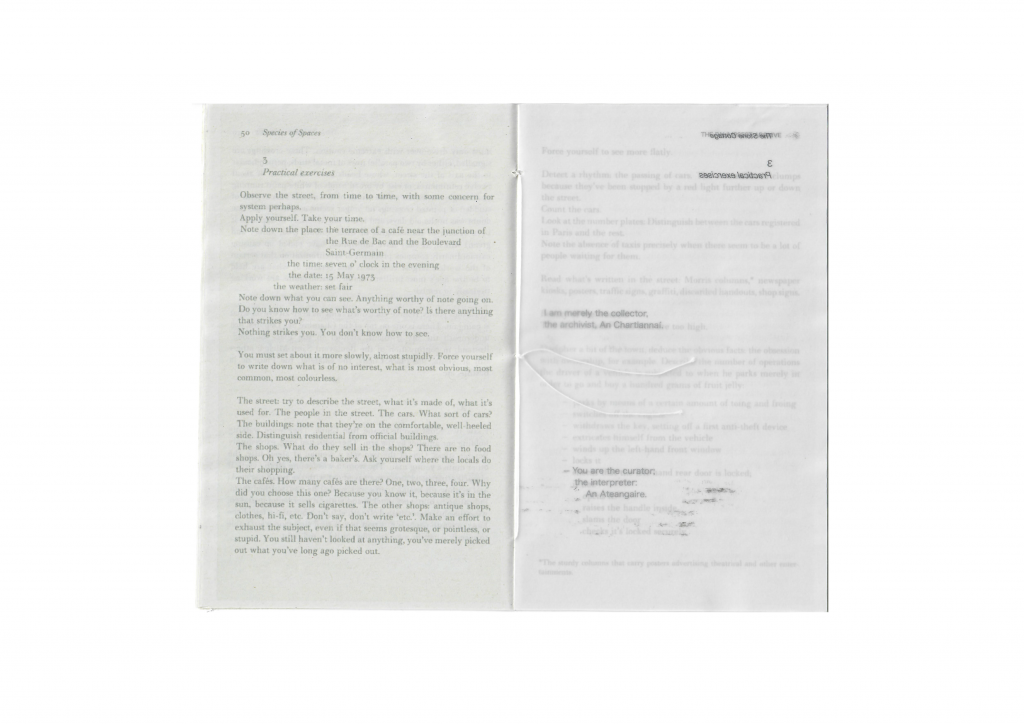
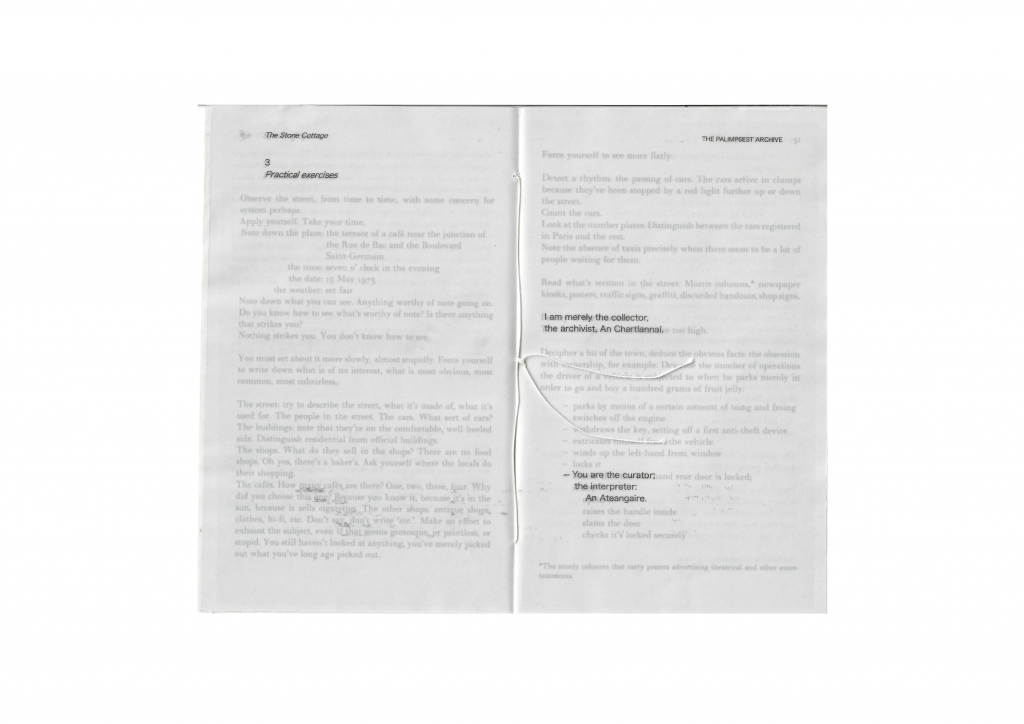
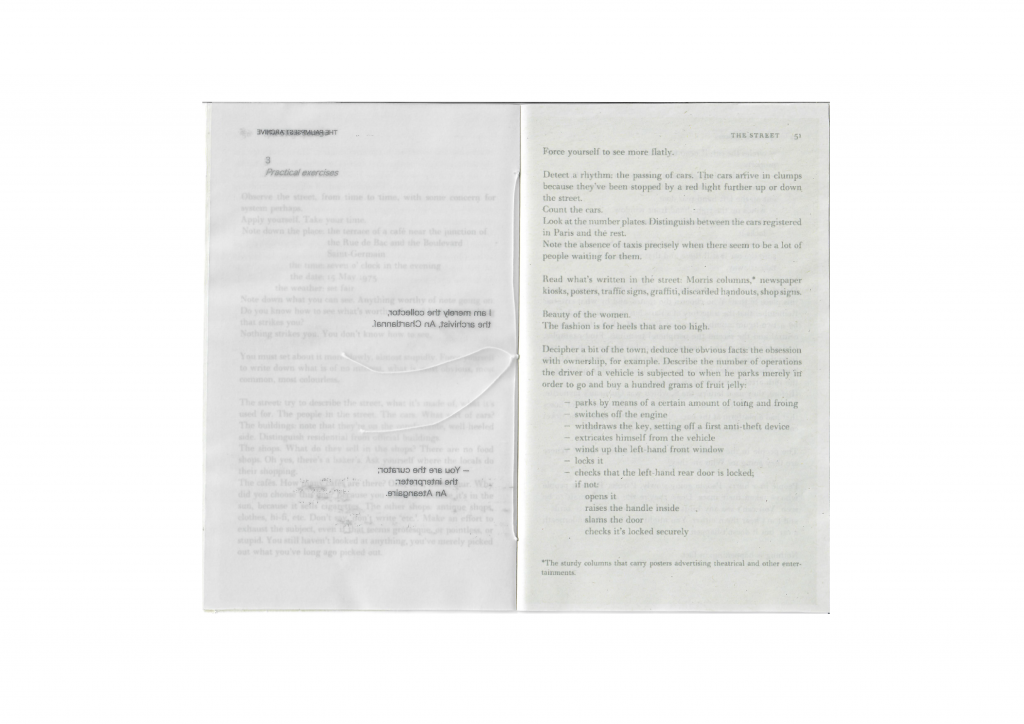
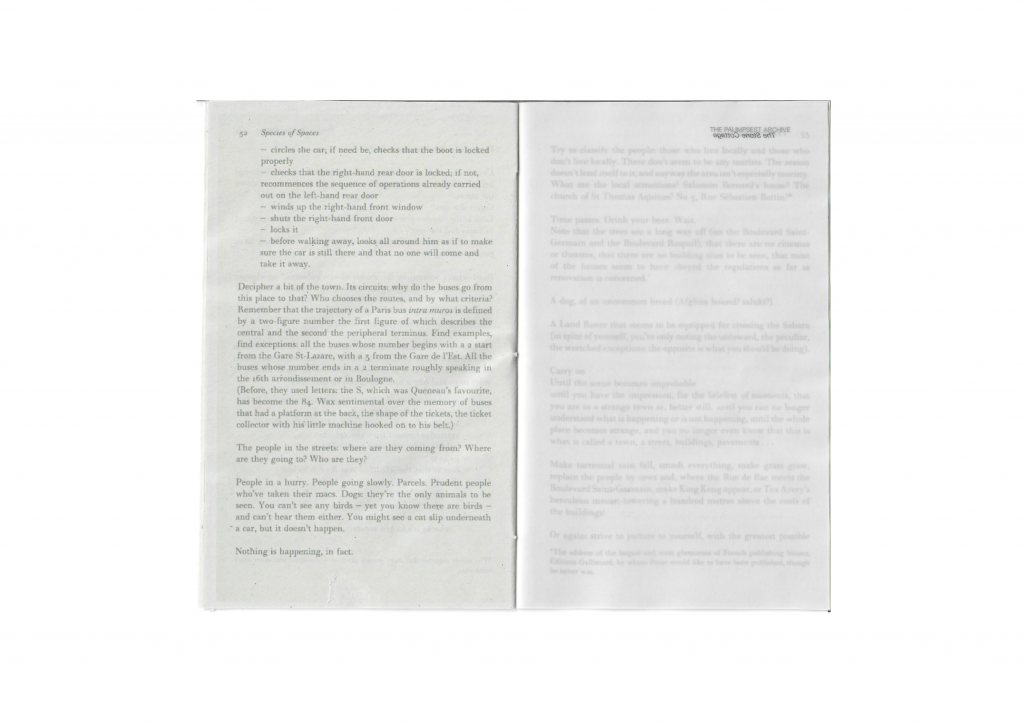
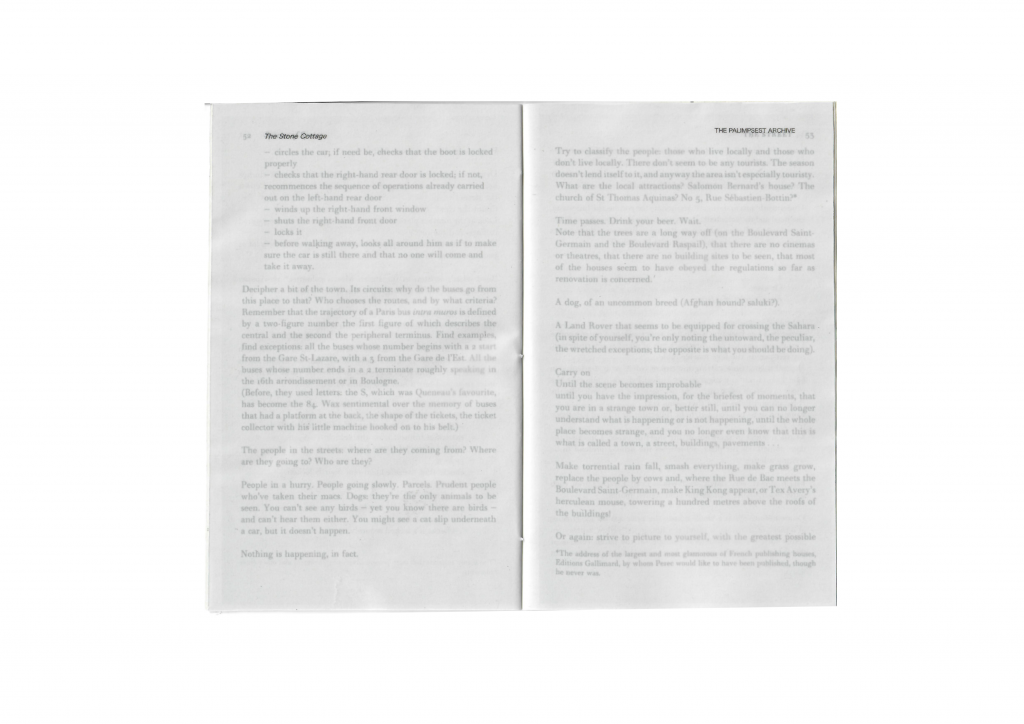
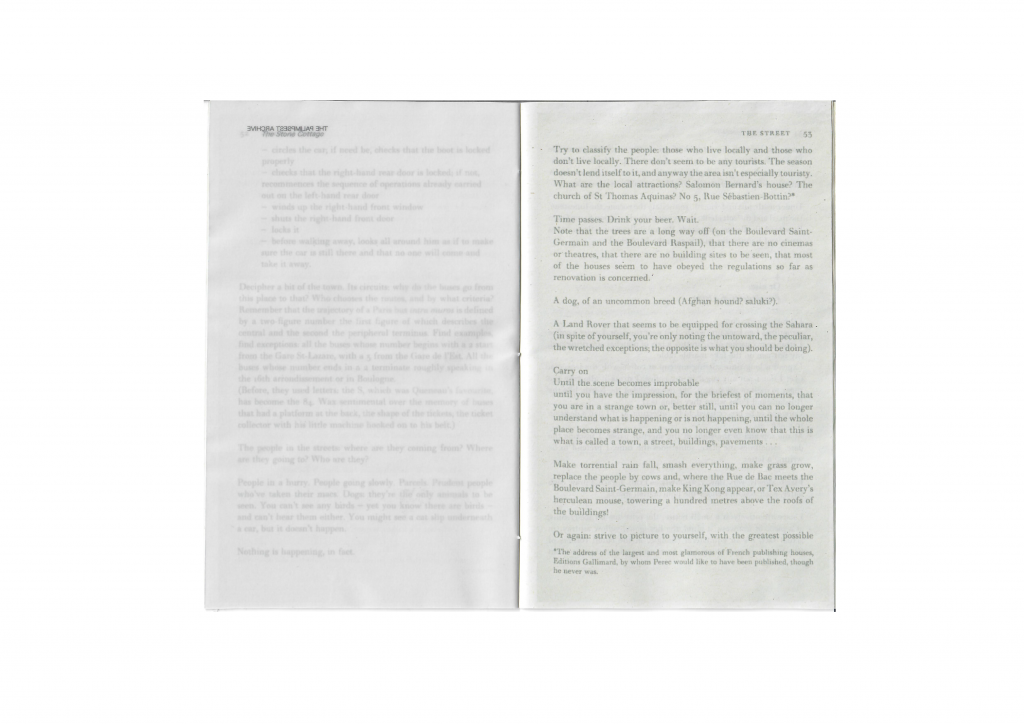
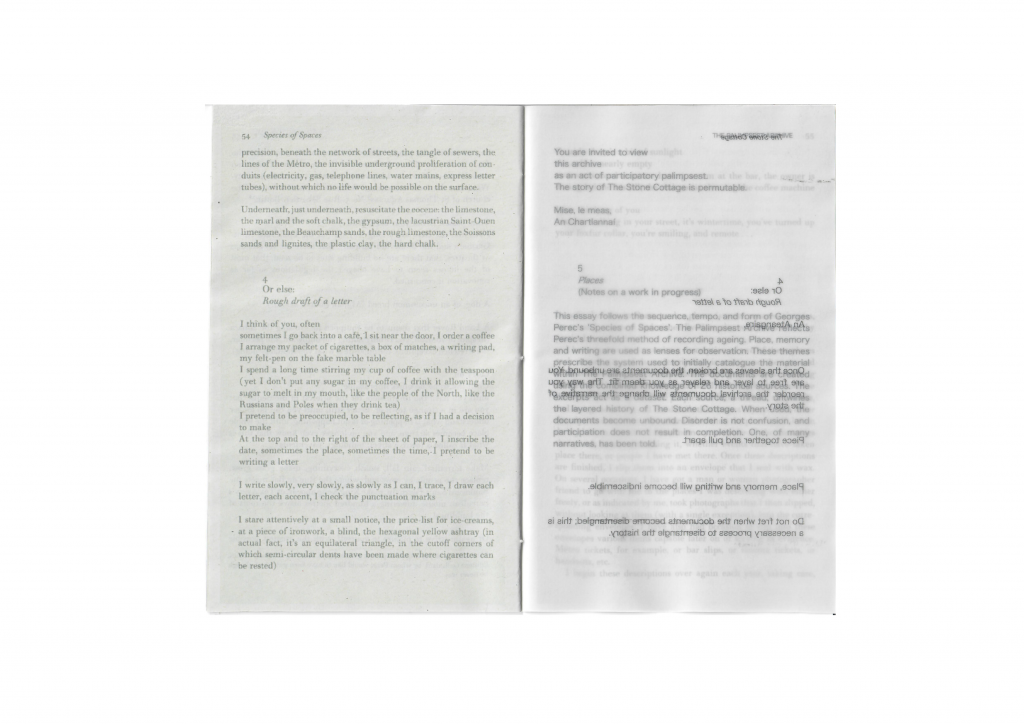
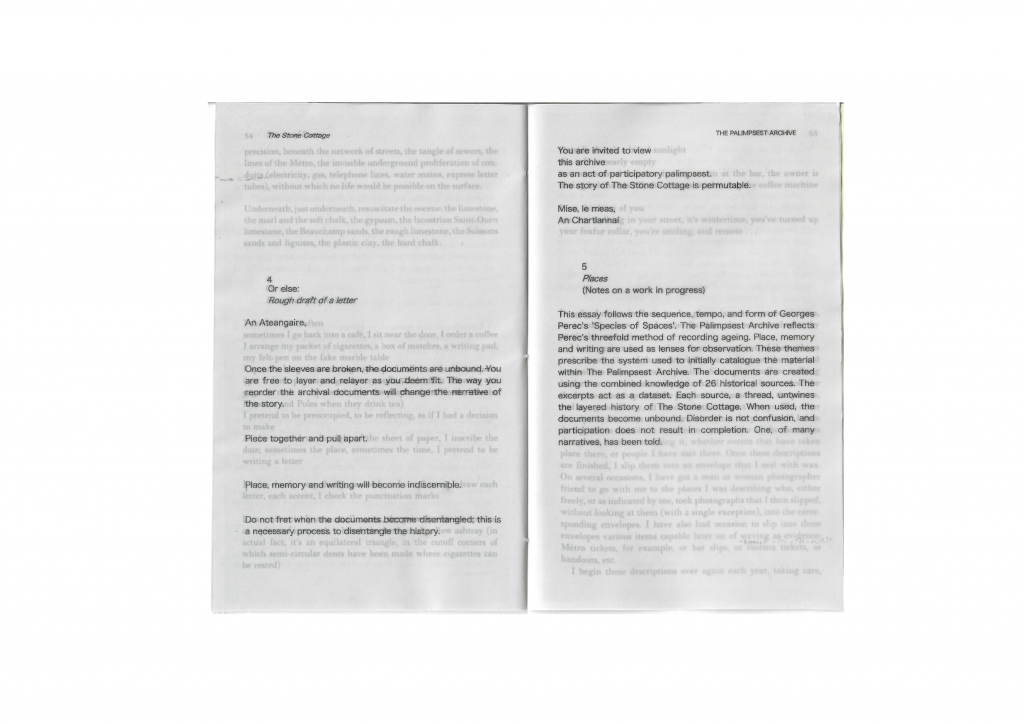
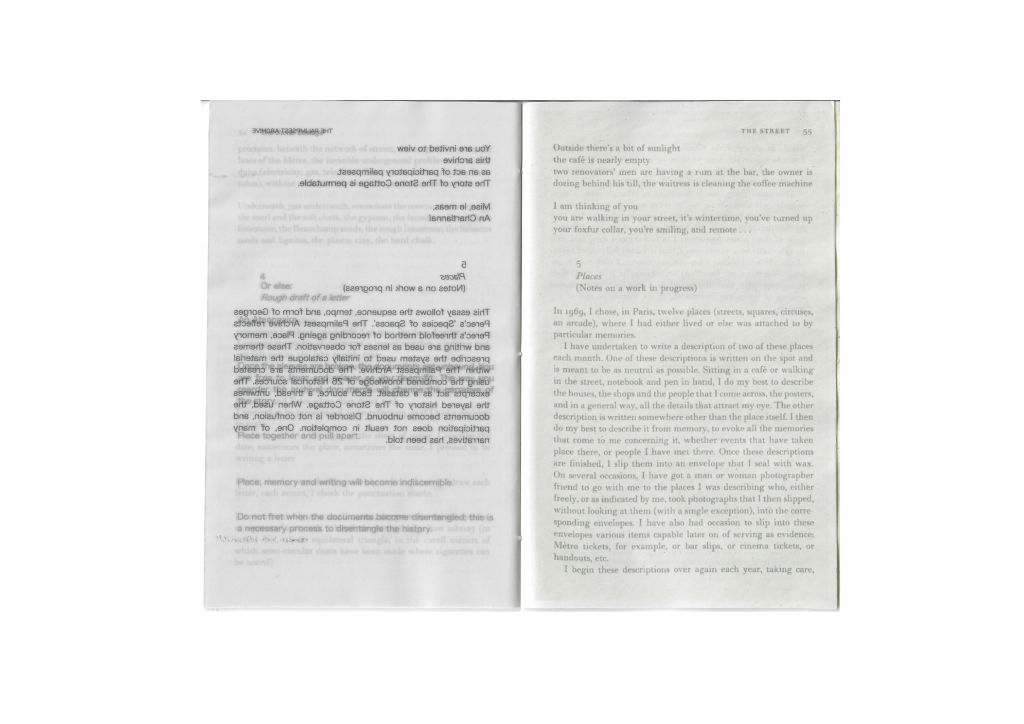
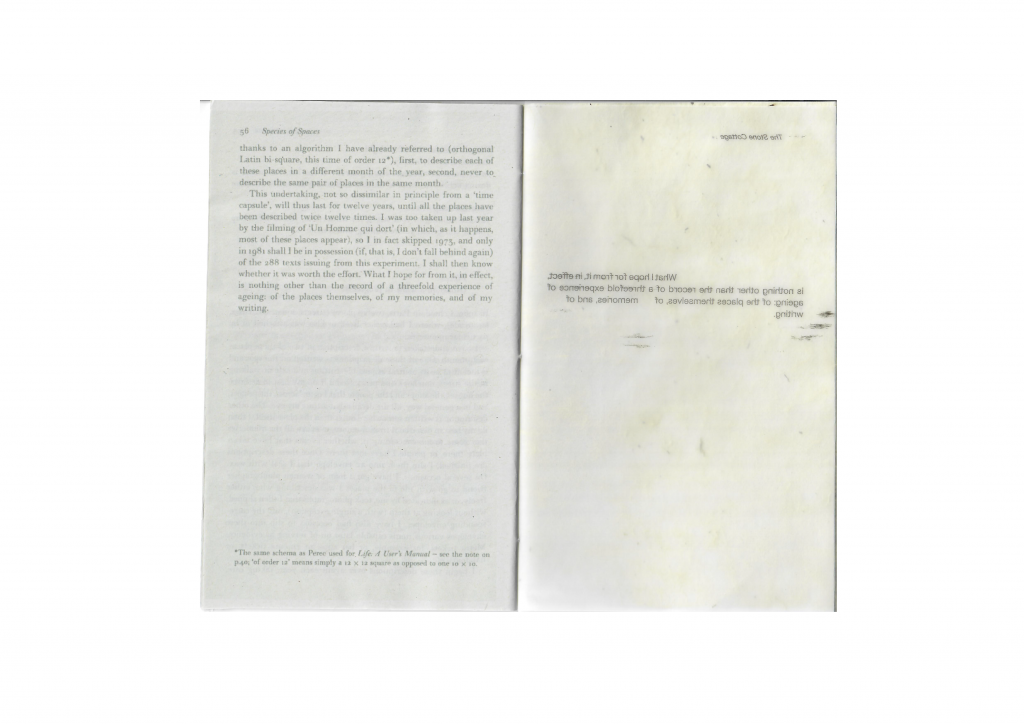
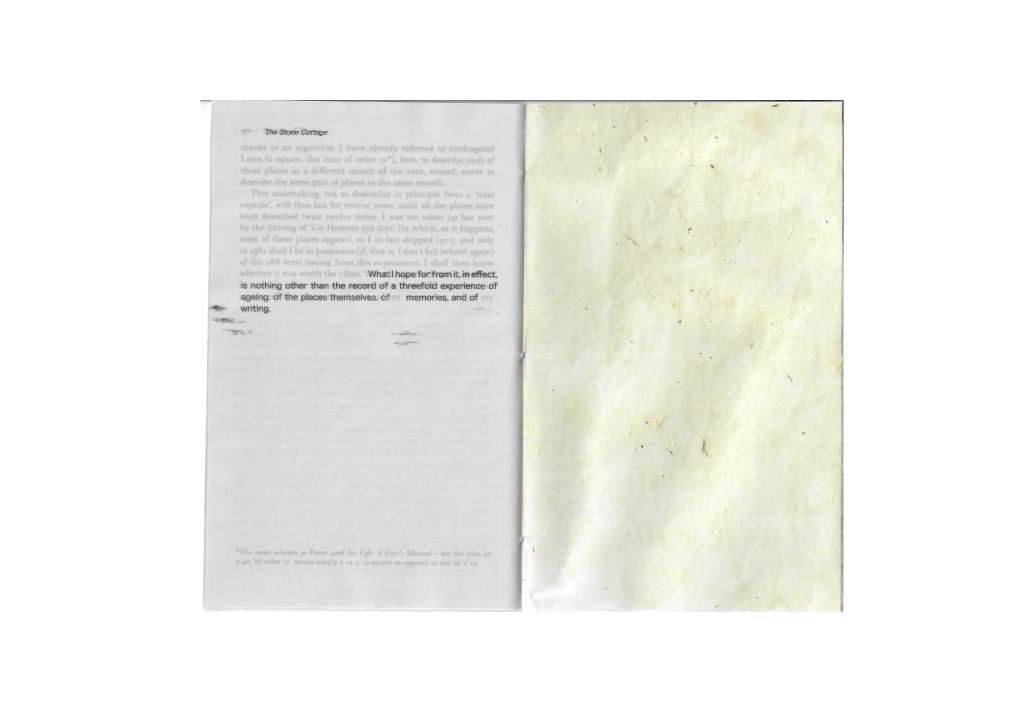
The Positions through Essaying video reflects the sequence, tempo and form of Georges Perec’s (1999) ‘Species of Spaces’. The chapter titled ‘The Street’ was responded to during Positions through Contextualising (Perec, 1999). The excerpt is divided into five distinct subchapters.
The first and second subchapters follow a traditional prose structure, characterised by justified text, long sentences and descriptive language. This is replicated in my video essay, as I introduce The Stone Cottage, the dual narratives shown in the film, and The 1922 Fire that provides the rationale for the project.
The third and fourth segments within ‘The Street’ have a faster, more staccato pace. Perec (1999) describes Practical exercises used to decipher the city. The dynamic writing style reflects the content in these extracts. This change of tempo is mirrored in the narration and visual of the video essay. My own position as The Archivist is stated, followed by instructions of how to use the archive. The layering of the Irish voices implicitly convey with works position within the wider political and historical context of the West Coast of Ireland. The visual also becomes layered. The archive is in use and the documents are becoming disentangled.
Perec’s (1999) fifth, and final, subchapter returns to the prose structure, and the pace slows once again. This deceleration mimics the end of the participatory archival process, where one narrative has been distilled from the layered historical documents.
The rendered written response amplifies the themes explored in the video essay through a text-based investigation. The transcript of the video essay is overlayed with Georges Perec’s (1999) passage in ‘Species of Spaces’. The parallels between the reference and the video essay become explicit. Pace, tone, structure, punctuation and format are commonality.
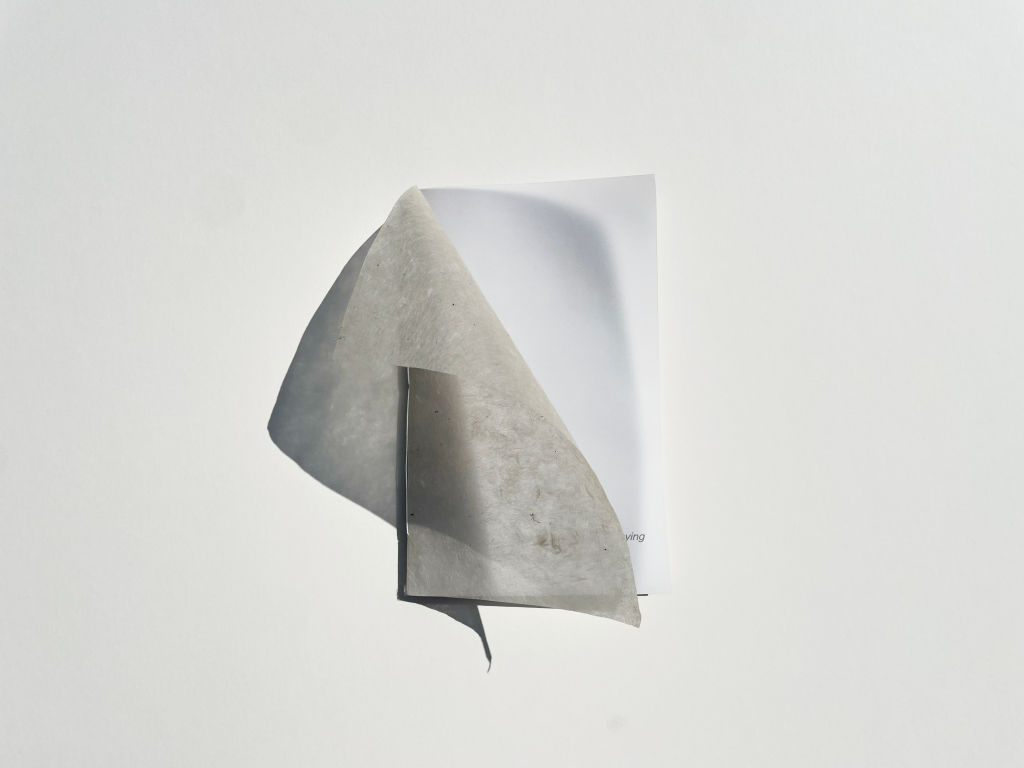
The materiality of The Palimpsest Archive is emulated within the rendered written response. The translucent and opaque paper textures allow Perec’s writing and my own transcript to be read simultaneously. This format communicates key themes explored within the essay: The Palimpsest Archive contains multiple histories, existing concurrently. Similarly, two distinct narratives are examined within the video essay: The 1922 Fire that destroyed the Public Records Office of Ireland, and, the past, present and future of The Stone Cottage. The composition of the publication follows a palimpsestic form. The Perec (1999) text has been altered to reflect my own studio exploration, whilst still bearing visible traces of its earlier form.
Reference List:
Perec, G. (1999) ‘Species of Spaces’, in Species of Spaces and Other Pieces. London: Penguin, pp. 46–56.
Leave a Reply