Drawing inspiration from first iteration of the archival kit, I developed the design to refine the contents of the kit, whilst further exploring the purpose of the work.
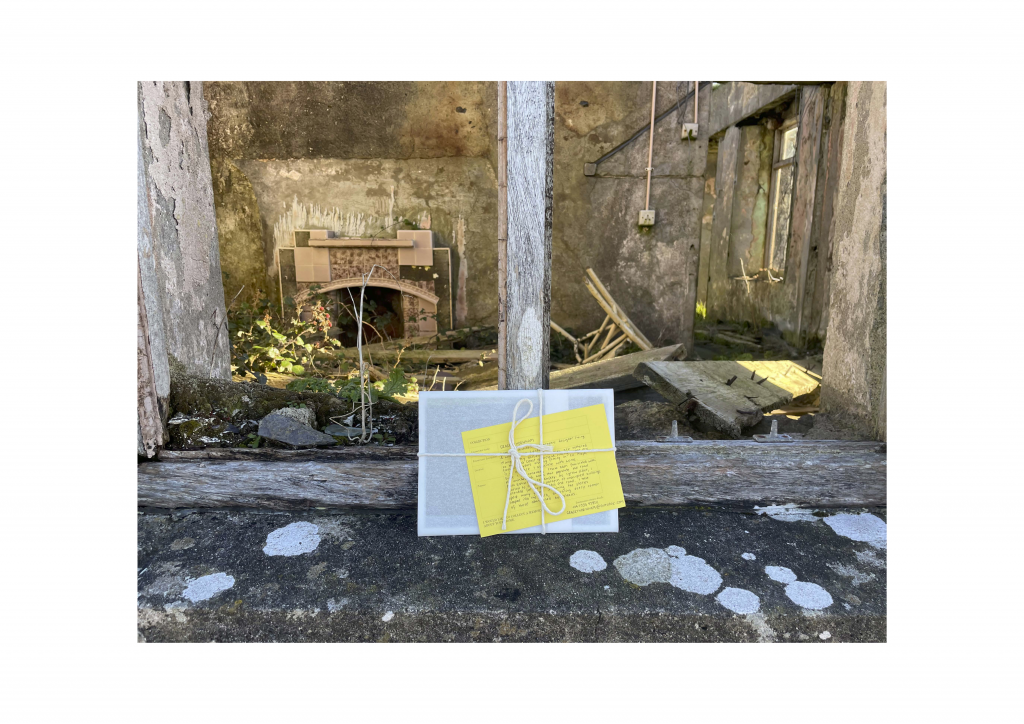
The preamble to the archival kit introduced participants to the motivations behind my research and contextualised the work through my own relationship with the West Coast of Ireland:
‘Many of my earliest memories are tethered to the West Coast of Ireland. Having spent my formative years visiting family in County Mayo, it is a place I associate with home.
Since I can remember, I have been fascinated with the uninhabited homes that populate the road from Enniscrone to Easkey. As I grew older, I started to notice the pattern of unoccupied buildings extended beyond this one road. The landscape of the West Coast is inundated with these stone cottages. I have spent many years imagining the stories seeped into the walls, saturating every corner of these abandoned homesteads.
I would like to collect a memory about your home.’
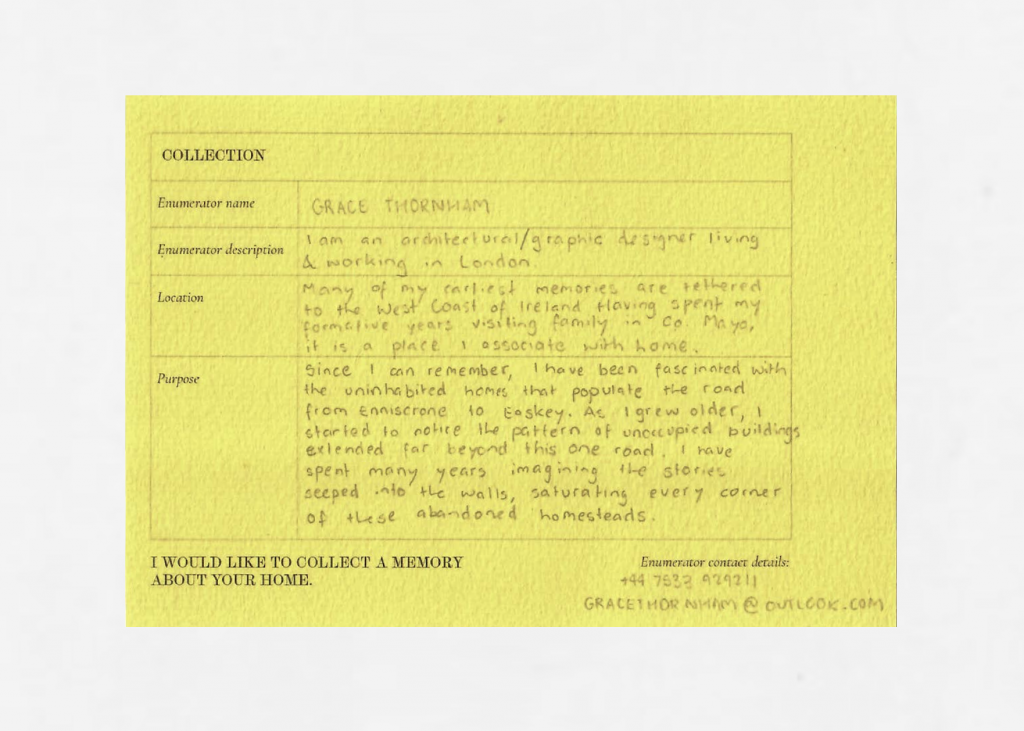
As the archival kit was intended to be workshopped with members of the community, my position shifted from archivist to enumerator. The kit comprised two distinct sections, separated by sleeves. The first contained documents for participants to keep, while the second contained documents to be returned to the enumerator.
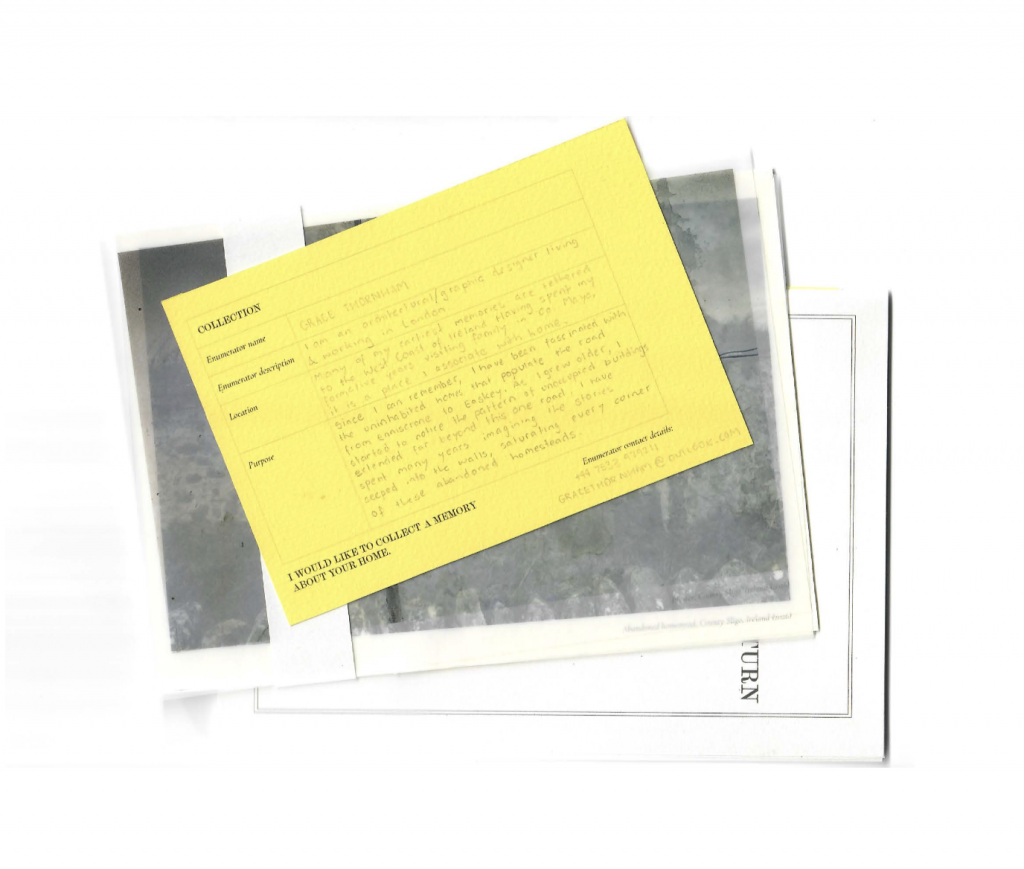
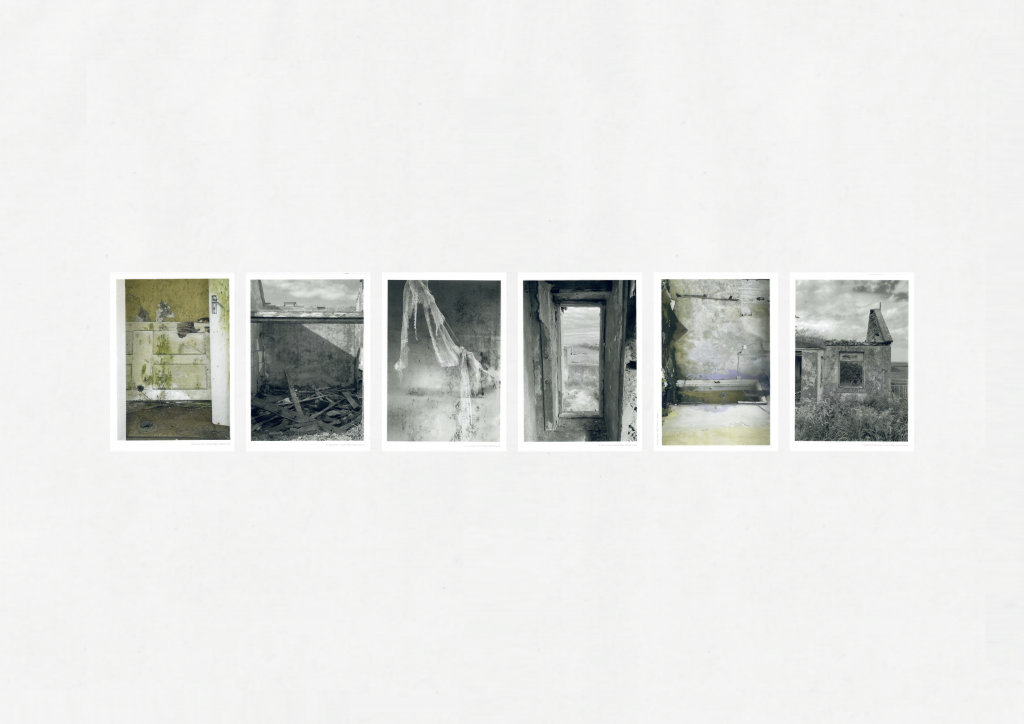
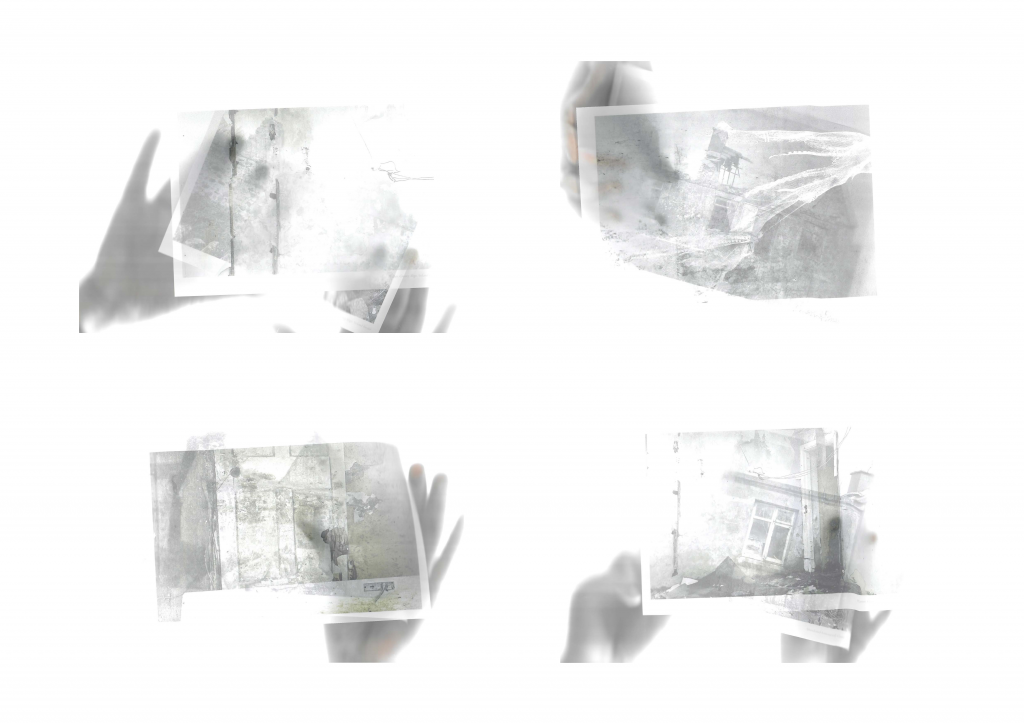
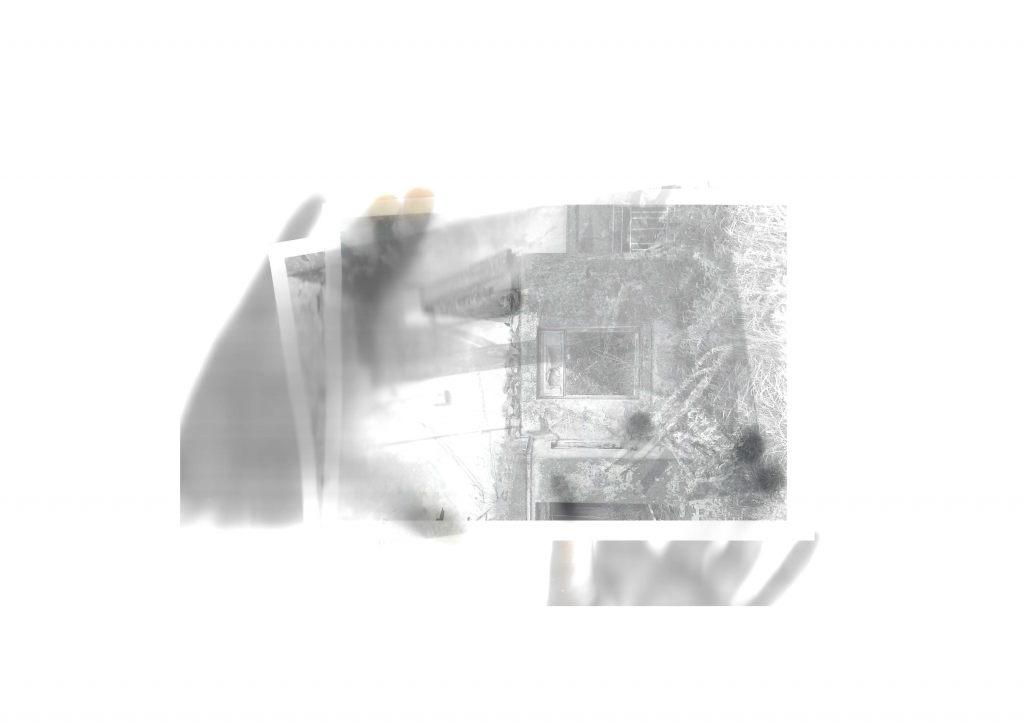
The first sleeve contained two photographs of abandoned homesteads, printed onto polyester film. Each kit contained a different selection of photographs taken in or around Easkey, County Sligo. The visual quality of the printing enabled the images to be overlaid, with the bottom image only becoming visible when held up to the light. The physical form of these photographs reflected the layers of history embedded within the ruinous architecture of the unoccupied buildings.
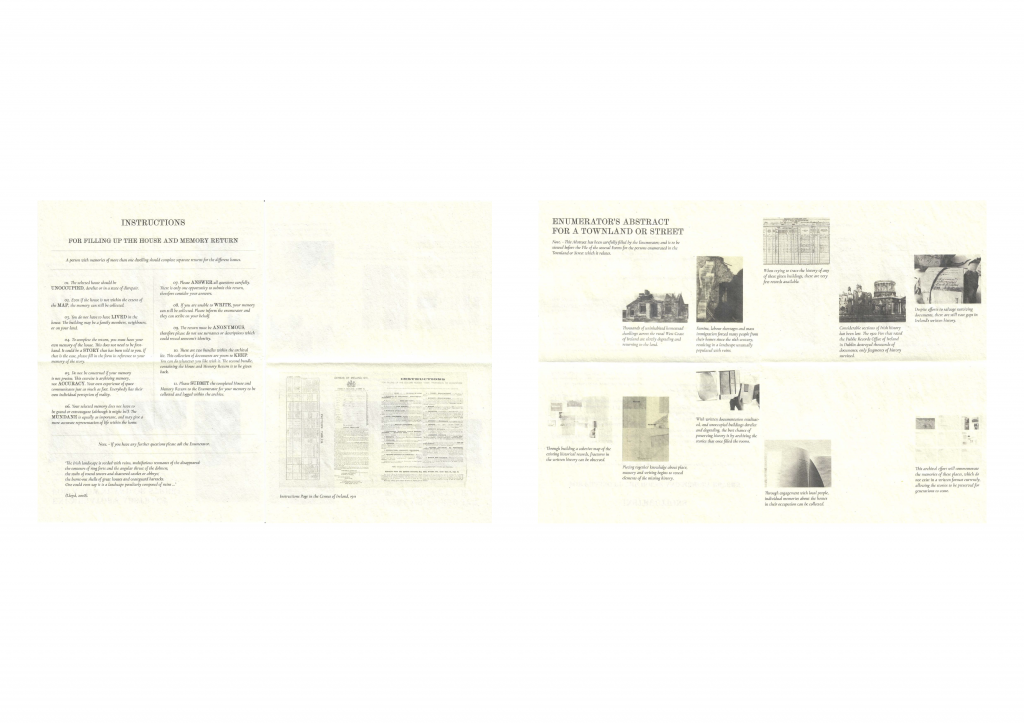
The second document within the first sleeve provided instructions on how participants should navigate the archival kit. Taken from the 1911 Census Form A (Page 2) (The National Archives of Ireland, 1911), this record opens with the following snippet of text: ‘Note. – This Abstract has been carefully filled by the Enumerator, and is to be viewed before the File of the several Forms for the persons enumerated in the Townland or Street which it relates’.
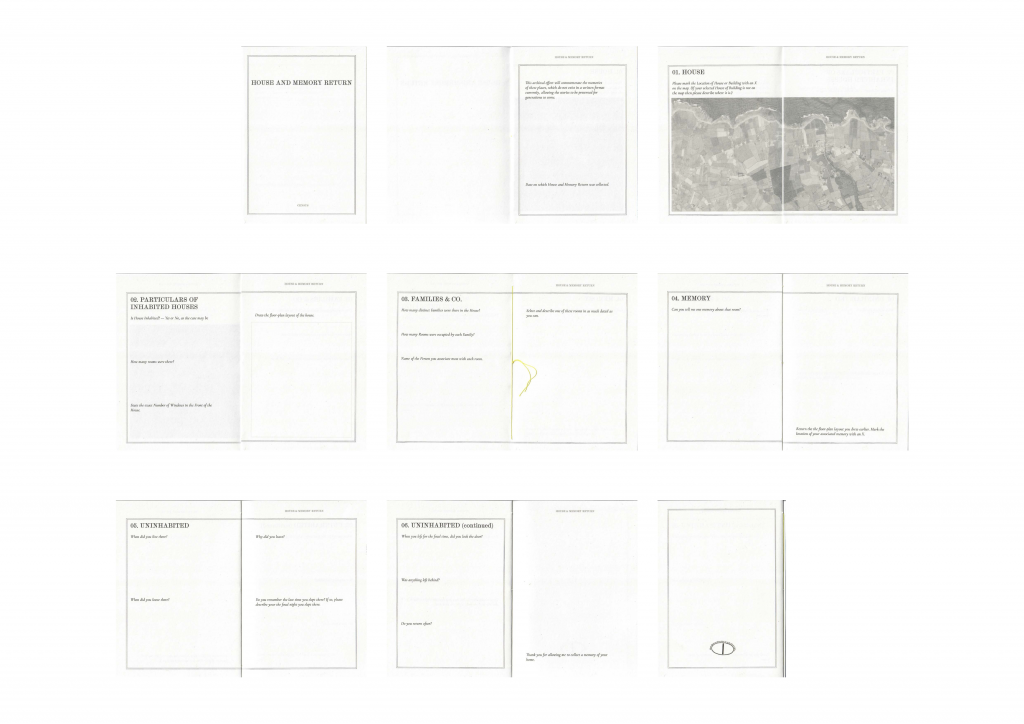
The second sleeve established a framework through which I could explore my new role as enumerator. House and Memory Return, which borrowed visual and rhetorical language from the 1911 Census House and Building Return (The National Archives of Ireland, 1911), provided the infrastructure to evoke and document memories of a selected abandoned building through a series of guided questions and prompts.
Reference List:
The National Archives of Ireland (1911) ‘Census of Ireland 1911’.[Form A (Page 2) for Finned, Easky West, Sligo]. Available at: https://nationalarchives.ie/collections/search-the-census/view-pdf/?doc=nai003253579 (Accessed: 10 October 2026).
The National Archives of Ireland (1911) ‘Census of Ireland 1911’.[House and Building Return (Form B1) for John Kenny, Finned, Easky West, Sligo]. Available at: https://nationalarchives.ie/collections/search-the-census/view-pdf/?doc=nai003270942 (Accessed: 10 October 2026).
Leave a Reply