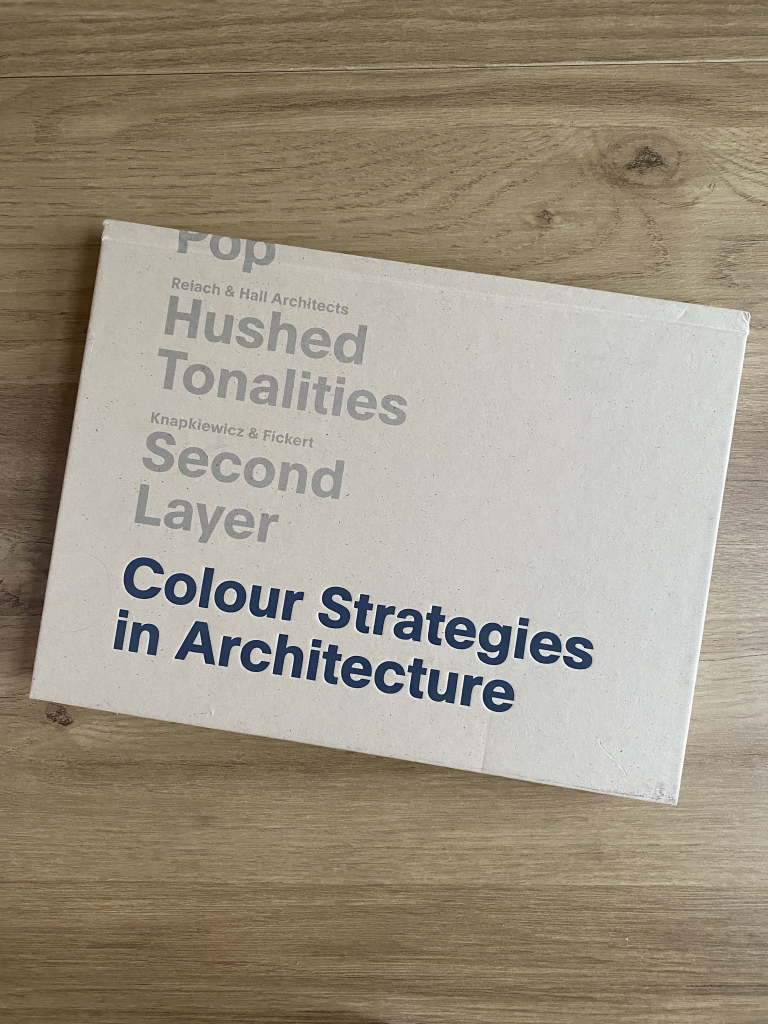
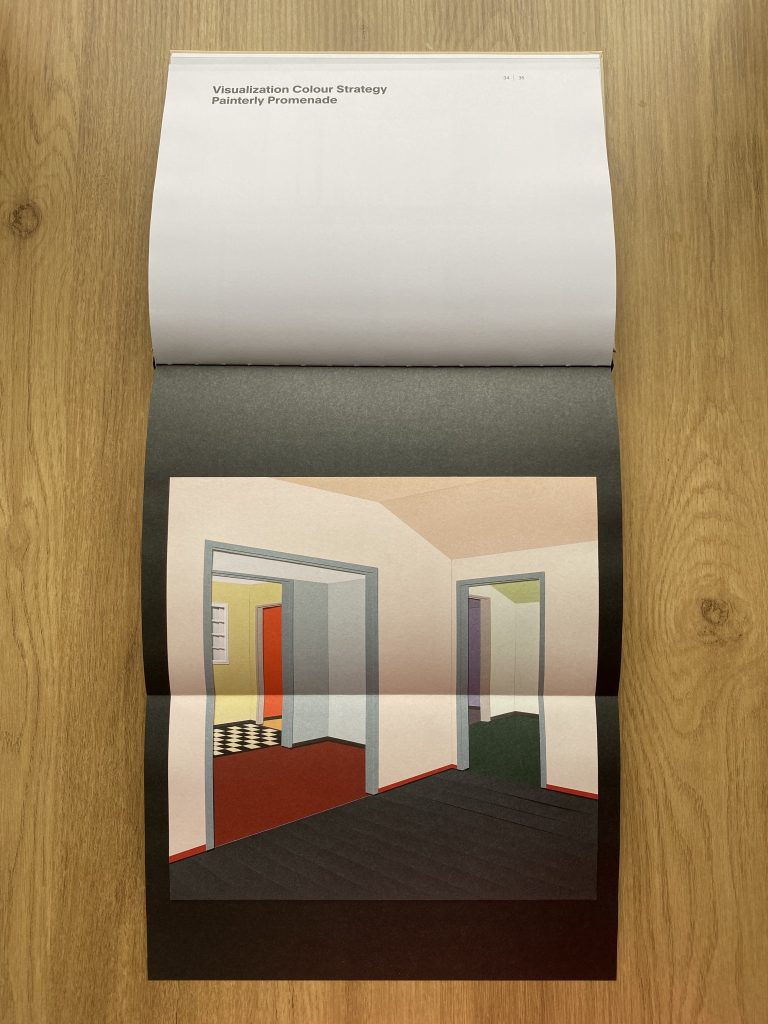
‘Colour Strategies in Architecture’ was instrumental in my process of observation throughout week one (McLachlan et al., 2015). The methodology of documenting buildings within ‘Colour Strategies in Architecture’ utilises a system of collecting accurate colour palettes, mixed and matched on site, and the re-representation of these hues within an established framework of graphical mapping (McLachlan et al., 2015). This allows the use of colour in architecture to be captured, obtained through a critical investigation of perception and observation.
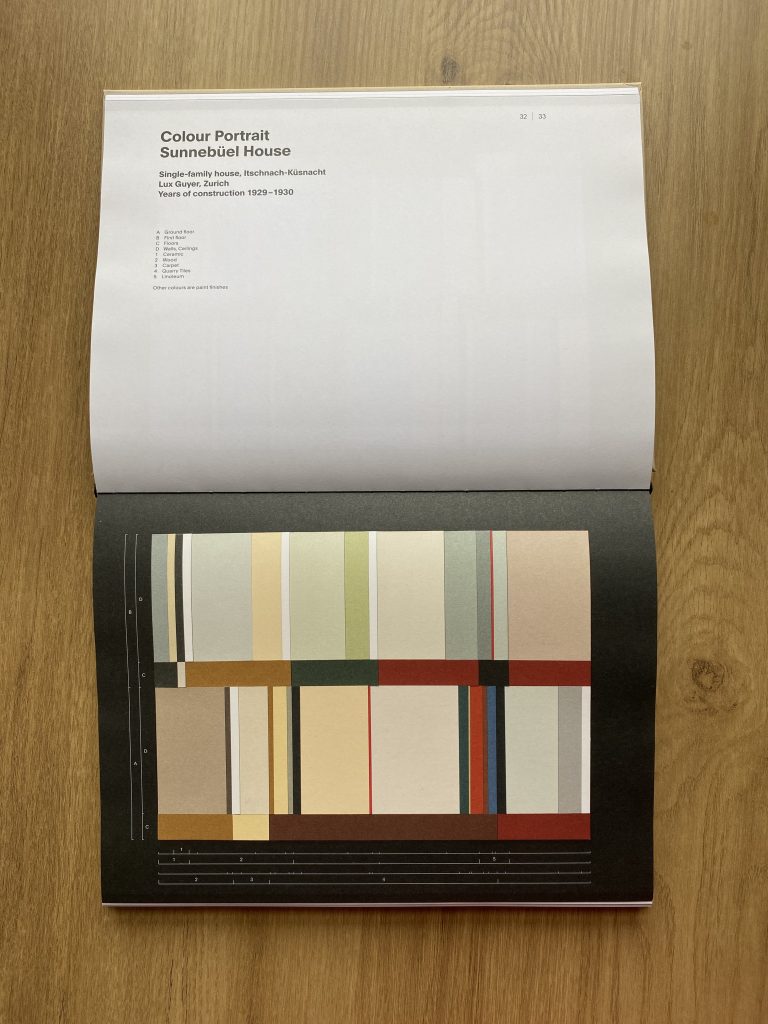
(Above) Fig. 2. Colour palette of Sunnebüel House (McLachlan et al., 2015).
(Right) Fig. 3. Graphical visualisation of Sunnebüel House utilising colour palette (McLachlan et al., 2015).
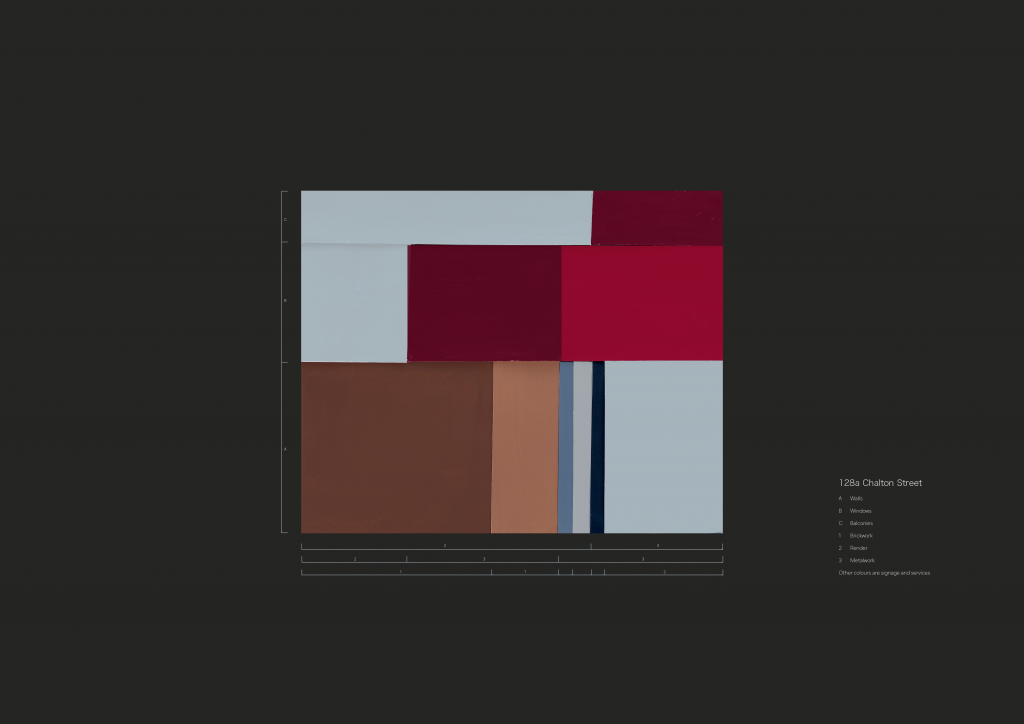
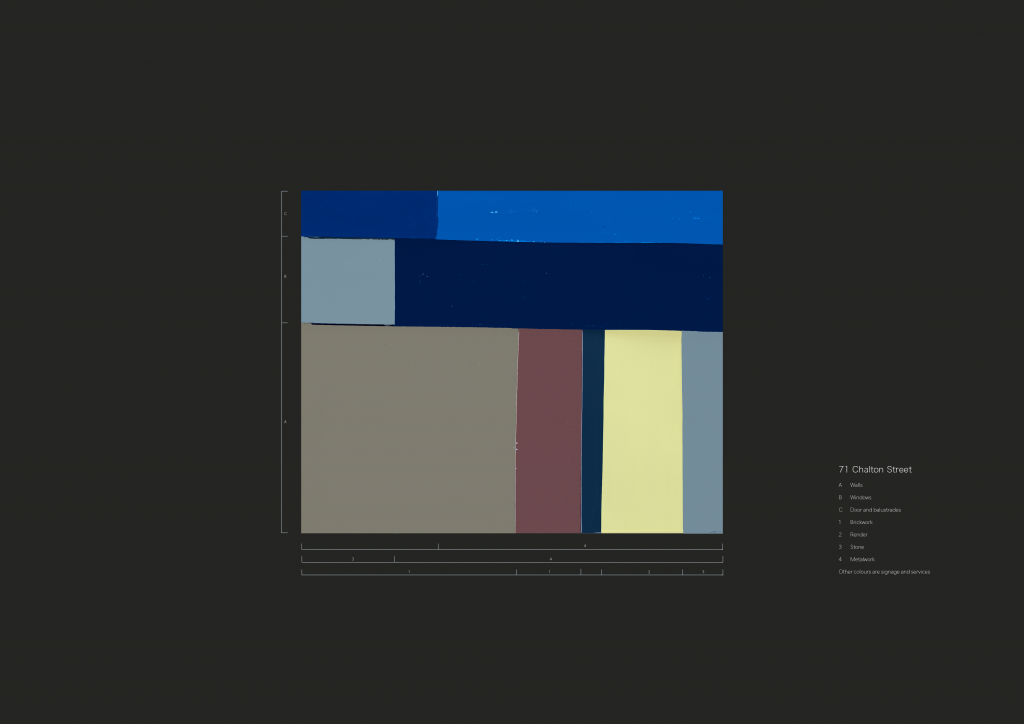
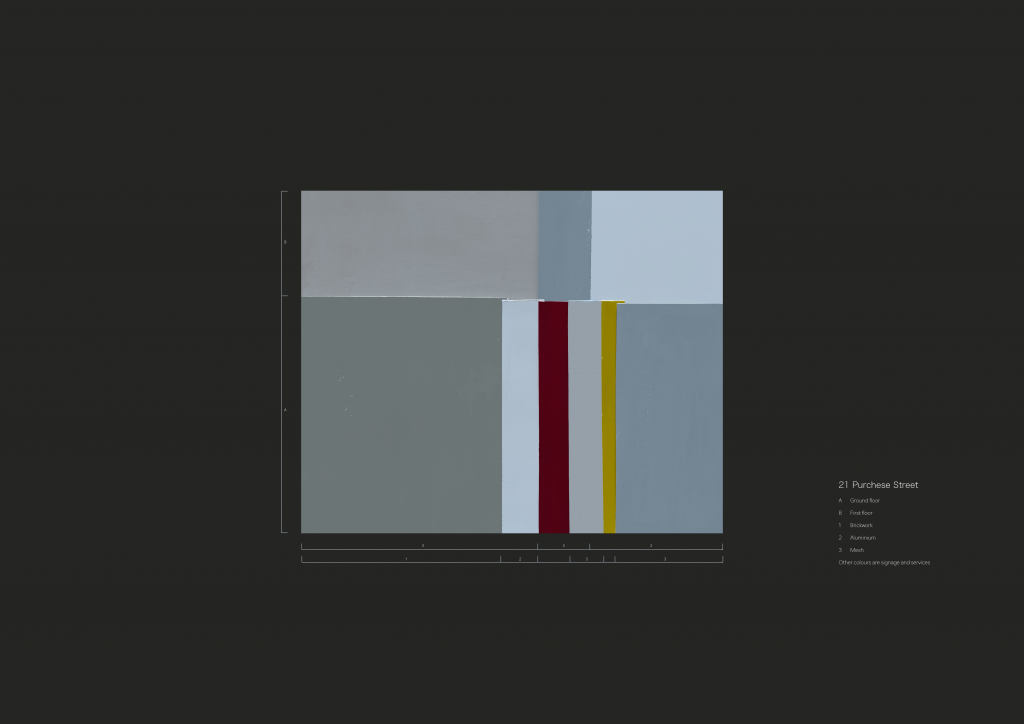
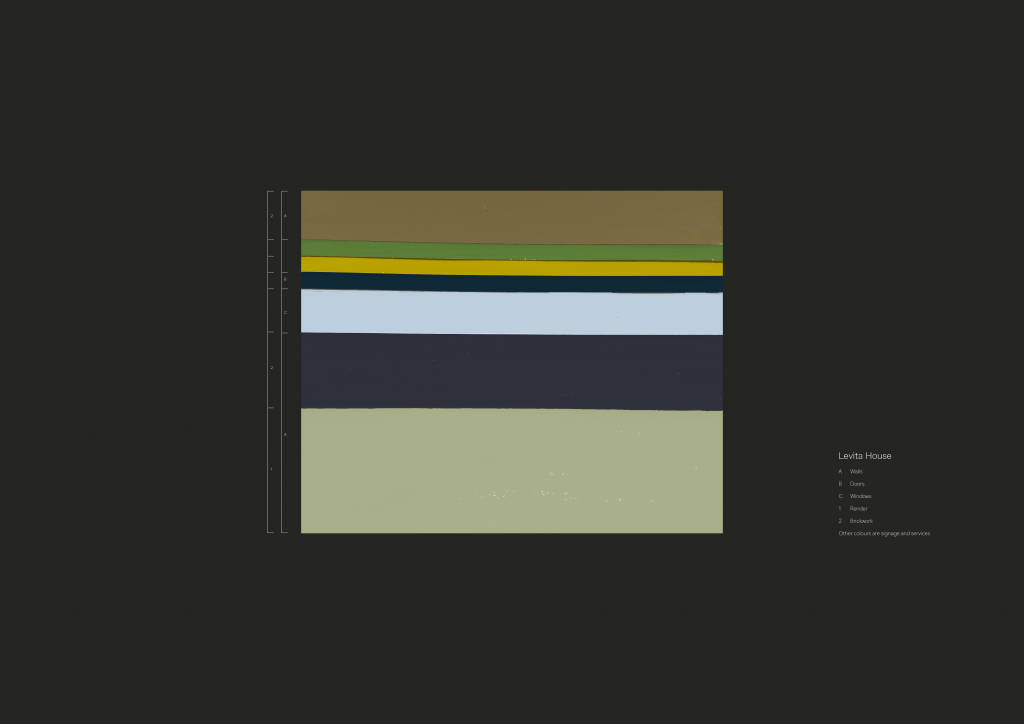
Following the methodology proposed in ‘Colour Strategies in Architecture’, I collected colour samples of four buildings’ facades within Somers Town (McLachlan et al., 2015). I mapped out the ratios of the colours used across the facades, prior to creating the graphical representation of the palette following a graph-like system.
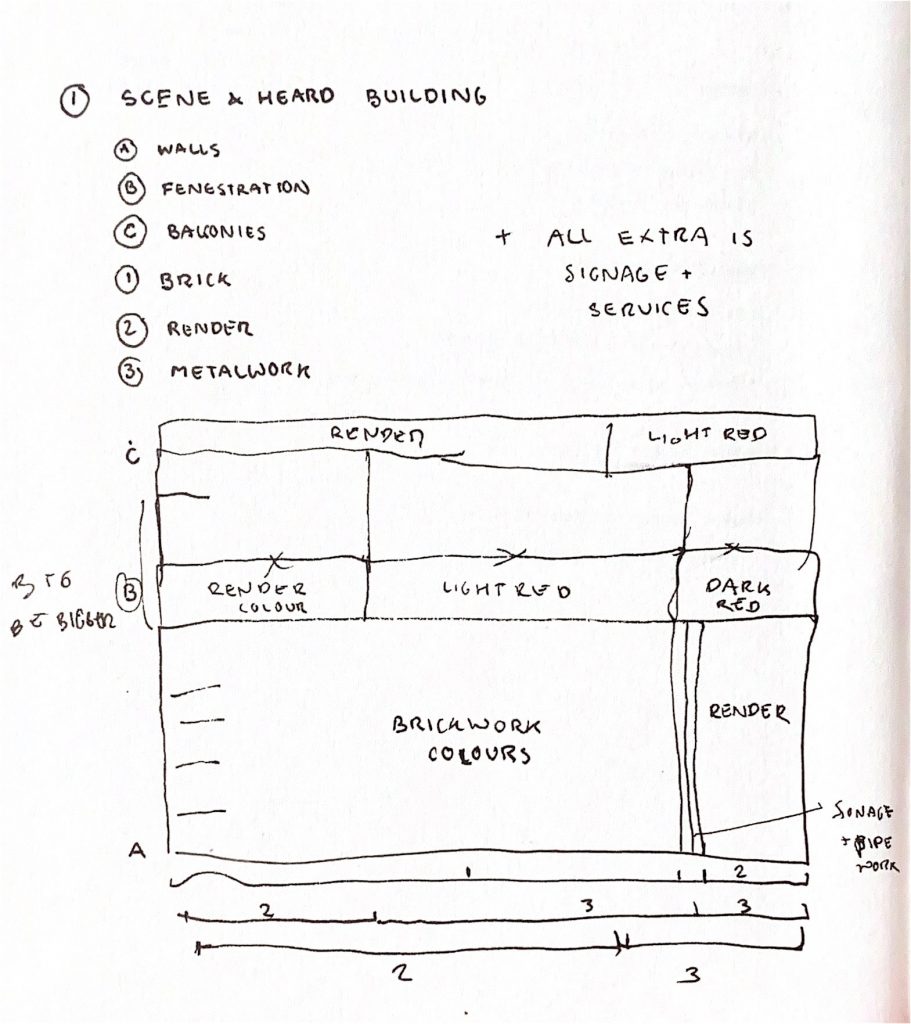
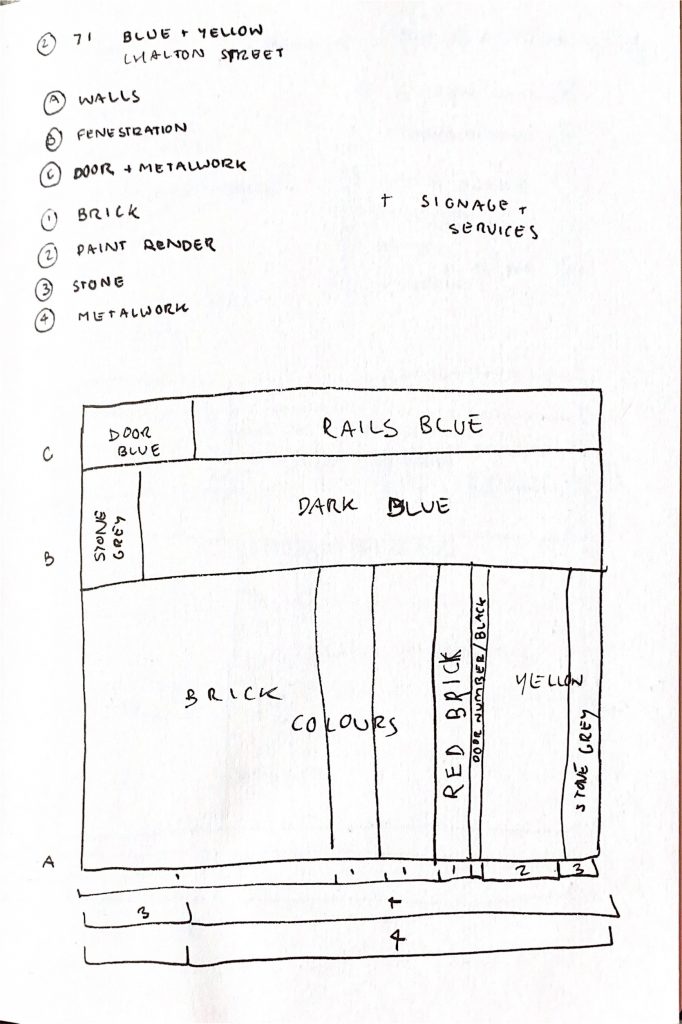
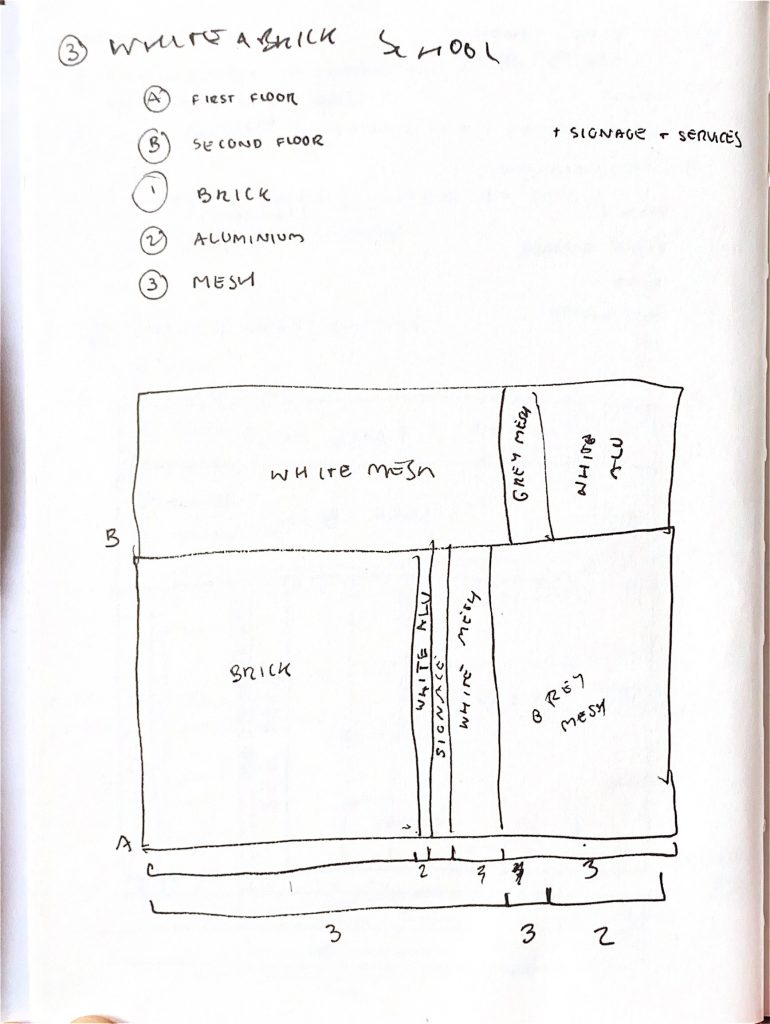
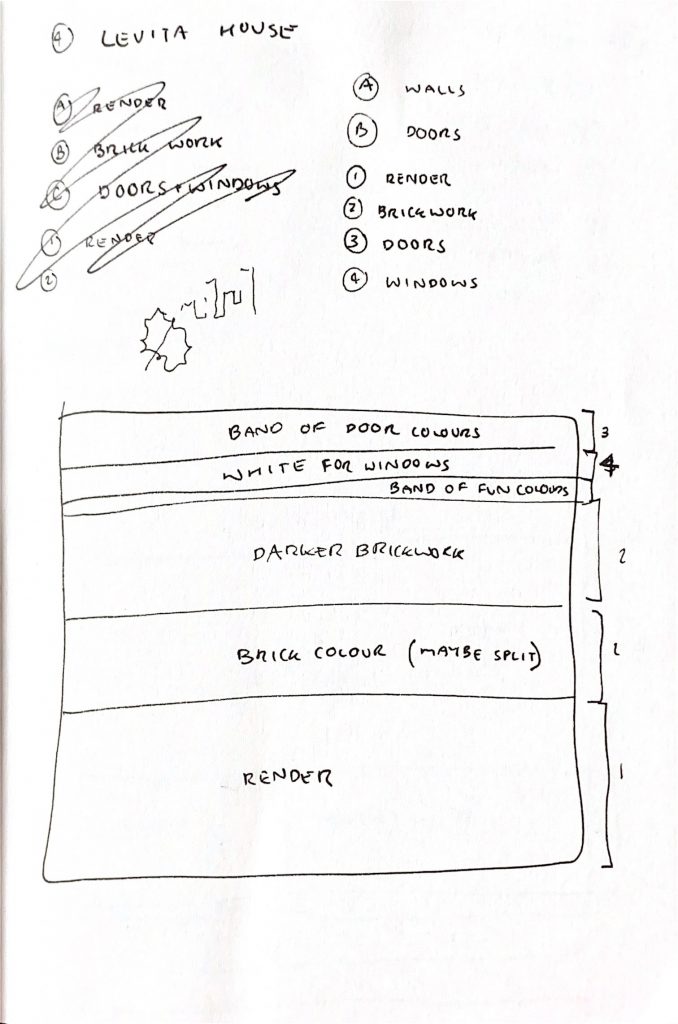
The method of investigation provides a succinct and accurate observation of the buildings’ facades, and explores how architecture can be portrayed using graphic visualisations. Although I did not proceed with further research into mapping colour in this studio project, the iterative process of observing and re-representing building facades proved instrumental in the progression of my work. The concept of The Maker’s Mark (see Prompt One for definition) was enquired through a framework, created by the form of these initial investigations. The hand-made quality to the palettes can be seen as the swatches do not lay flat, revealing the physicality of them. Isolating these hand-made marks informed the map which refined my area of research, and focused my investigation further.
Reference List:
McLachlan, F. et al. (2015) Colour Strategies in Architecture. Translated by I. Boyd White. Basel: Farbstrategien in der Architektur.
Leave a Reply