Influenced by the continuously growing bibliography of references that was curated during Positions through Contextualising, this selection of sources is more reflective of my current line of enquiry. Some of these references have been revisited, as new connections between their work and my own has been found as my research progressed, whilst others were only discovered recently.
Barthes, R. (1977) ‘The Death of the Author’ in Image, Music, Text. London: Fontana Press, pp. 143-148.
‘In the multiplicity of writing, everything is to be disentangled, nothing deciphered’ (Barthes, 1977).
In The Death of the Author (1977), Roland Barthes argues that the author is merely the steward of pre-existing texts, as writing ‘holds together, in a single field, all the traces by which the text is constituted’. If this position is adopted, then surely all writing can be understood as an example of multiple narratives existing concurrently, as fragments of pre-existing texts are woven together to create a textured argument composed of layers of other people’s work.
Furthermore, Barthes (1977) writes that ‘everything is to be disentangled, nothing deciphered’. This sentiment has been applied throughout my studio work. Within The Palimpsest Archive, the documents were unbound, allowing the interpreter to physically take them apart, whilst simultaneously disentangling the complex and layered history of The Stone Cottage. My dissertation will likely take the position that the reader must disentangle their own narrative from the information, much as I have done throughout my research. This exercise is likely to guide the form of the writing, enabling the reader to piece together their own understanding of the text.
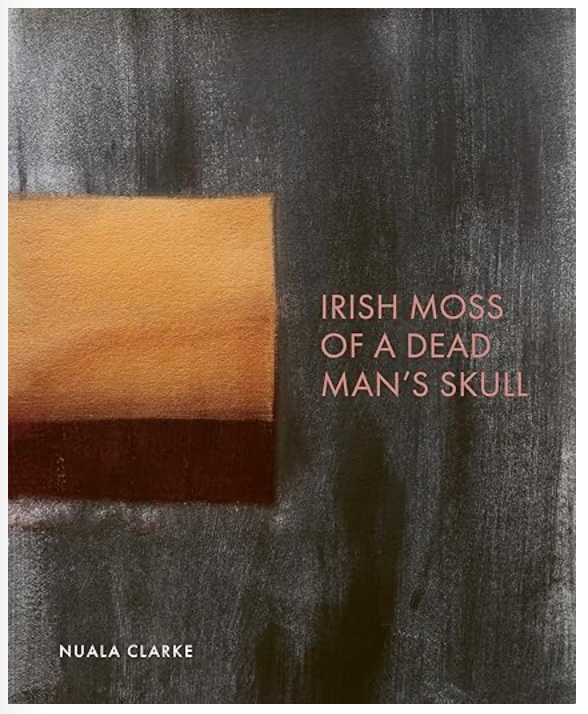
Clarke, N. (2025) Irish Moss of a Dead Man’s Skull. Nashville: The Owl Circus.
Abstract artist Nuala Clarke, who is based in the West Coast of Ireland, published her alchemical portfolio of work, Irish Moss of a Dead Man’s Skull, in 2025. Although the content and artwork is not directly relevant to my research, Clarke’s (2025) style of interweaving academic text with poetry has provided a clear stylistic reference for my approach to writing as a form giving medium.
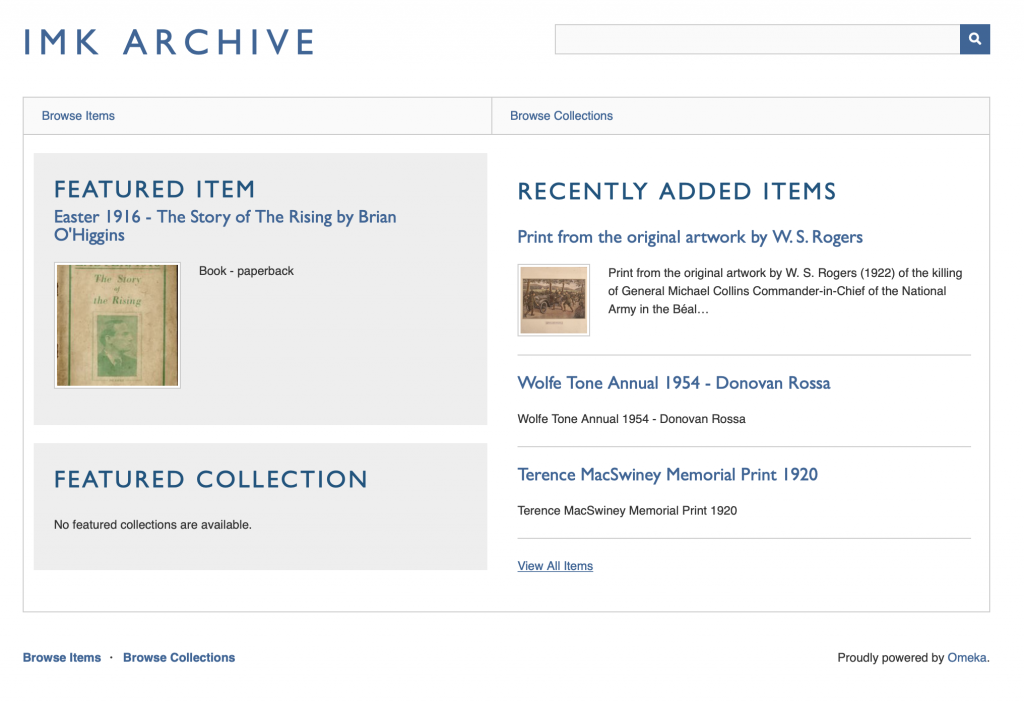
Independence Museum Kilmurray (2024) ‘IMK Archive’. Available at: www.imkarchive.org (Accessed: 21 October 2026).
‘Our digital archive is standardised according to international museum standards as part of the National Museum of Ireland’s aim “to encourage communities across the country to document and digitally safeguard the irreplaceable artefacts of their local heritage.”
While nothing can recreate the unique experience of the physical proximity to history and heritage that an actual visit to a museum offers, the digital aspect allows for the wider presentation, perusal and protection of documents and artefacts that would not otherwise be possible. The digital presentation will also allow a wider and more inclusive audience to browse or indeed search and engage with our archive’ (Independence Museum Kilmurray, 2024).
Independence Museum Kilmurray (2024) have digitised their collection to enable a wider audience to access their existing physical archive. The platform enacts their position by displaying featured items on the home page, which rotate regularly, connecting the user with archival material that they may not have necessarily been searching for. The effort of ‘presentation, perusal and protection of documents and artefacts that would not otherwise be possible’ resonates with my work, as I am also attempting to archive stories, where their existence is threatened. Although I am currently working in an analogue format, as I feel that is more representation of the transient nature of storytelling, the IMK Archive (Independence Museum Kilmurray, 2024) raises legitimate questions about the immortalisation of history, and whether that demands a digital format.
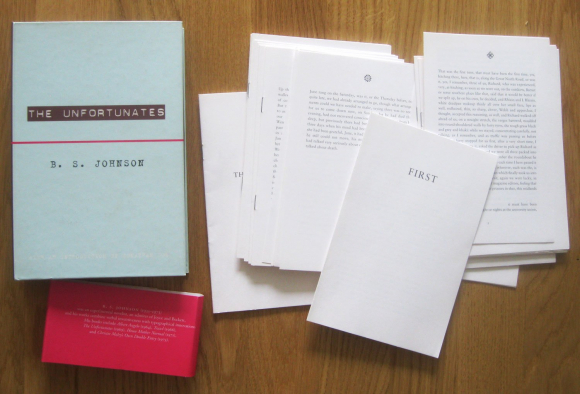
Johnson, B.S. (1969) The Unfortunates. London: Panther Books.
My understanding of concurrence in writing has become clearer through iterative studio experiments exploring how publication form may facilitate the simultaneous reading of multiple texts. Inspired by B. S. Johnson’s The Unfortunates (1969), I intend to reposition my enquiry to centre around permutation. This will illustrate that my research can be arranged to produce different configurations of meaning, rather than guiding the reader through a predetermined sequence of the work.
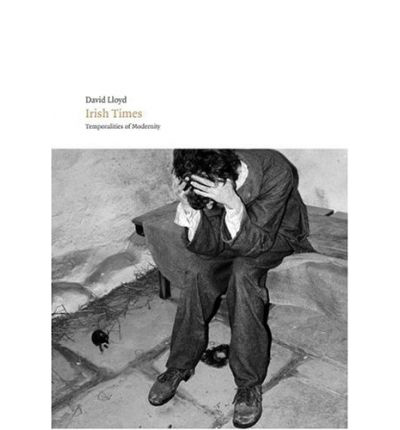
Lloyd, D. (2008) ‘Overture: Ruins/Runes’, in Irish Times: Temporalities of Modernity. Dublin: Field Days Publications.
‘The Irish landscape is seeded with ruins, multifarious remnants of the disappeared:
the contours of ring forts and the angular thrust of the dolmen;
the stubs of round towers and shattered castles or abbeys;
the burnt-out shells of great houses and coastguard barracks.
One could even say it is a landscape peculiarly composed of ruins …’ (Lloyd, 2008).
Lloyd (2008) illustrates the landscape of Ireland, populated with remnants and ruins. In my earlier work, snippets of found poetry were used as a contrast to the heaviness of the archival material, whilst still providing an equally legitimate representation of historical information about Ireland. This encouraged me to reflect on how my work can remain nostalgic and historically rigorous, whilst being playful and communicative. Building upon the exploration of this idea in The Palimpsest Archive, my dissertation will also utilise varying tones of voice to incorporate my own memories from time spent in the community in Easkey into the wider academic writing.
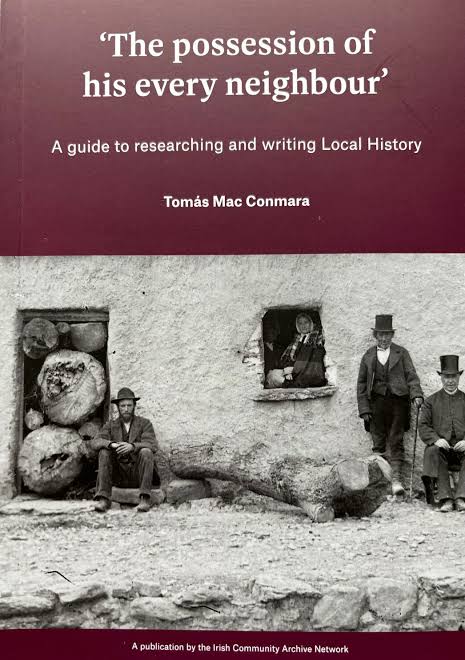
Mac Conmara, T. (2024) The possession of his every neighbour. Dublin: Irish Community Archive Network.
Whilst visiting the National Museum of Ireland – Country Life, I picked up a copy of The Possession of His Every Neighbour (Mac Conmara, 2024). The short book explores methods of archiving local history in Ireland, particularly through oral storytelling and community engagement. Although the resource did not provide any novel insight into the process of documenting primary research, it did contextualise my work within existing archival efforts, and legitimised the methods I had been exploring.
O’Farrell, M. (2026) Land. London: Headline Publishing Group.
‘On a windswept peninsula stretching out into the Atlantic, Tomás and his reluctant son, Liam, are working for the great Ordnance Survey project to map the whole of Ireland. The year is 1865, and in a country not long since ravaged and emptied by the Great Hunger, the task is not an easy one. Tomás, however, is determined that his maps will be a record of the disaster. The British soldiers in charge are due to arrive any day, expecting the work to be completed, but Tomás is sent off course by an unsettling encounter in a copse.’ (O’Farrell, 2026).
During Positions through Triangulating, I have been reading Maggie O’Farrell’s most recent novel, Land (2026). Although a fiction, I have observed parallels between the novel and my design research. The main character, Tomás, is attempting to not only map the territory, but also the extents of the effects of the Great Hunger, through the cartographic process. Similarly, my work has been a simultaneous enquiry to map the history of the uninhabited stone cottages that populate the rural, West Coast of Ireland and the historiographical events that have destroyed so much of Ireland’s written history. The book encouraged a critical reflection on the accuracy of historical documentation, in particular the role of the social and political circumstances that effect the precision of the recorded information.
Perec, G. (1999) ‘Species of Spaces’, in Species of Spaces and Other Pieces. London: Penguin, pp. 46–56.
‘What I hope for from it, in effect, is nothing other than the record of a threefold experience of
ageing: of the places themselves, of my memories, and of my writing’ (Perec, 1999).
Perec (1999) views the relationship between place, memory and writing as an effective method of recording the experience of ageing. These three terms have guided and punctuated my body of work. This is most apparent in the creation of The Palimpsest Archive, an archival box housing the unbound history of The Stone Cottage. When the box is opened, the records are catalogued and held together by place, memory and writing. Through the process of participation, the documents become disentangled, and the distinctions between place, memory and writing become indiscernible.
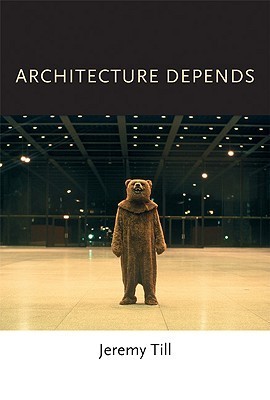
Till, J. (2009) ‘Contingency’, in Architecture Depends. Cambridge: MIT Press, pp. 45–61.
Till (2009) writes in two tones of voice. This is visually communicated through the use of different fonts. A serif typeface is deployed for the traditional academic writing, and a san serif used for the informal dialogue. This subtle shift in typeface is a powerful tool to effectively communicate two parallel stories.
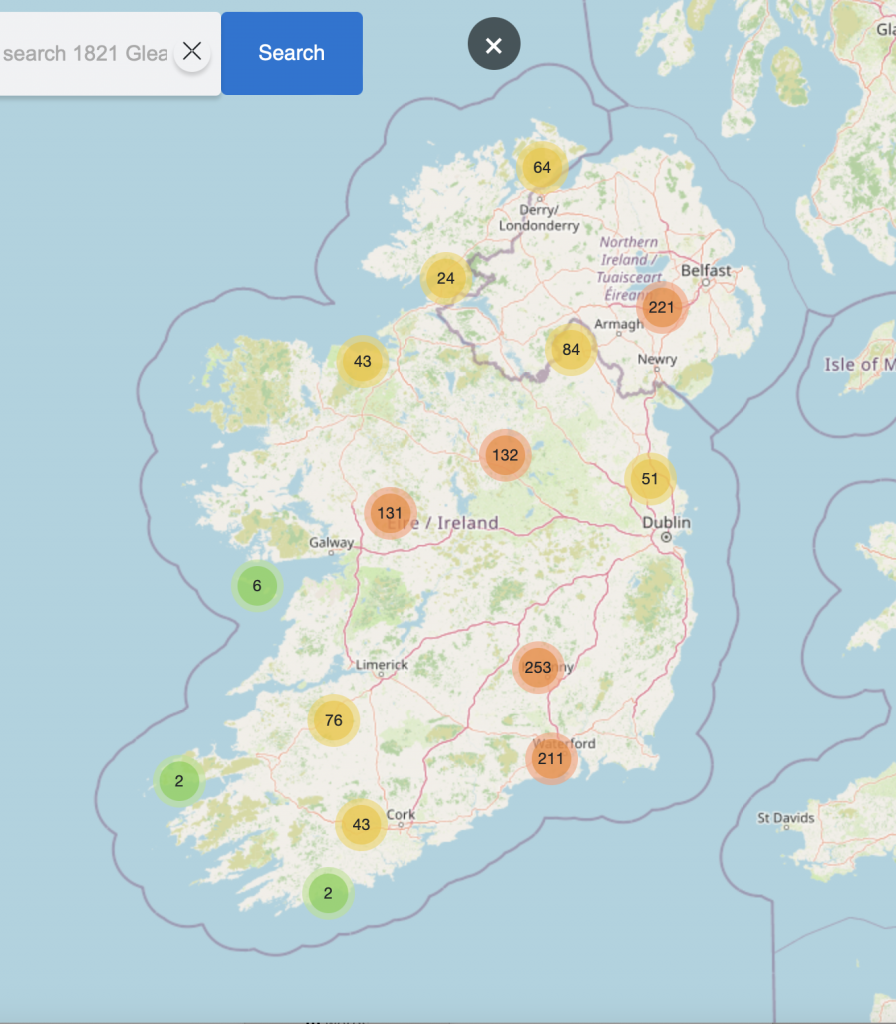
Virtual Record Treasury of Ireland (2022) 1821 Census Gleanings Map. Available at: https://virtualtreasury.ie/gold-seams/census-gleanings/census-gleanings-map (Accessed: 19 October 2026).
I discovered Census Gleanings Map (2022) during Positions through Iterating, and it was established as an important, and alternative, method of documenting the fragments of the recovered documents from the 1922 fire that destroyed the Public Record Office of Ireland. At the time, there was little opportunity to explore the resource with the level of critically and depth that would yield insight and new knowledge about the Virtual Record Treasury of Ireland’s archival methodology. Positions through Triangulating (2) offered an opportunity to revisit Census Gleanings Map (2022), exploring the relationship between my own work and the resource, with space and capacity for expansive investigation.
Leave a Reply