Category: Unit 1: Methods

  • Prompt Four

    DRAFT ONE

    While you’re working on your copy, articulate (in writing) the key critical questions that emerge through this exploration. Discuss how the project that you’re copying raises these questions and write a proposal for a studio-based experiment that would allow you to explore them further.

    The initial copying exercise saw a recreation of aspects of ‘Size, Format, Stock’ produced by Fenner Paper and Studio8 Design (2009). The publication was included within the Bookbinding Toolkit, provided by Central St Martins to every MA Graphic Communication Design student. The information within the publication was manipulated and divided into four explorations, each looking at a distinct bookbinding process. Elements of the graphical style of the Fenner Paper (2009) infozine were replicated, and the simple illustration style was adopted to visually represent the binding processes.

    The iterative exercise of copying raised critical questions about the hidden labour of bookbinding. The craftsmanship and skill required for bookbinding cannot be seen in the final output, as the labour is concealed within the spine and gutter. Moreover, the bookbinders toolkit leaves no trace, thus exacerbating the elusiveness of the binder. This raised further questions about what is seen and what is left unseen. ‘Size, Format, Stock’ (Fenner Paper, 2009) does not address the handcraft aspect of bookbinding, and the binder themselves remains out of the conversation. Is a successful bookbind one that has no trace? 

    Dieter Rams’s ‘Ten Principles for Good Design’ (2021) suggests that ‘good design is unobtrusive’. Within the field of bookbinding, this seems to be the desired outcome. This notion of design being inconspicuous sits at odds with Rams’s sixth principle; that ‘good design is honest’. Can design be both unobtrusive and honest? How does this translate into the process of bookbinding?

    It is impossible to uproot ‘Size, Format, Stock’ (Fenner Paper, 2009) from its original context; the Bookbinding Toolkit. Shared knowledge of bookbinding is therefore considered as a critical tool within the Bookbinding Toolkit. In an attempt to create honest design, the studio-based experiment will focus on revealing the tools that are used within the process of bookbinding. This process will attempt to unravel the fixed notions of bookbinding, and rebuild the process with an emphasis on celebrating the craftsmanship of the binder.

    DRAFT TWO

    Identify a reference from the reading list that you can use as a lens through which to view and analyse your project. Then create a second draft of your writing that advances your enquiry in response to this new context.

    Ronald Barthes (1977) proposes the idea that the role of the author ceases to exist within his seminal work ‘The Death of the Author’. Barthes’s (1977) primary argument is that the author has been suppressed in the interests of writing. The notion that writing is the author’s cohesive voice is discredited, suggesting that we have entered an era where the role of the author is a steward of pre-existing texts. Barthes (1977) proposes that the author merely ‘holds together, in a single field, all the traces by which the text is constituted’.

    Within my Methods of Iterating studio project, there has been an astute focus on the role of the binder. The tension between the craftsmanship and lack of trace of this craftsmanship within the process of bookbinding has been explored thus far. Barthes (1977) raises critical questions about whether the role author has been reduced to a curator. If the author’s sole duty is to ‘blend and clash’ (Barthes, 1977) others writing, then what does this mean for the role of the binder? 

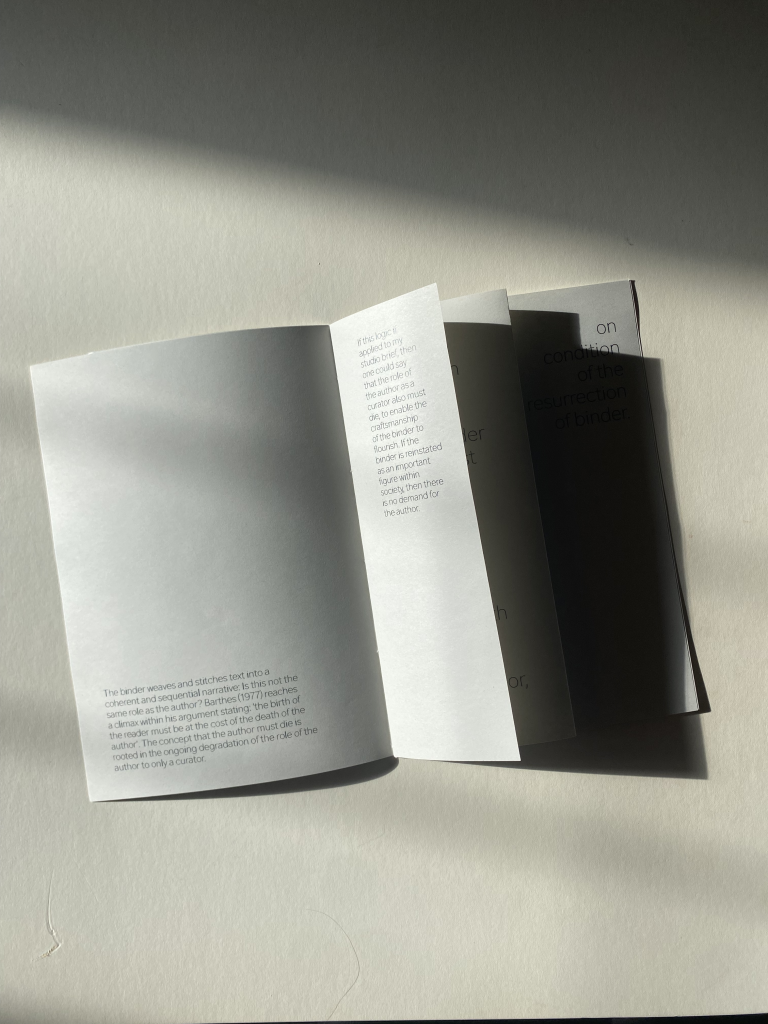
    The binder weaves and stitches text into a coherent and sequential narrative: Is this not the same role as the author? Barthes (1977) reaches a climax within his argument stating: ‘the birth of the reader must be at the cost of the death of the author’. The concept that the author must die is rooted in the ongoing degradation of the role of the author to only a curator. If this logic if applied to my studio brief, then one could say that the role of the author as a curator also must die, to enable the craftsmanship of the binder to flourish. If the binder is reinstated as an important figure within society, then there is no demand for the author.

    The birth of the reader must be at the cost of the death of the author, on condition of the resurrection of the binder.

    Furthermore, Barthes (1977) highlights that ‘in the multiplicity of writing, everything is to be disentangled, nothing deciphered’. Writing has become a linear expression of an interwoven mesh of others ideas. If this were not the case, how would the reader decipher the writing? If knowledge is not granted, then the text will be constrained. The reader will have to understand, scrutinise and interpret the writing for themselves. The notion of constraint is a key theme explored within my studio project, Methods of Iterating. The process of binding conceals and reveals different aspects of the information shared; a constraint on knowledge. 

    DRAFT THREE

    For the third draft of your written response, render your text using the tool or medium that you’ve been exploring during this project. This is both a visual and intellectual exercise. How does the text and its meaning change when you translate it in this way?
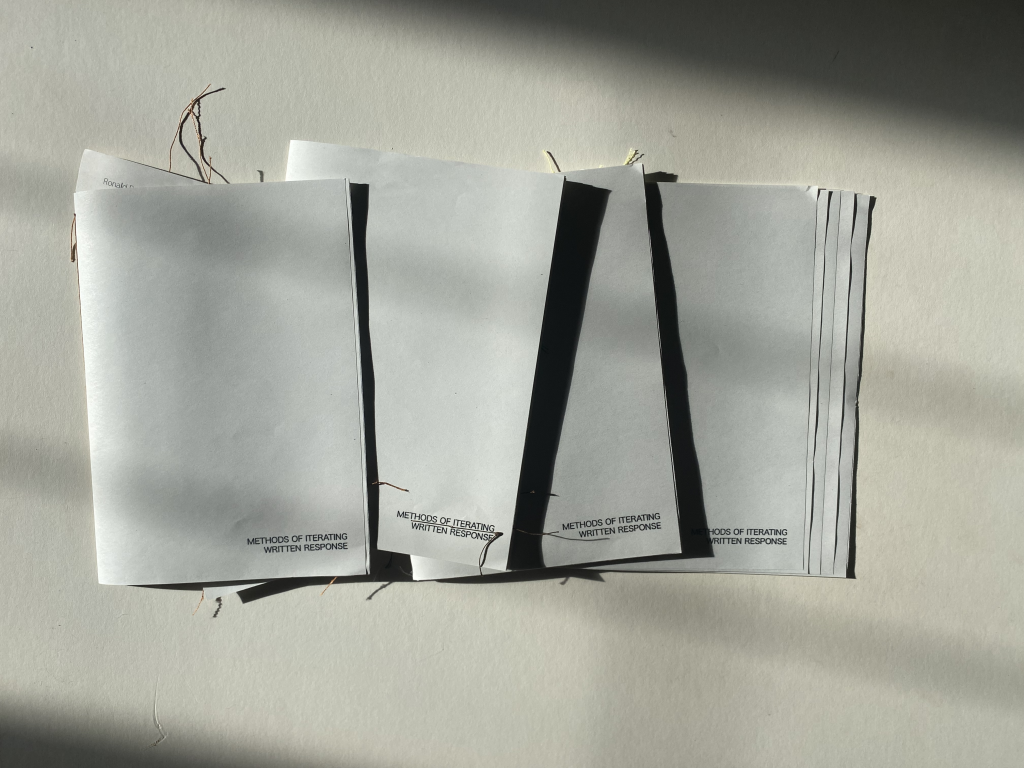
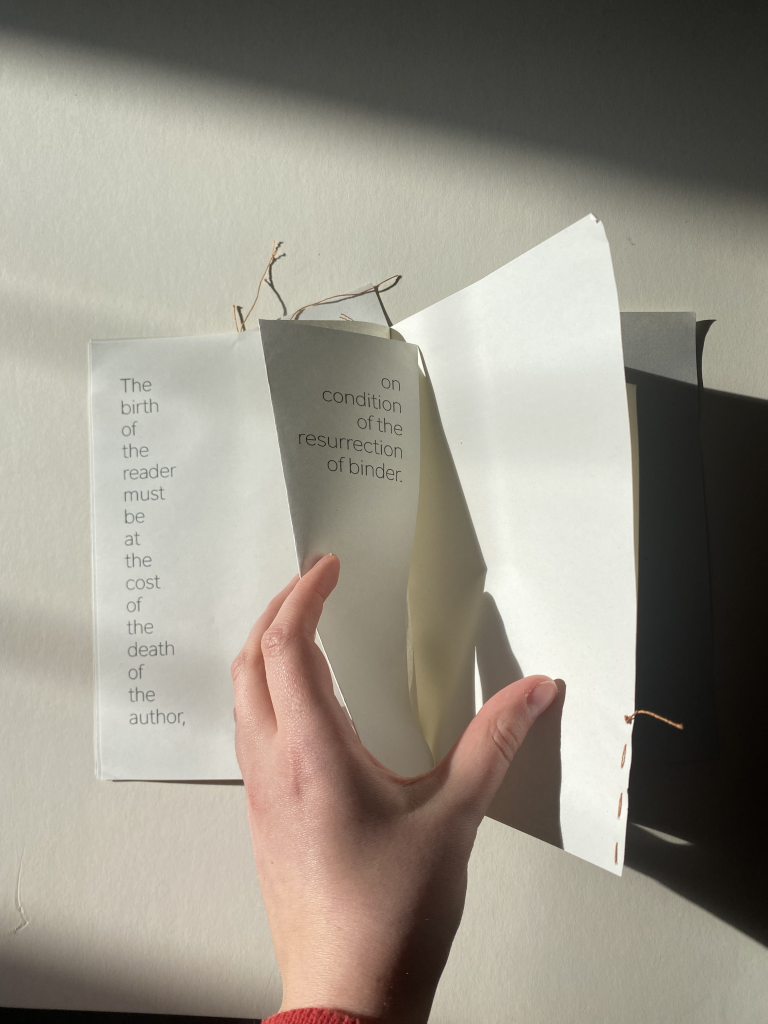
    Fig. 1. The four iterations of my rendered text, each correlating to the terms I discovered to be bound outcomes within the process of bookbinding.
    Fig. 2. Constraint
    Fig. 3. Trace
    Fig. 4. Sequence
    Fig. 5. Friction.

    For the third draft of my written response, I rendered the second draft of text using the process of bookbinding. Similarly to all my other experiments through the Methods of Iterating project, the binding process exclusively used the equipment included within the CSM Bookbinding Toolkit. 

    The text was stitched together four times, each correlating to the terms which I have discovered to be bound within the process of bookbinding: constraint, friction, sequence and trace. This iterative experiment plays with the parameters that define bookbinding, disturbing with the readability of the text as different elements are concealed and revealed. 

    The rendering reinforces the notion that constraint, friction, sequence and trace are bound outcomes within bookbinding, whilst simultaneously scrutinising the meaning of these terms. The fixed outcomes have been reimagined to produce a binding that is no longer conventional. Does that these outcomes are no longer bound?
     

    Reference List:

    Barthes, R. (1977) ‘The Death of the Author’ in Image, Music, Text. London: Fontana Press, pp. 143-148.

    Fenner Paper. (2009) Size, Format, Stock. Tonbridge: Fenner Paper.

    Rams, D. (2021) Ten Principles for Good Design. Munich: Prestel Publishing.
  • Week 3 Process


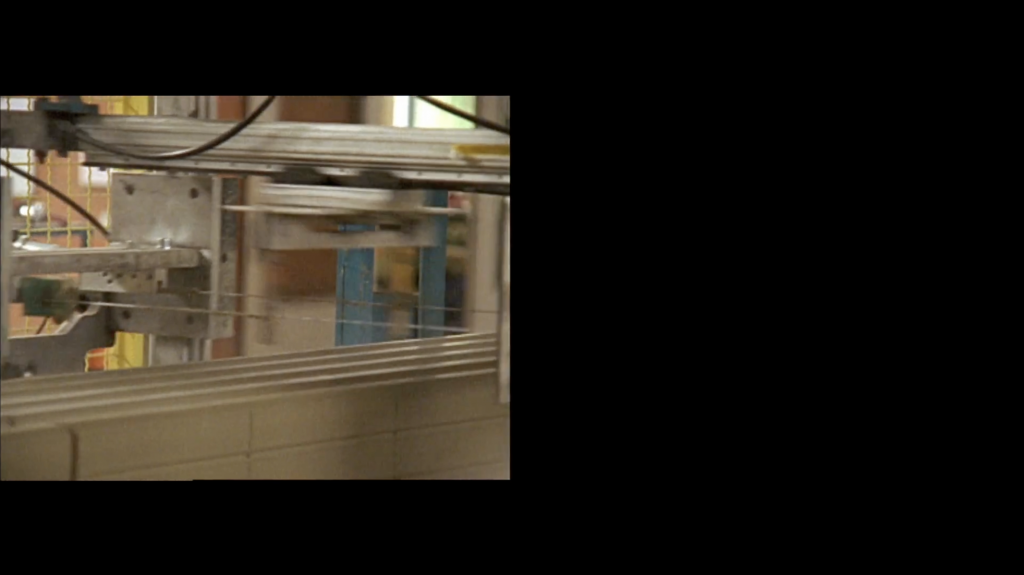
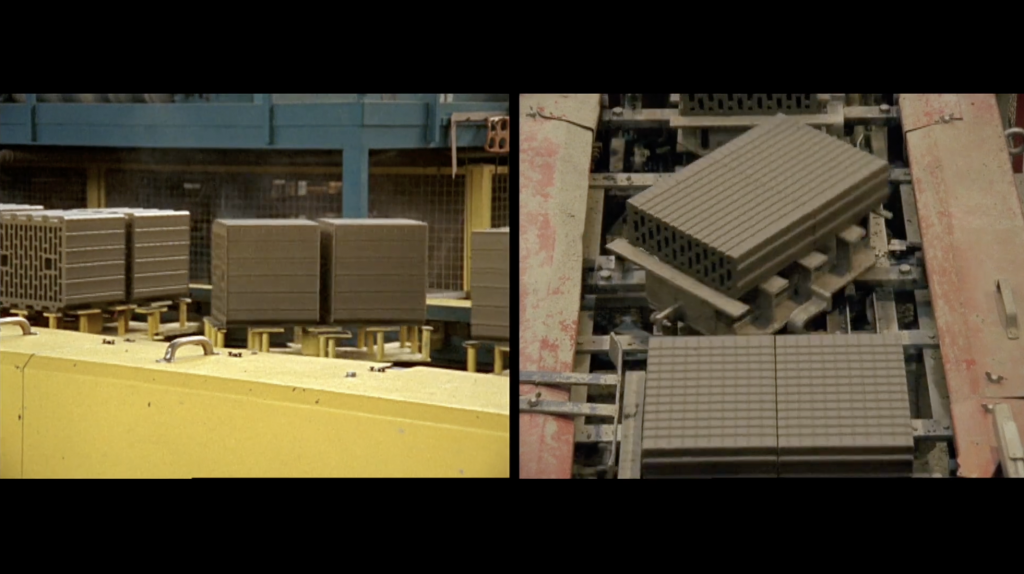
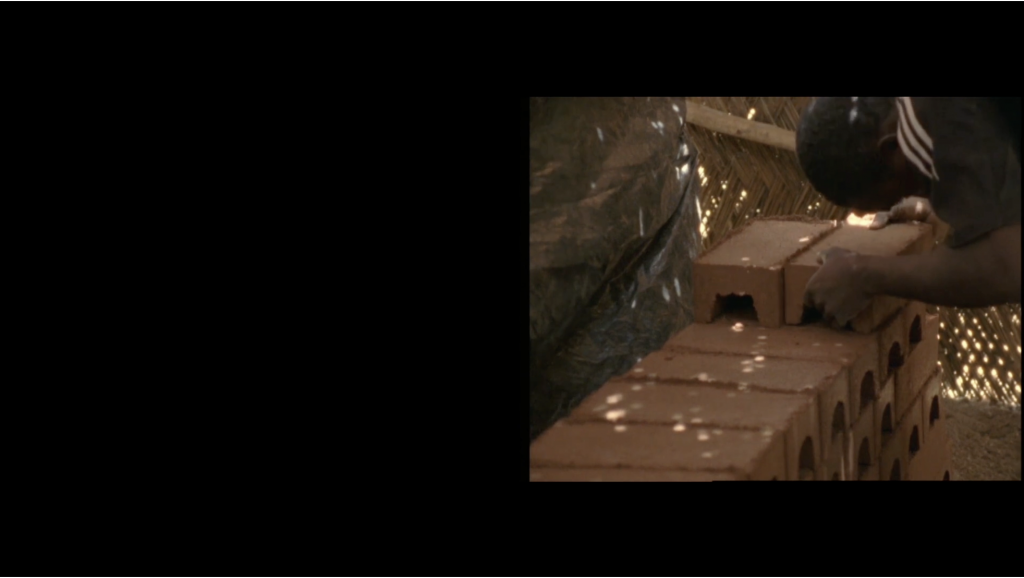
    Harun Farocki’s (2009) In Comparison served as a key reference within my studio project. Farocki’s split screen video documents the procurement of clay bricks across Burkina Faso, Germany, France, Austria, India and Switzerland. The work is a commentary on the disparity of global labour, with the footage illustrating industrial material manufacturing in direct conversation with manual, labour-intensive processes. 

    Fig. 1. Stills from Harun Farocki’s (2009) In Comparison.

    Within the context of bookbinding, there is a vast variance between modern, automated book production, versus traditional craftsmanship. The role of the binder is quickly becoming eradicated as factory procurement is becoming more favourable. The art of bookbinding is under serious and immediate threat.

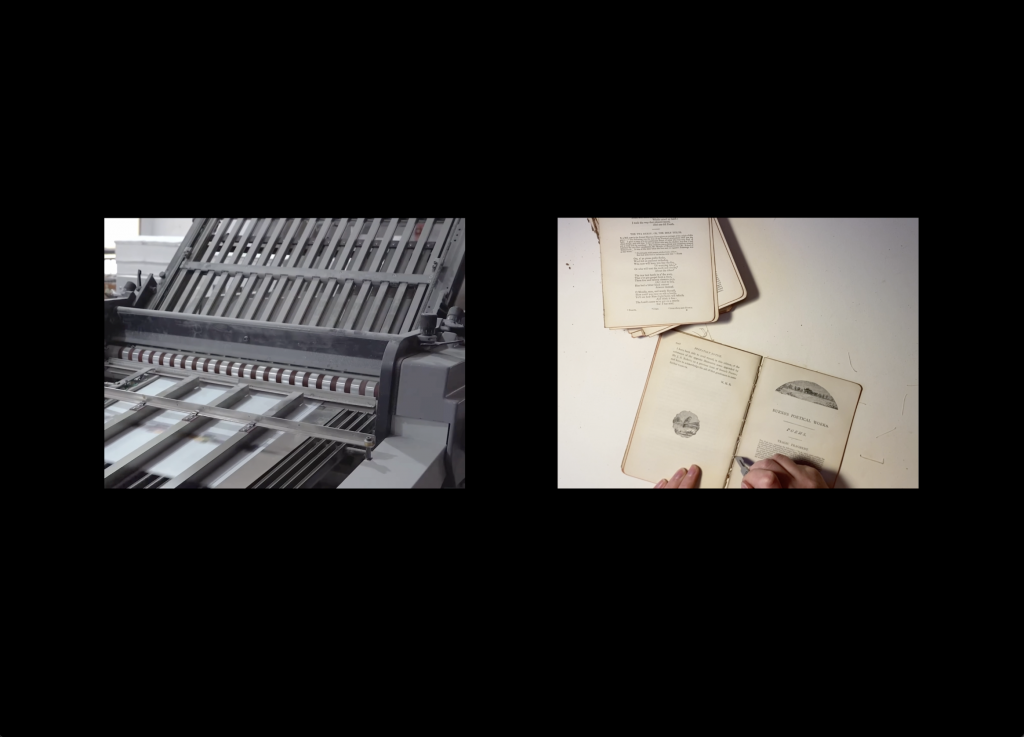
    Reflecting the form of Harry Farocki’s (2009) In Comparison, I set out to create a split screen video representing my own experience of the bookbinding process. I juxtaposed by own documentation of dismantling and restitching a book from 1905 against the automated process documented in SatisFactory Press’s (2024) Youtube video The Fascinating Mass Production Process of Books in a Chinese Factory. The audio was spliced and overlayed on top of the videos, creating tension between the two processes. The outcome was uncomfortable and distressing as it illustrated the scale of mass produced books, as well as the threat for the existence of the hand bookbinder.

    To access the split screen video please click on the image above or follow the link below:

    https://vimeo.com/1163076639?share=copy&fl=sv&fe=ci

    Reference List:

    Farocki, H. (2009) In Comparison [Video]. Tate: Liverpool.

    SatisFactory Process (2024) ‘The Fascinating Mass Production Process of Books in a Chinese Factory.’ 

    Available at: https://www.youtube.com/watch?v=WGcqyR2hK_w

  • Week 2 Process

    Following discussions during my week 1 tutorial, I felt that my Methods of Translating needed  redirection. Up until this point, my work had primarily focused on architectural map-making as a graphic design tool. In attempts to broaden my horizons and begin the process of interweaving the disciplines of graphic design and architecture, I decided to attempt to apply an architectural theory onto a graphic design process. 

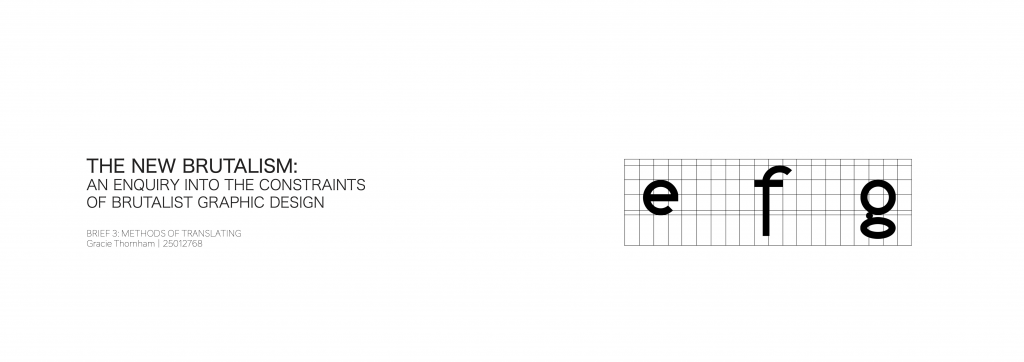
    This altered my line of enquiry, and informed the overarching question: ‘What does it mean to make a Brutalist font?’. When you google “Brutalist Font”, a plethora of typefaces bounce back. As I scrolled through the pre-existing ideas of Brutalist type design, I noticed that very few of adhere to Reyner Banham’s (1955) definition of Brutalism.

    Fig. 1. Brutalist Fonts on MyFonts.


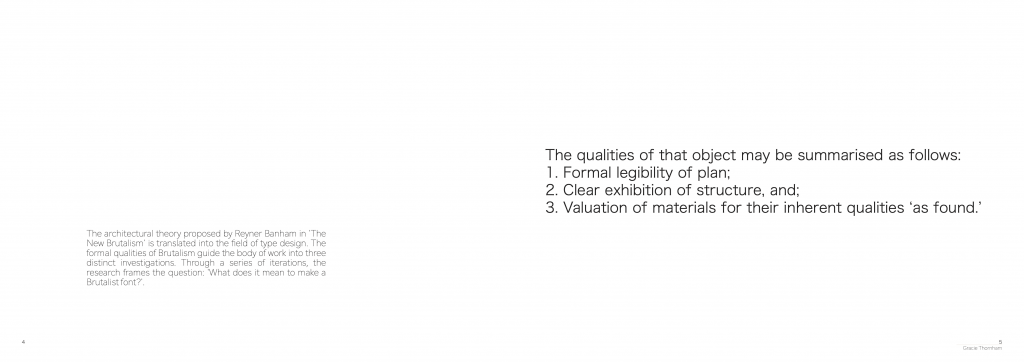
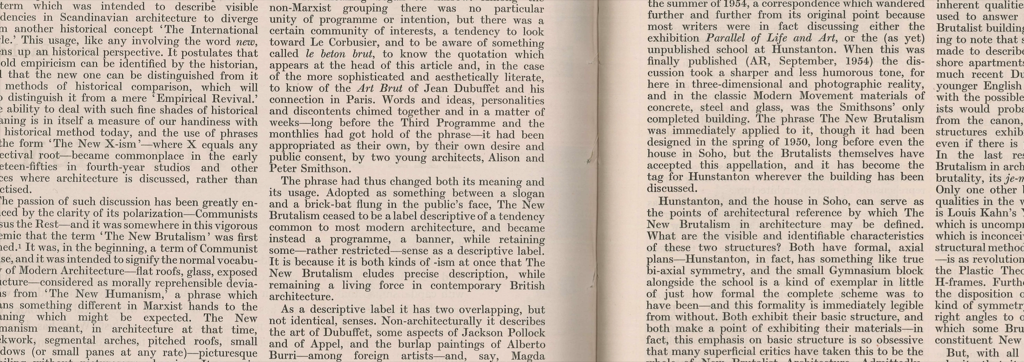
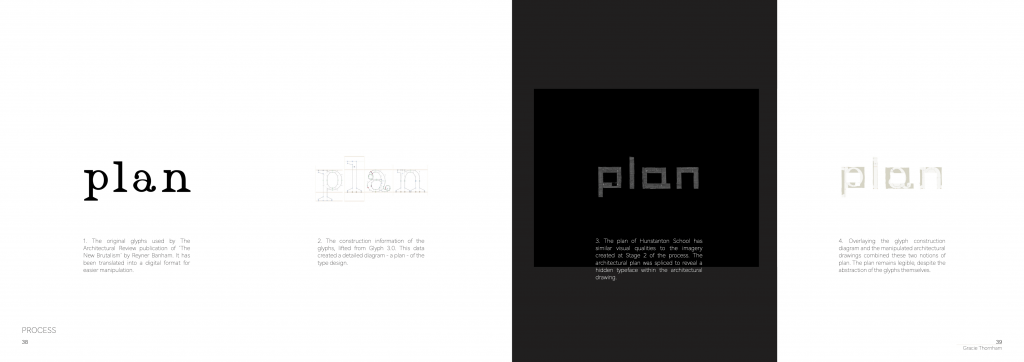
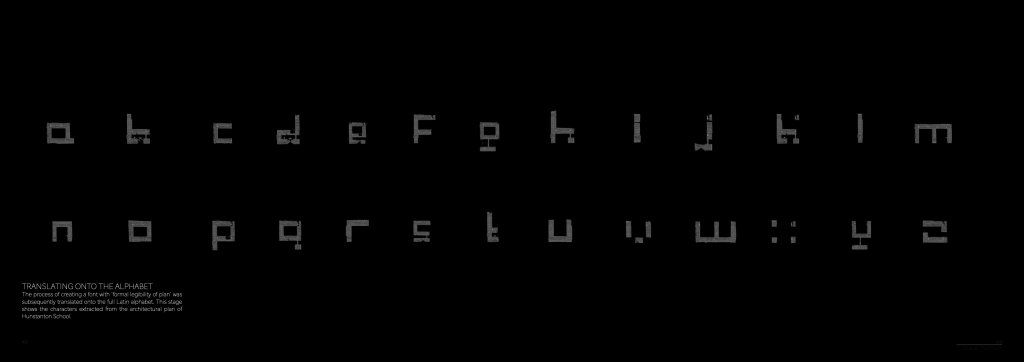
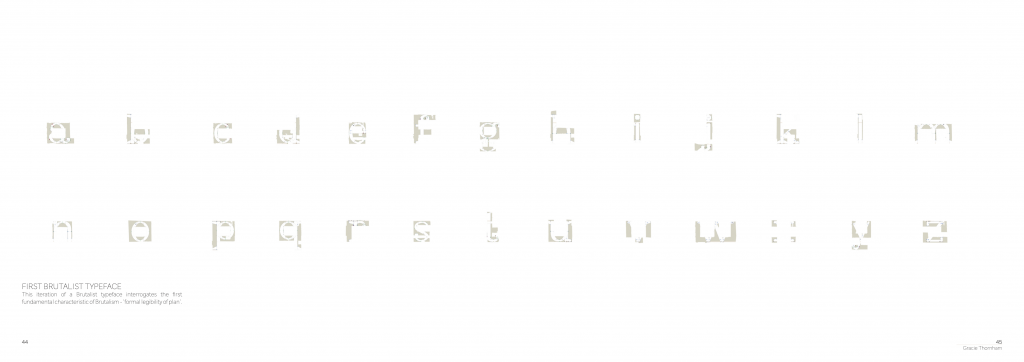
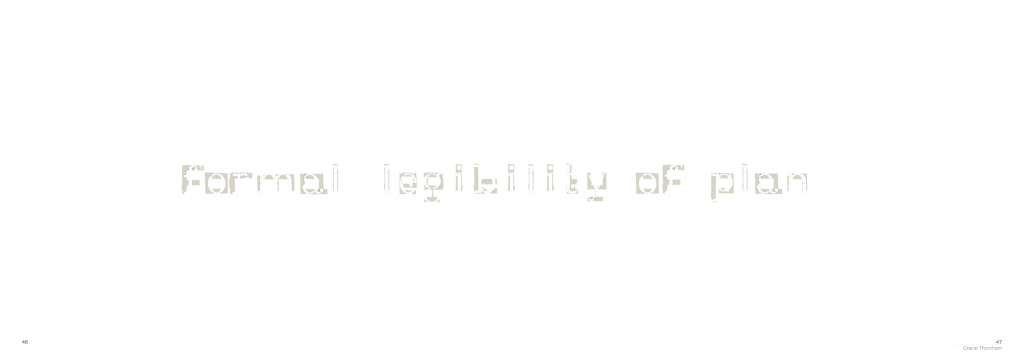
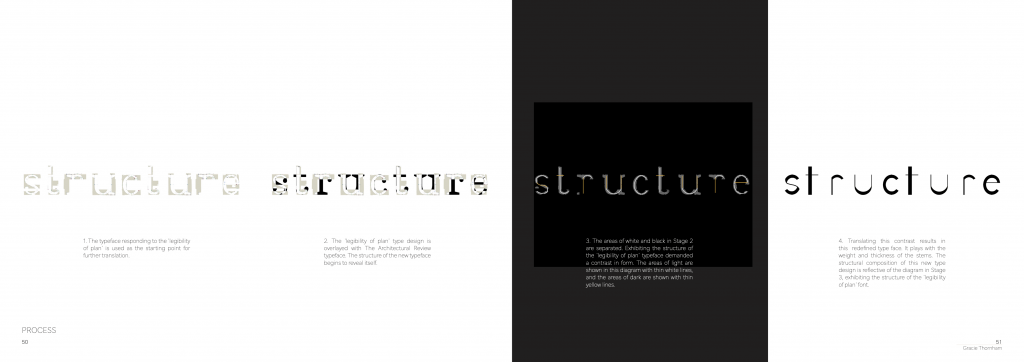
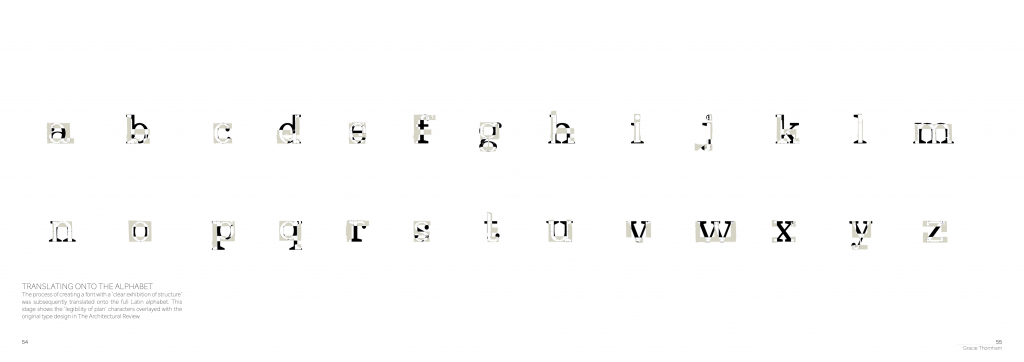
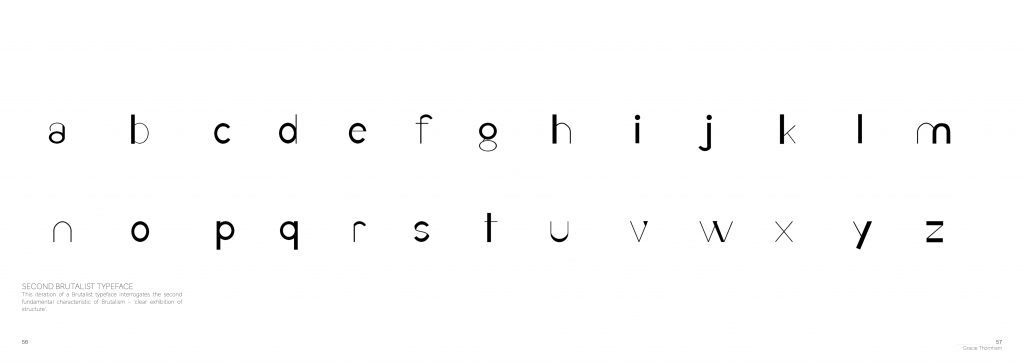
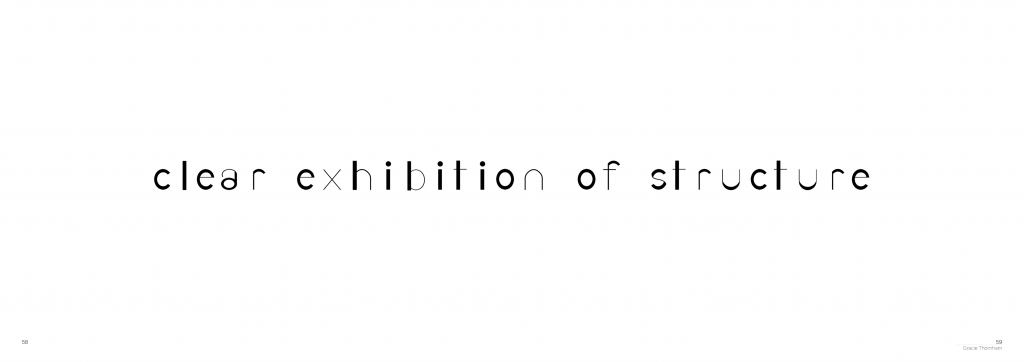
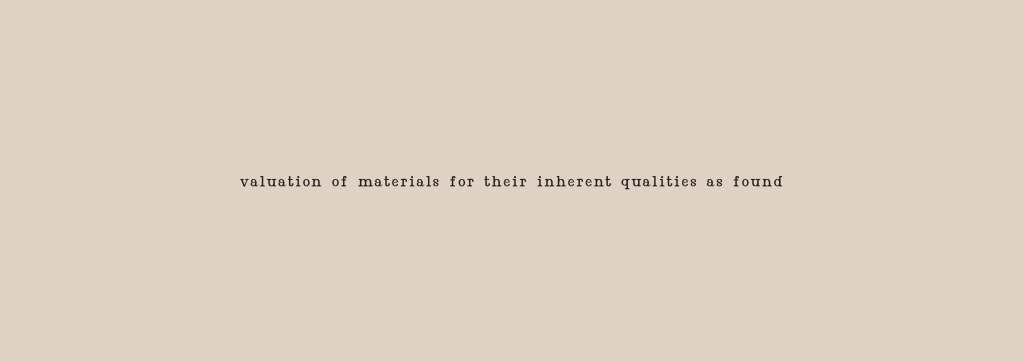
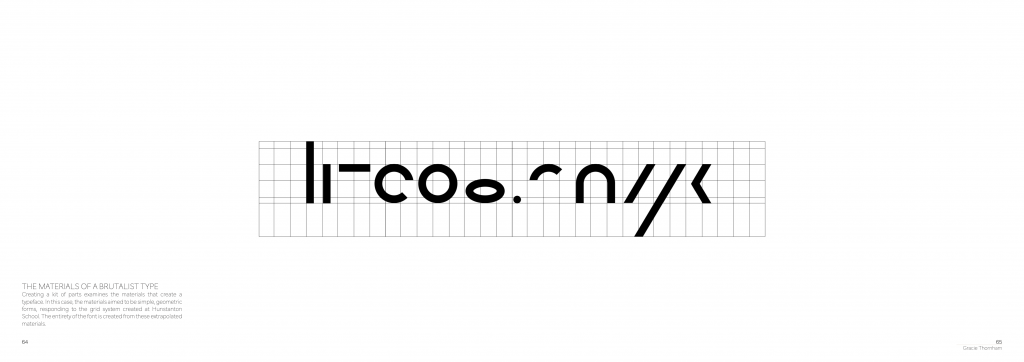
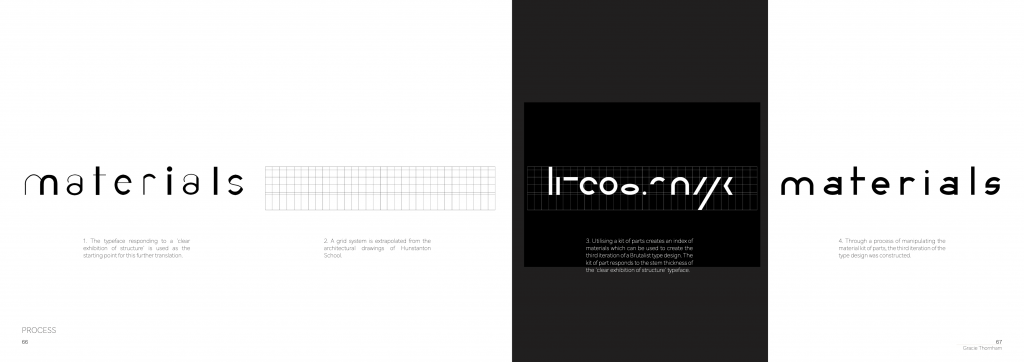
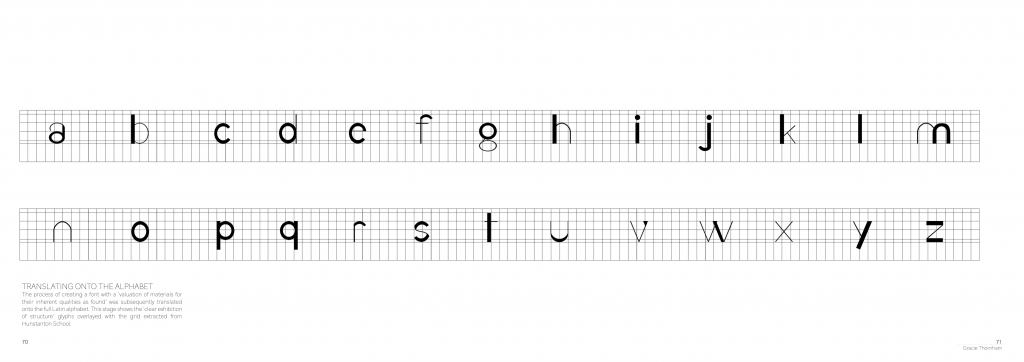
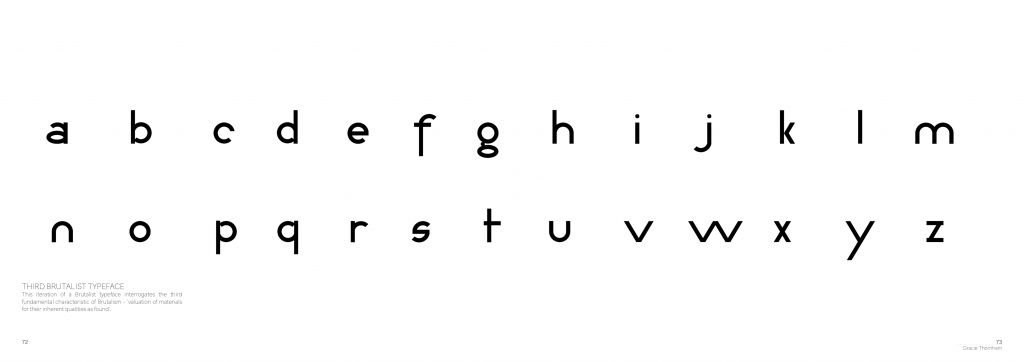
    The original type design from The Architectural Review article acted as the starting for my investigation into a Brutalist type face. Through a process of iterative redesign, three Brutalist type faces were created, all building upon the form of the previous. These three type faces followed Banham’s (1955, p.357) definition of Brutalism – ‘1, Formal legibility of plan; 2, clear exhibition of structure, and 3, valuation of materials for their inherent qualities ‘as found’.’ 

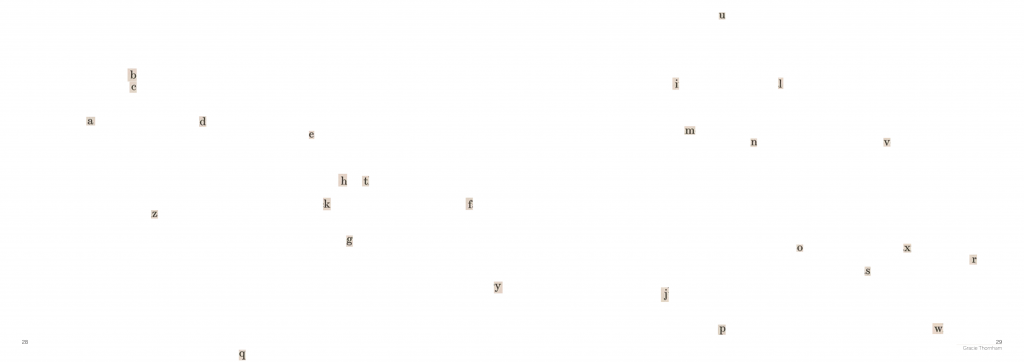
    Fig. 2. Process of creating Formal Legibility of Plan type design.
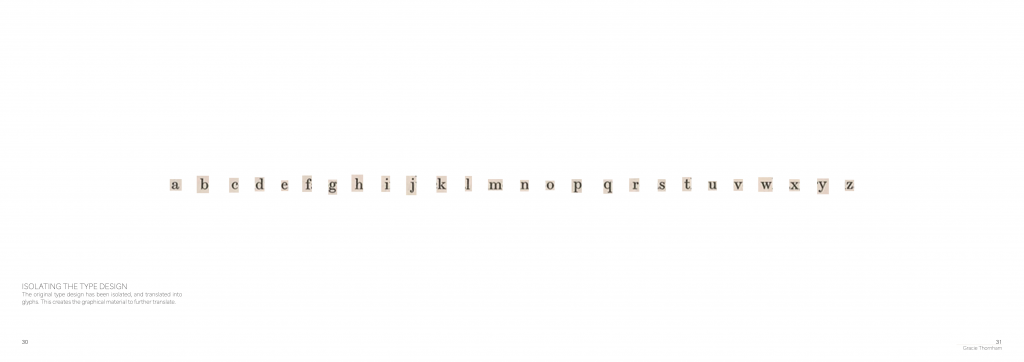
    Fig. 3. Process of creating Clear Exhibition of Structure type design.
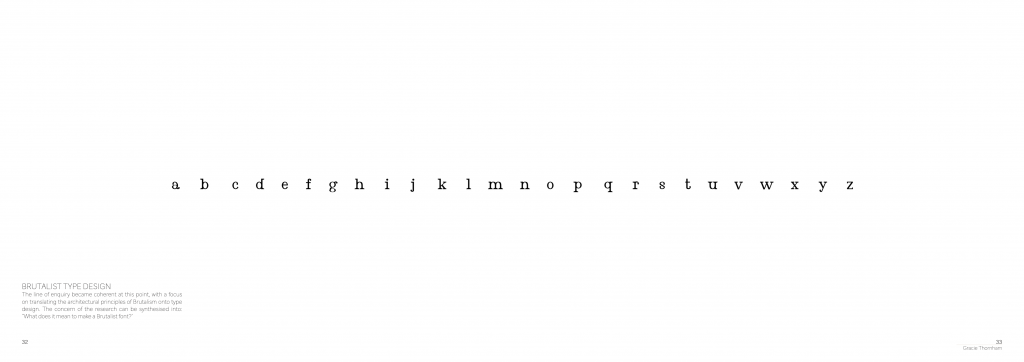
    Fig. 4. Process of creating Valuation of Materials for their Inherent Qualities ‘As Found’. type design.

    Reference List:

    Banham, R. (1955) ‘The New Brutalism,’ The Architectural Review, 118 (708), pp. 335-361.

    MyFonts. Brutalist Fonts. Available at: https://www.myfonts.com/pages/tags/brutalist-fonts/?srsltid=AfmBOorM9xuxbXGgjJBa_7jrZC-LI_zjnaKmxUgyBUwcl7fSz2Qra7cU (Accessed: 11 November 2025).

  • Week 1 Process

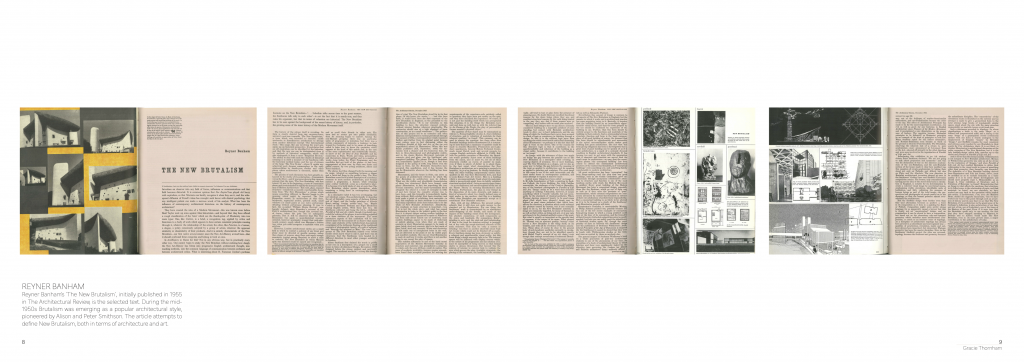
    The New Brutalism by Reyner Banham (1955) was my selected material to translate. The journal article was published in The Architectural Review in 1955, and explored the earliest definition of the architectural movement. The true definition of Brutalism has been shrouded in mystery since its inception, with architectural critics rarely agreeing on a set of defining characteristics. 

    Banham’s (1955) writing coincided with the rise of architects Alison and Peter Smithson. The Smithon’s are considered to be the founders of Brutalism, as they began to experiment with architectural detailing, where the materials retain their inherent qualities ‘as found’ (Banham, 1955).

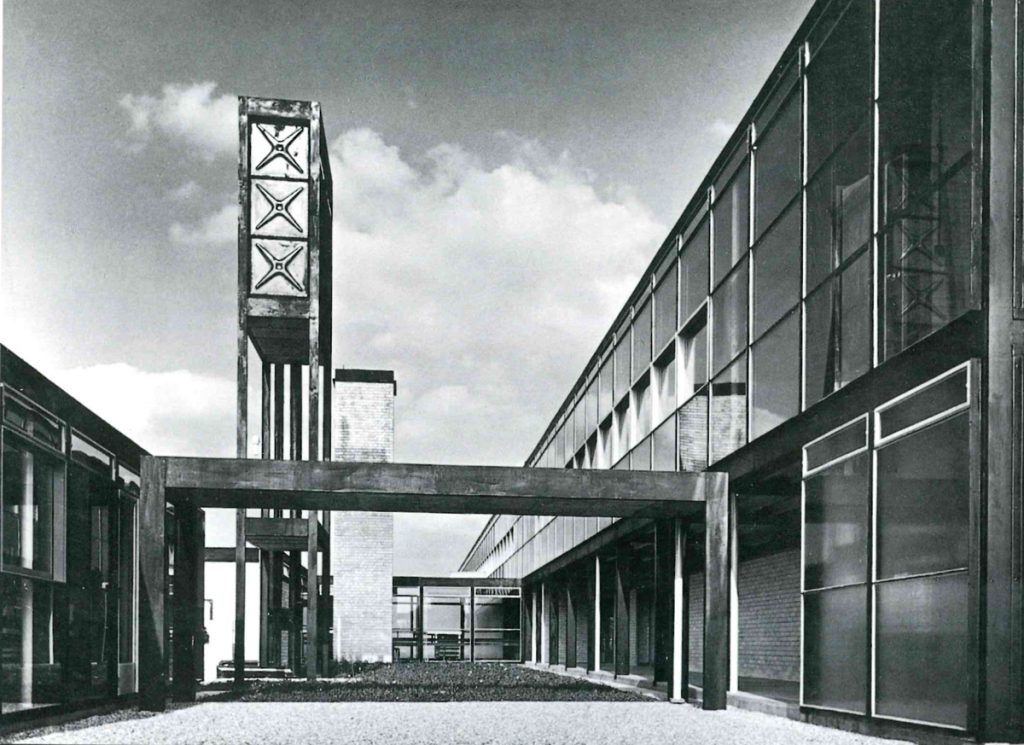
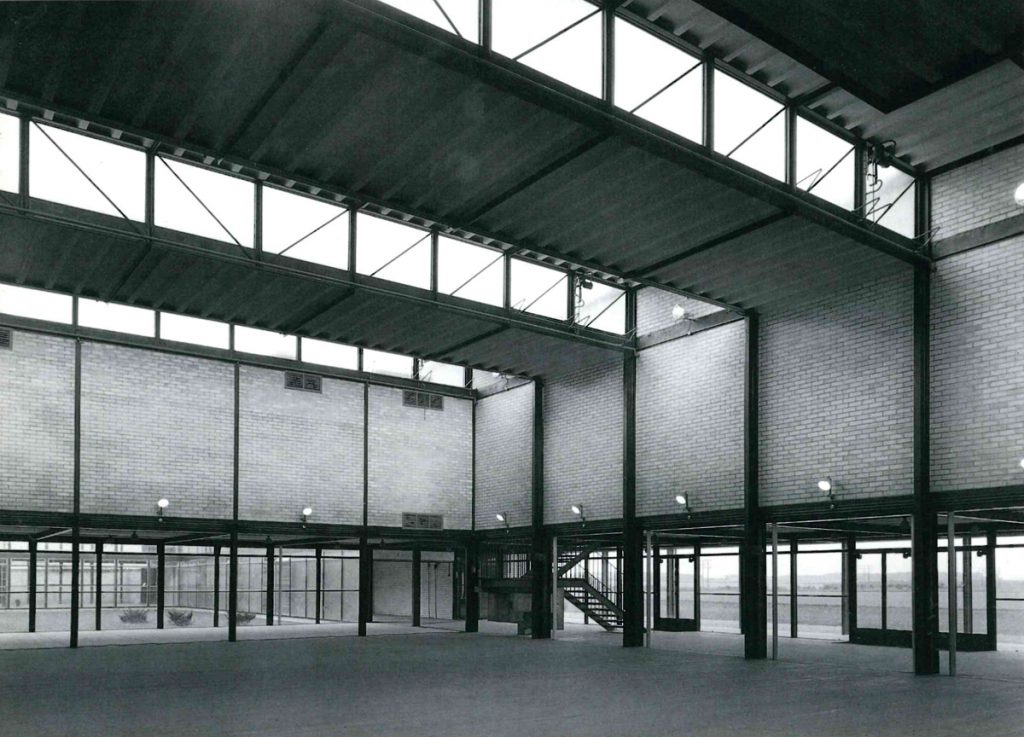
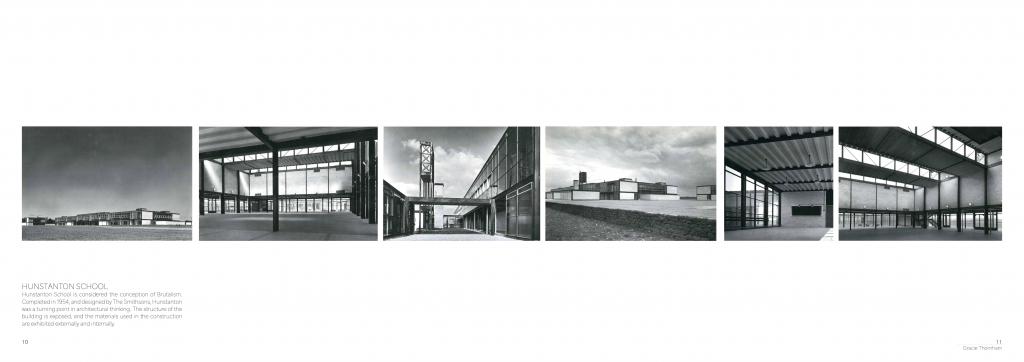
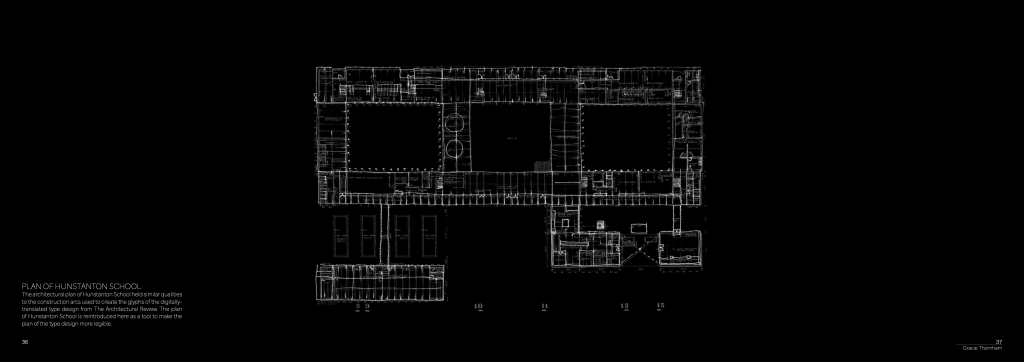
    Hunstanton School by Alison and Peter Smithson is considered by many as the first Brutalist building, as it adheres to Banham’s (1955) definition of The New Brutalism. I focused my observation onto Hunstanton School.

    Fig. 1. Photographs of Hunstanton School by Nigel Henderson (2001).

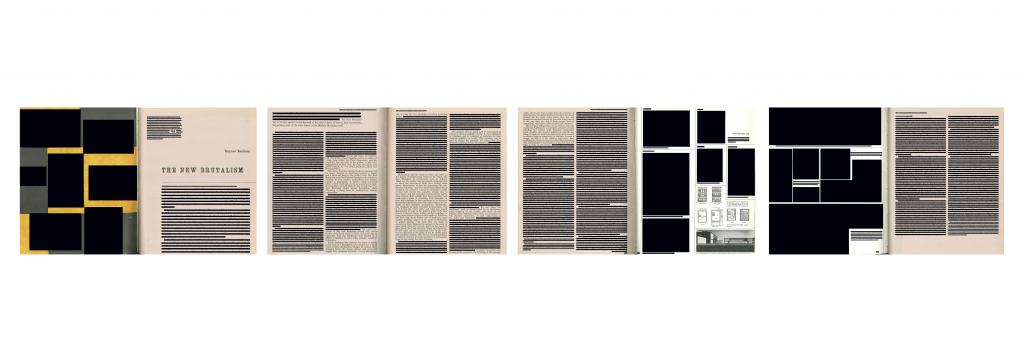
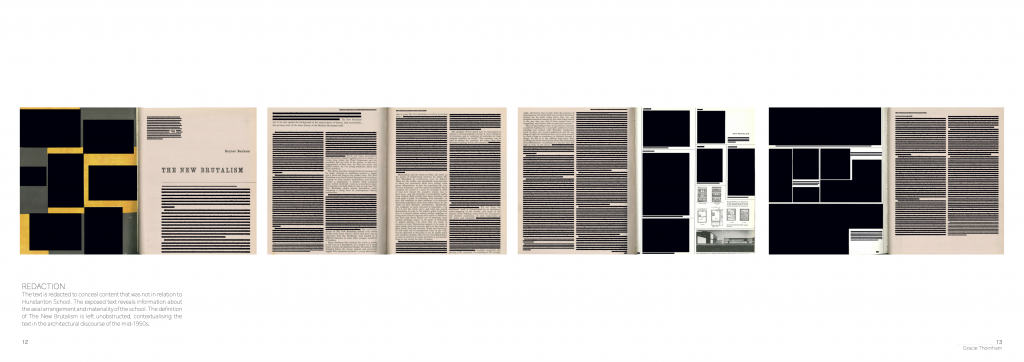
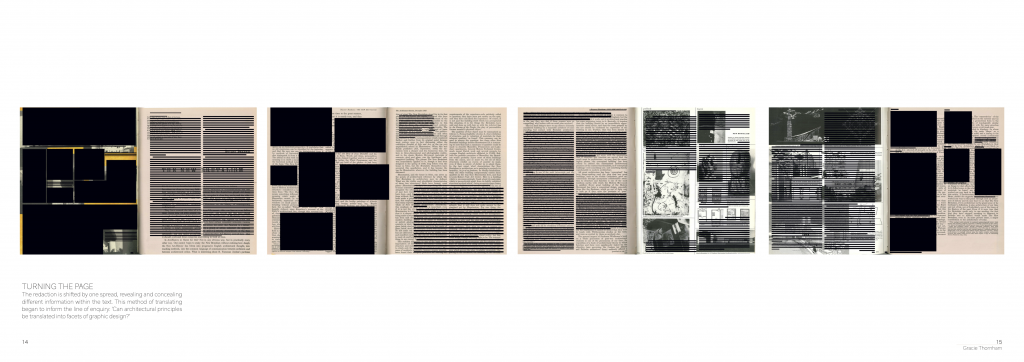
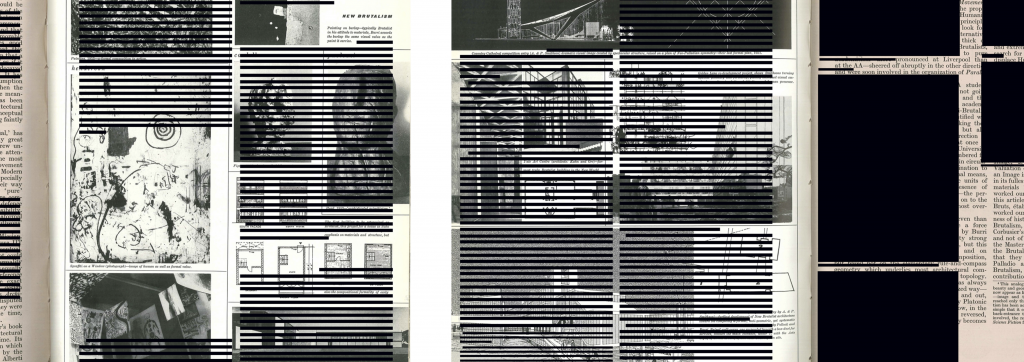
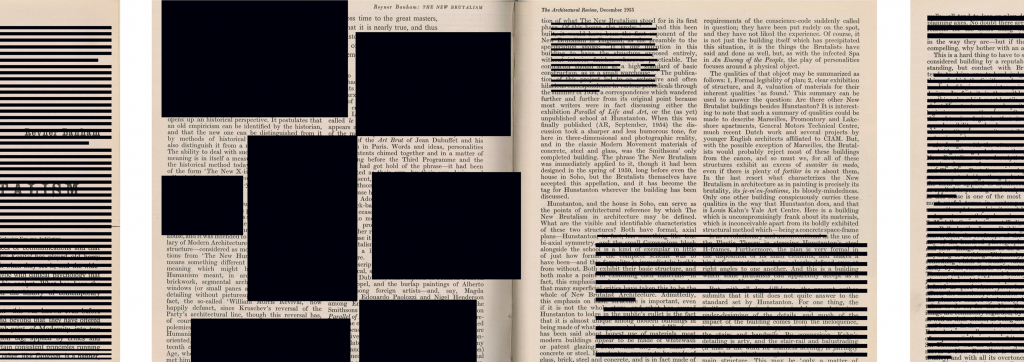
    My initial method of investigation looked at redacting the text, leaving only the content about Hunstanton School exposed. 

    Fig. 2. Redacted text focusing on the writing about Hunstanton School.

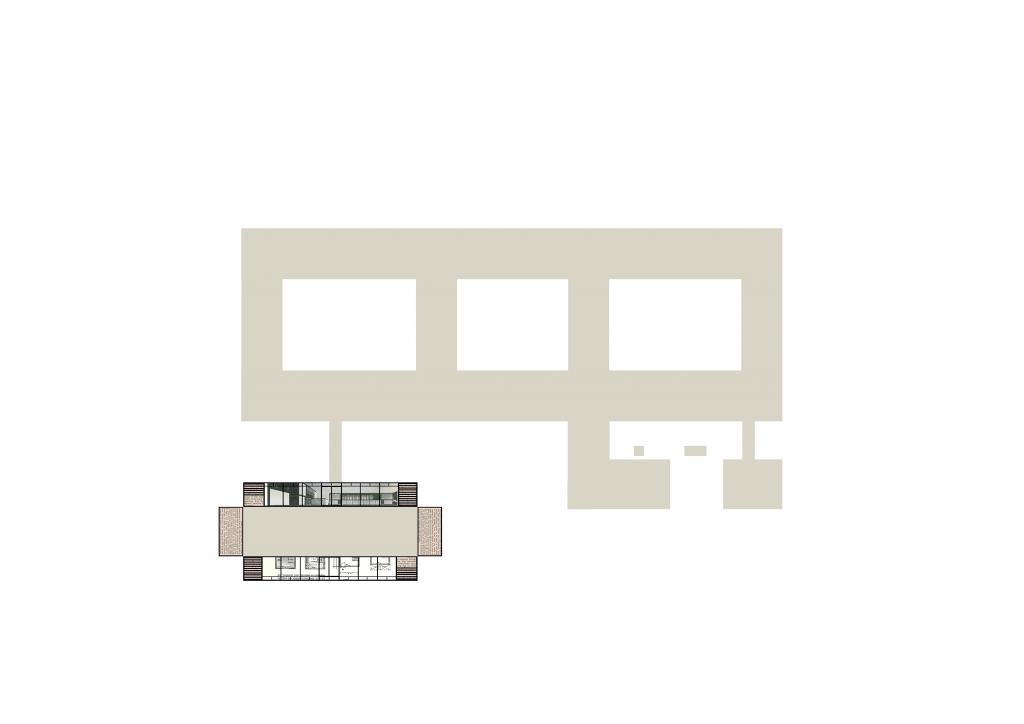
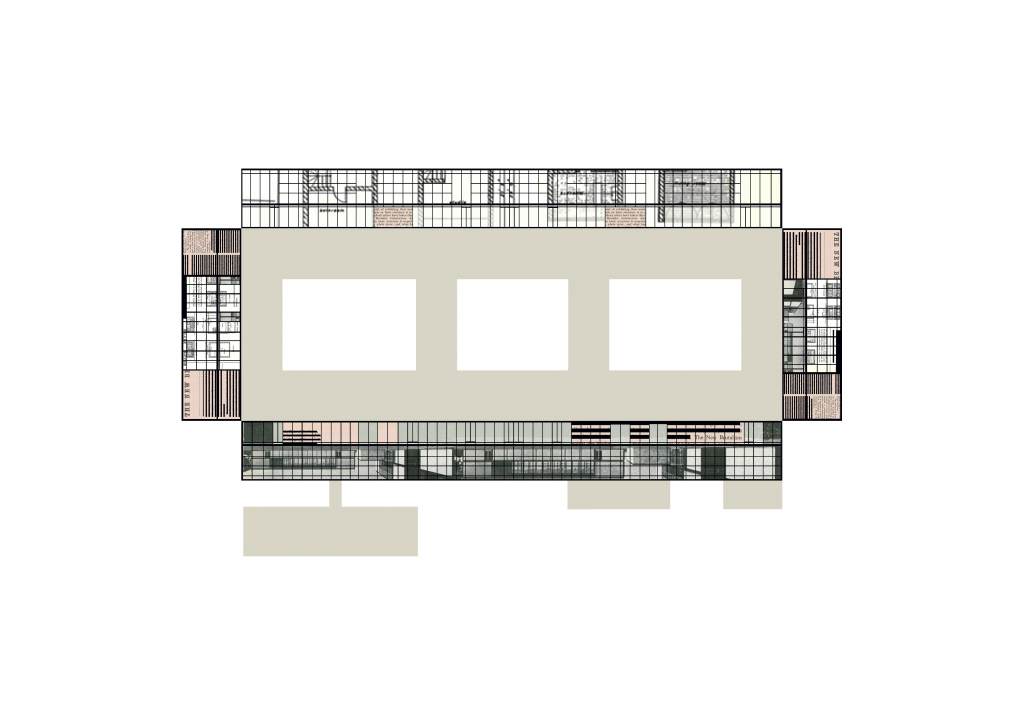
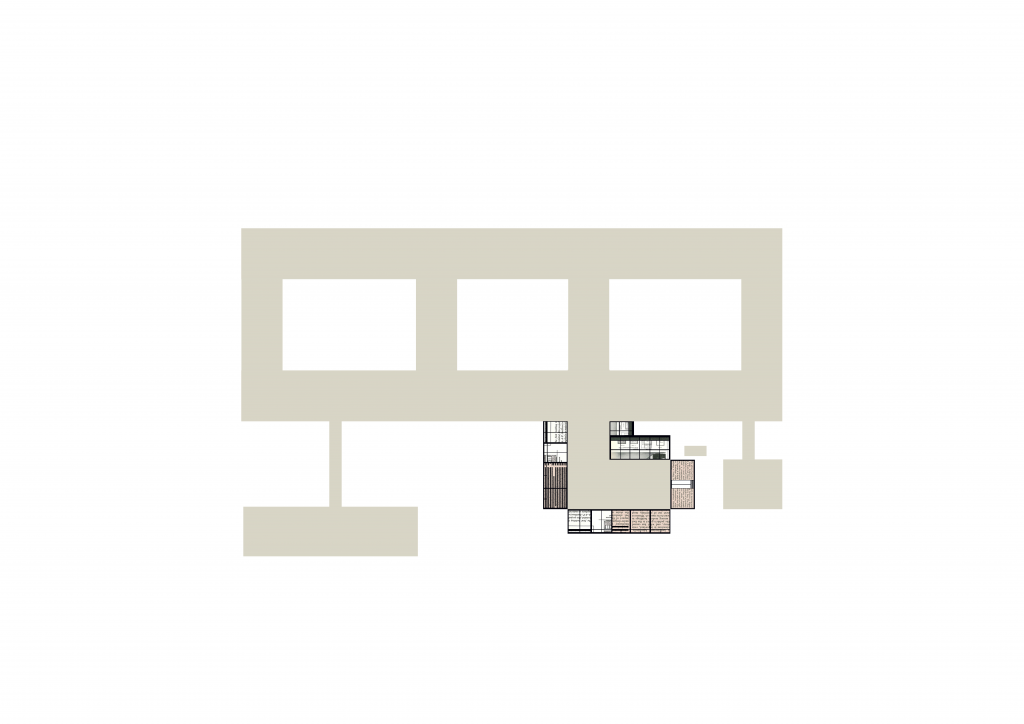
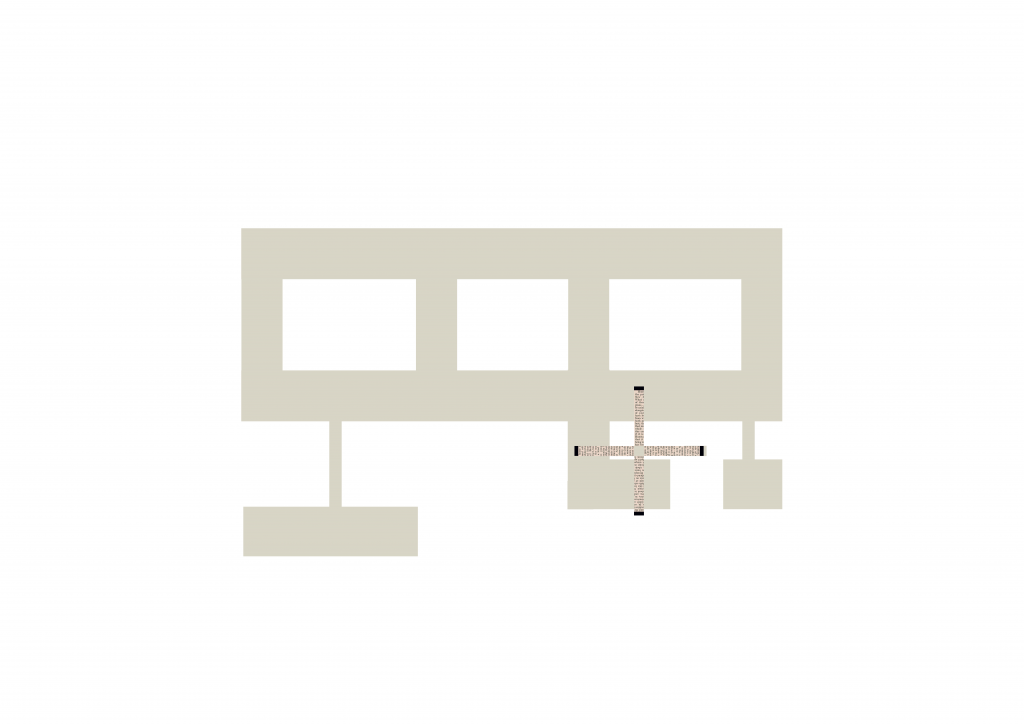
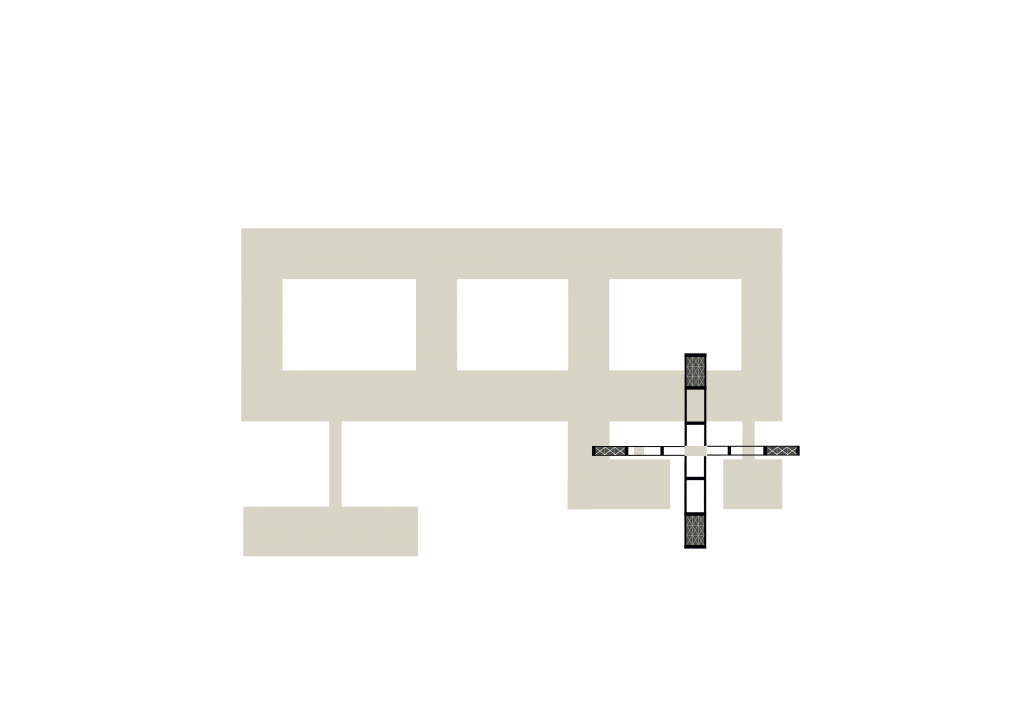
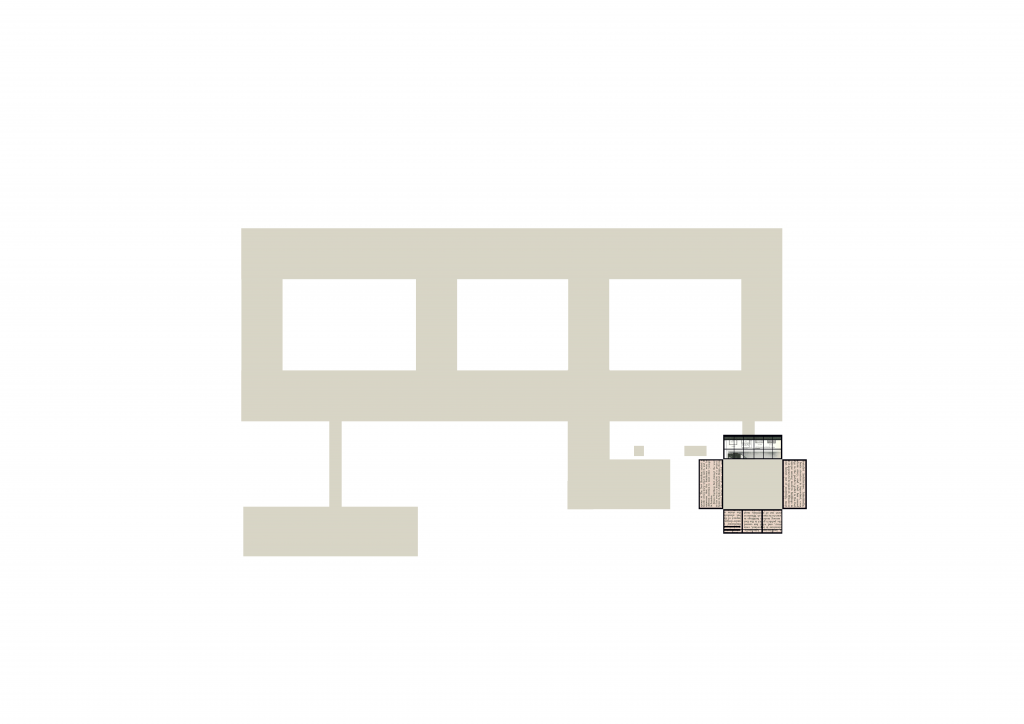
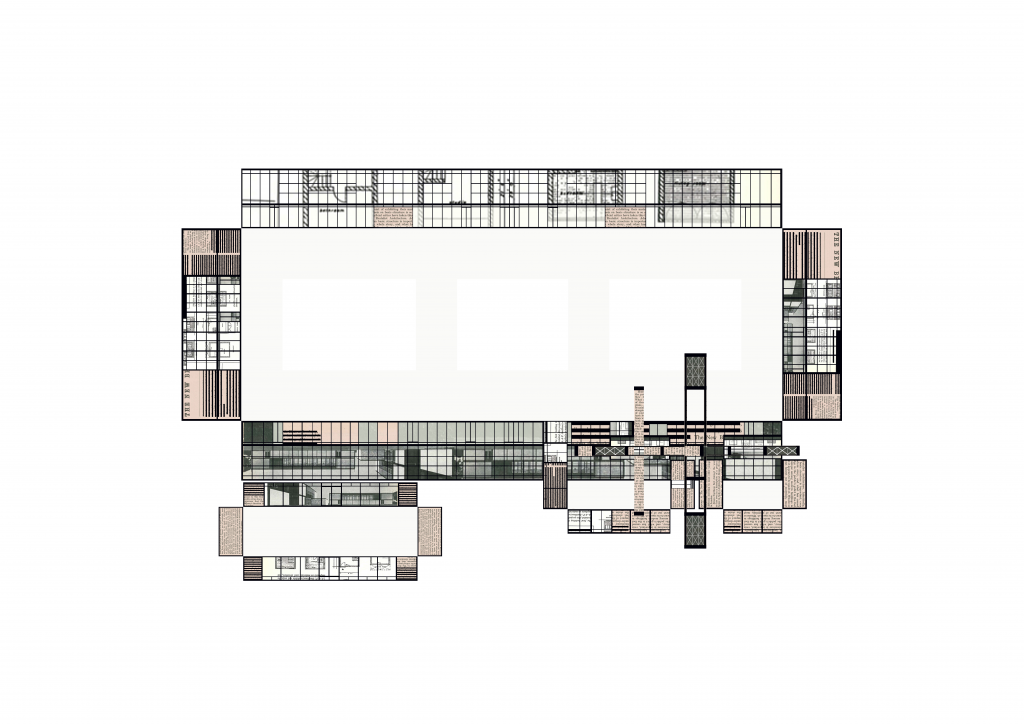
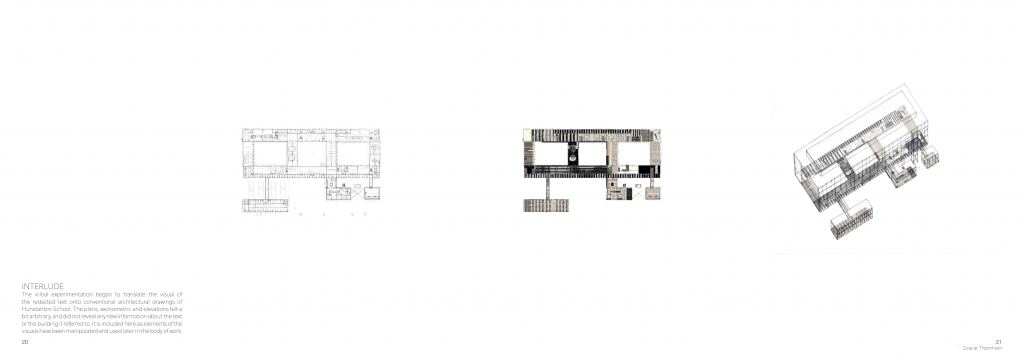
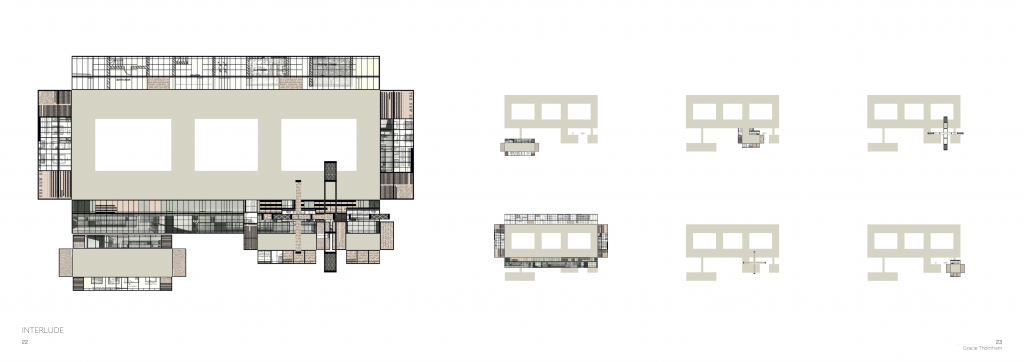
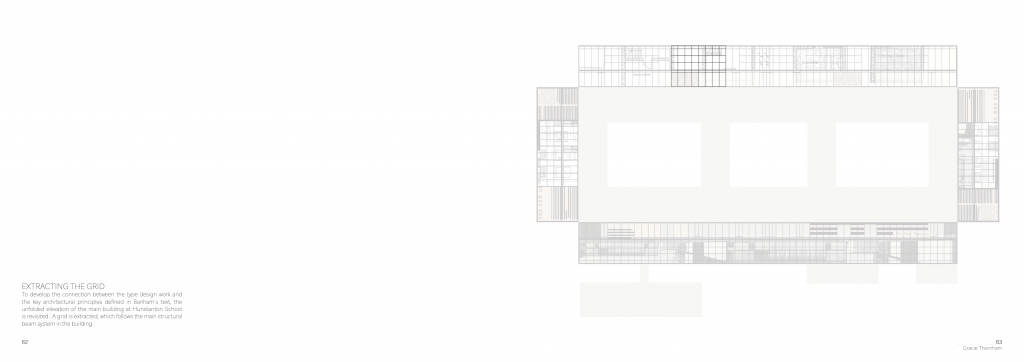
    Using the visual language of the redacted article, I began to see architectural patterns within the imagery. I subsequently translated the visual imagery of the text into semi-conventional architectural drawings. I opted to unfold the facade elevations around the architectural floor plan, creating the textures of the materials using the fabric of the redacted article. 

    Fig. 3. Elevations of different volumes, created using visual elements of the redacted text.
    Fig. 4. Overlayed unfolded elevations to illustrate the material fabric of the facade.

    Reference List:

    Banham, R. (1955) ‘The New Brutalism,’ The Architectural Review, 118 (708), pp. 335-361.

    Henderson, N. (2001) The charged void: Architecture – Alison and Peter Smithson [Photograph]. Available at: https://hicarquitectura.com/2023/07/alison-and-peter-smithson-hunstanton-school/(Accessed: 11 November 2025).

  • Prompt Three

    Select one reading from the course reading list and ‘re-present’ its main arguments and ideas using the 

    structure, 

    form, or 

    method

    of another on the reading list.


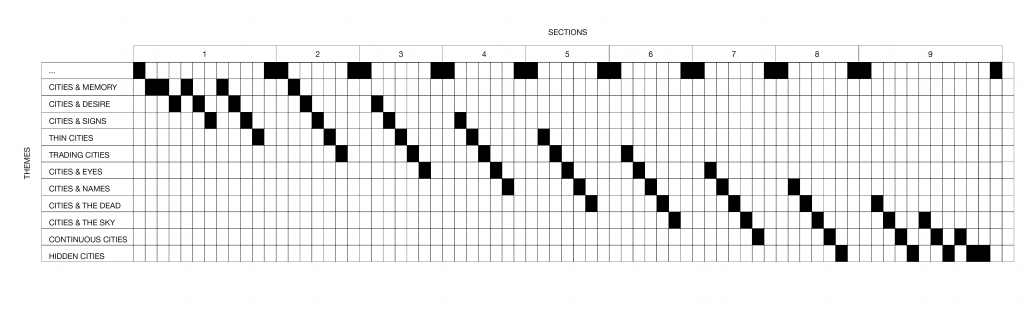
    To translate the structure of Invisible Cities by Italo Calvino (1972) onto another text, the pattern of the book must first be examined. The text is guided by a framework of fictitious conversations between Venetian merchant, Marco Polo, and the former emperor of the Yuan Dynasty in China, Kublai Khan. The conversational tone of the text creates a whimsical representation of the architectural principles of the 13th Century, bridging the gap between Eastern and Western design. Calvino (1972) creates a tension between the real and surreal in Invisible Cities through the imagination of the conversations between these two historical characters.

    Fig. 1. Diagrammatic representation of the structure of Invisible Cities (Calvino, 1972).

    The 55 invisible cities are catalogued into eleven themes. Calvino (1972) adopts a non-linear structure, where these themes are woven into nine sections of the book. This non-linear pacing magnifies the overarching topics of the book, particularly memory. Similarly to memory, the structure of the book is cyclical, with themes being reviewed periodically. Representing the configuration of Invisible Cities as a diagram further illustrates the cyclical system in which the themes are introduced and, subsequently, re-introduced (Calvino, 1972).

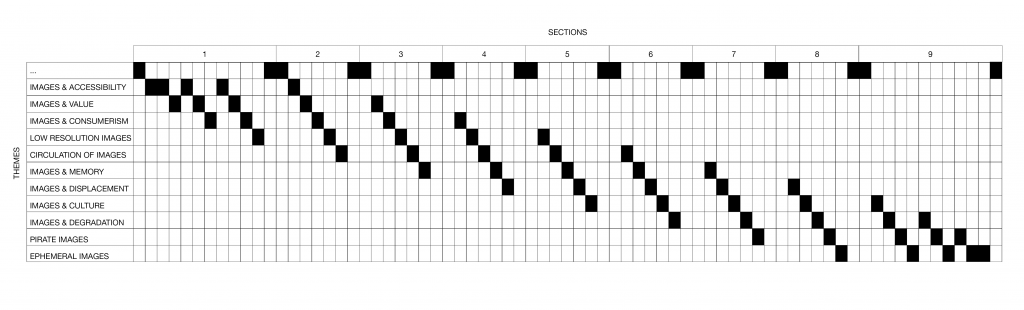
    Applying the same structural logic onto Hito Steyerl’s In Defense of the Poor Image (2012) reveals different thematic strands, all in relation to the ‘Image’. 

    Fig. 2. Translated theme titles, responding to the main arguments within In Defense of the Poor Image (Steyerl, 2012).

    Overarching similarities, including memory and reality, can be drawn between Steyerl (2012) and Calvino’s (1972) texts. This informed the translation of Steyerl’s (2012) writing, which follows the non-linear, thematically catalogued structure of Invisible Cities, rather than a translation into dialogue (Calvino, 1972). 

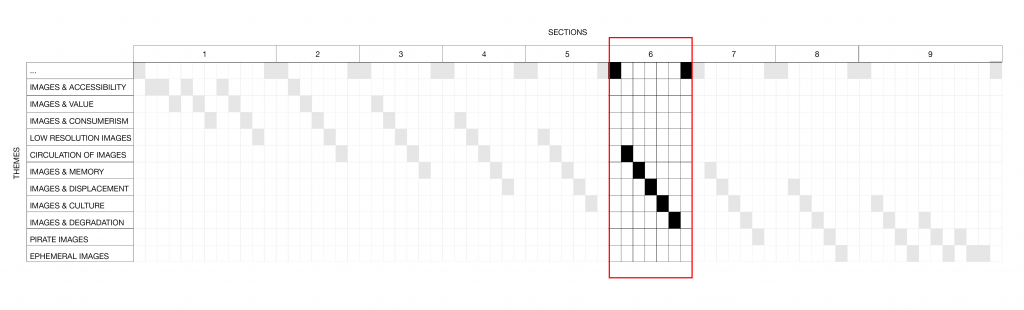
    Due to the brief nature of this writing, only Section 6 will be re-presented, allowing for a more focused consideration.

    Fig. 3. Focus on the structure of Section 6.

    Circulation of Images 5

    Quality is transformed into accessibility. A poor image is created when it can be viewed by the masses, therefore quality of image must be surrendered in favour of widespread circulation.

    Images & Memory 4

    Memory attached to an image is implicit. Its memory is inherent as the quality reveals the history of its viewership. 

    Images & Displacement 3

    The process of decontextualising enables co-ownership of an image. The semantics of a poor image will be altered, as it is uprooted from its original context.

    Images & Culture 2

    Commodification of images is reflective of the paradigm shift towards a culture of mass-consumption.

    Images & Degradation 1

    Incessant redistribution of images creates a visual uncertainty.


    The circular nature of both readings is apparent; Calvino (1972) amplifies the non-linearity of memory through the structure of the text, whereas Steyerl (2012, p.43) repeatedly discusses the cyclicality of ‘distribution circuits’ of poor images. The translation of In Defense of the Poor Image, reinforces and further amplifies the notion of the poor image (Steyerl, 2012). The procedure of copying, reformatting, and redistributing defines a poor image. This same process has been undertaken during the structural translation of Steyerl’s writing (2012). The result: a ‘poor image’ of In Defense of the Poor Image (Steyerl, 2012). Through ‘re-presenting’ In Defence of the Poor Image (Steyerl, 2012), within the framework of Invisible Cities (Calvino, 1972), the text has become flattened, inevitably filtering out some of the themes and information discussed in the original, unaltered text.

    Reference List:

    Calvino, I. (1972) Invisible Cities. Translated from the Italian by W. Weaver. London: Vantage Books.

    Steyerl, H. (2012) ‘In Defense of the Poor Image’ in The Wretched of the Screen. Berlin: Sternberg Press, pp. 31-45.

  • Prompt Two

    Select any text – or excerpt of any text – from the reading list and apply one of the following methods of cataloguing in order to analyse its purpose value of meaning: 1. Inventory, 2. Metadata.

    Census, Map, Museum in Imagined Communities by Benedict Anderson (2006, pp.163-185) critically investigates the mode in which the ‘colonial state imagined it’s dominion’. The chapter is already formatted into an index, categorised by Census, Map,and Museum. The existing framework of the text guides the discourse through the lens of these three different scopes. The text is also implicitly subcategorised by theme. The overarching topics of the text examine the methods of control employed by the colonial state to validate their protectorate; 1. ‘The nature of the human beings it ruled’, 2. ‘The geography of it’s domain’, 3. ‘The legitimacy of its ancestry’ (Anderson, 2006, p. 164).

    The primary conclusion Anderson draws from his findings is that the colonial state applied a ‘totalising classification grid’ to all facets of life under the regime’s control (Anderson, 2006, p.183). The act of categorising maintained control over the region, as their rule was bounded and determinate (Anderson, 2006, p.183). Anything that did not adhere to this classification grid was considered as ‘other’ – a category used to box ‘all real-life anomalies’ (Anderson, 2006, p.183).

    Utilising a classification grid, mirroring the one adopted by colonial rulers used to legitimise their occupation, catalogues Anderson’s arguments both thematically and structurally. Employing this inventory method further reinforces the rigidity of the colonial’s imagination of its domain, but also explores a further indexical subcategorisation of the structure of Anderson’s text (2006).

    The warp of the grid (columns) is thematic; fixed and sterilised, whereas the weft (rows) is the scale of investigation; specific and focused. The differing scales of the investigation – Census, Map, Museum – weave a narrative through the fixed methods adopted by the colonial state to imagine its dominion – ‘The nature of the human beings it ruled’, ‘The geography of it’s domain’, ‘The legitimacy of its ancestry’.


    The nature of the human beings it ruled


    The geography of it’s domain


    The legitimacy of its ancestry


    Census


    The strive for unambiguity and completeness created a system of cataloguing people, which often overlooked the ethnodiversity, language, and religion in the area.


    There was vast disparity across the census-maker’s imaginations of their dominion, creating inconsistencies across data sets.


    The subcategorisation of the census was not a true depiction of the ancestry of the land, and those living within the territory would not have recognised themselves under the labels thrust upon them.


    Map


    Colonial cartographers and census-makers imposed the same surveillance on the human beings they ruled, through a system of total classification.


    Prior to colonisation, map-making was a borderless practice, with a focus on documenting marching and sailing times. With the influx of colonial rule, boundaries were imposed onto the land, in attempts to quantify the territory in which they occupied.


    Borders hold importance in determining sovereign authority. These man-made constructs were used to legitimise colonisation, as the creation of new boundaries provided a sense of self-determination over the land.


    Museum


    Construction of cultural monuments created a hierarchical tension between the builders and the colonial natives.


    In the later waves of colonialism, there was a paradigm shift from conquest to an effort to legitimise colonial rule. Once borders were established, focus turned to justifying colonial occupation.


    Prestige was intimately associated with the colonisers’s homeland. The colonisers with greater status used this as a tool to legitimise their ancestry and stake over the land.


    Utilising a classification grid onto Anderson’s Census, Map, Museum (2006, pp.163-185), reflects the rhetoric that was communicated in the text. The inventory system creates a pattern discrimination (Apprich et. al., 2018), excluding arguments that do not fit the framework of the classification grid, discarding them as ‘other’ (Anderson, 2006, p.183). This method of cataloguing, both examines the structure and themes of the text, whilst amplifying Anderson’s argument that a system of classification was used to justify the colonial ruler’s imagination of their dominion (2006, pp.163-185).

    Reference List:

    Anderson, B. (2006) ‘Census, Map, Museum’ in Imagined Communities. London: Verso, pp.163-185.

    Apprich, C. et al. (2018) Pattern Discrimination. London: Meson Press.

  • Week 1 Process

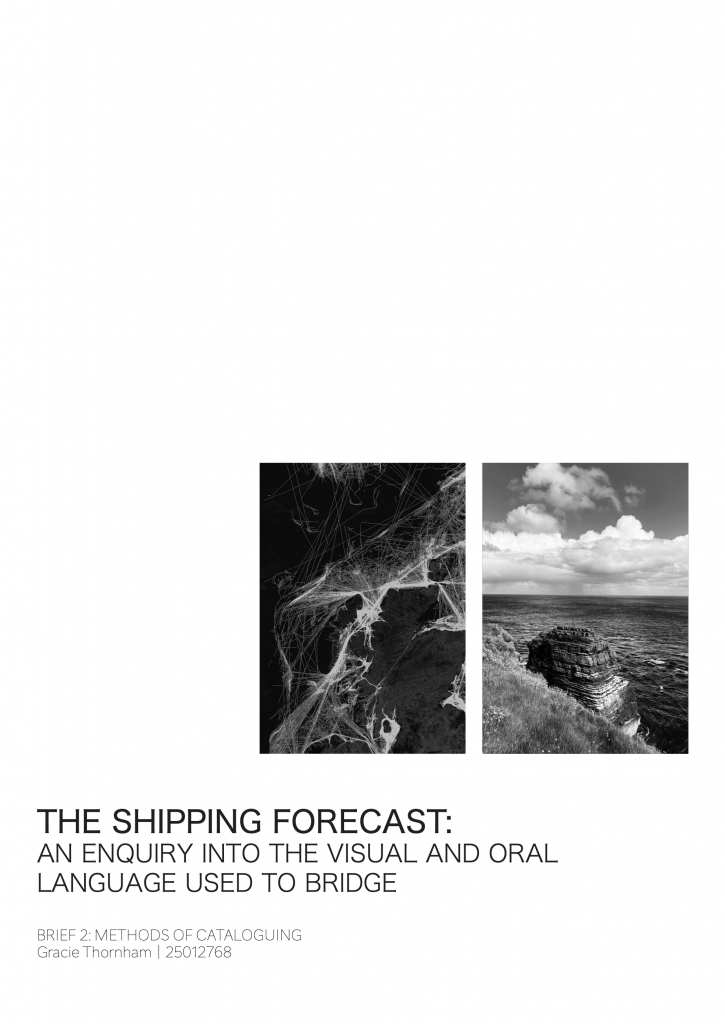
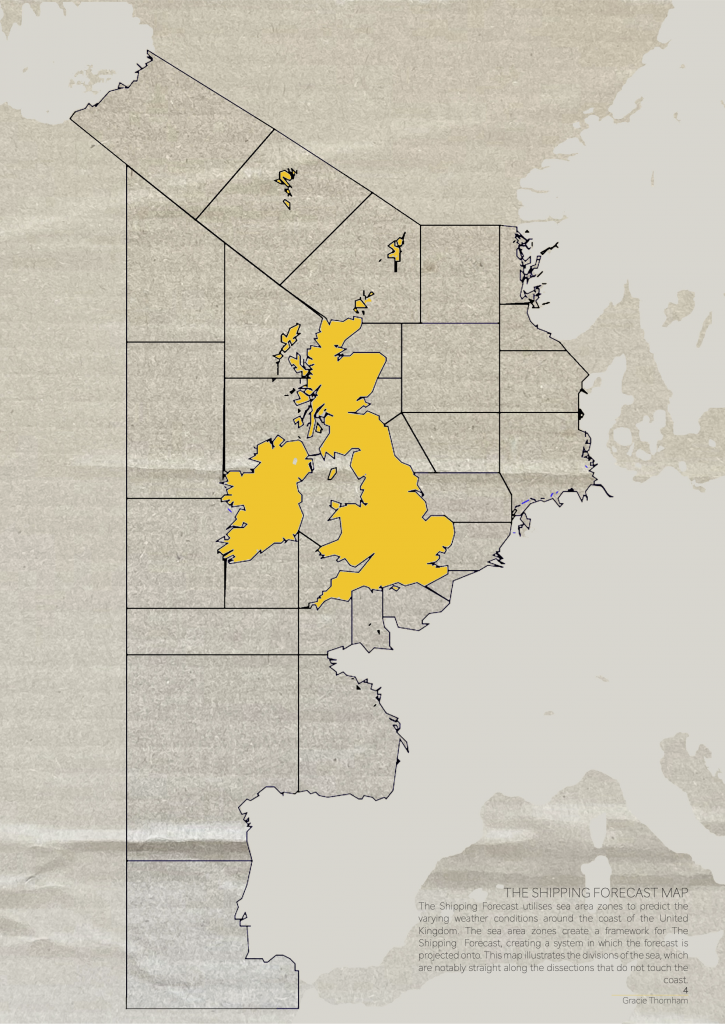
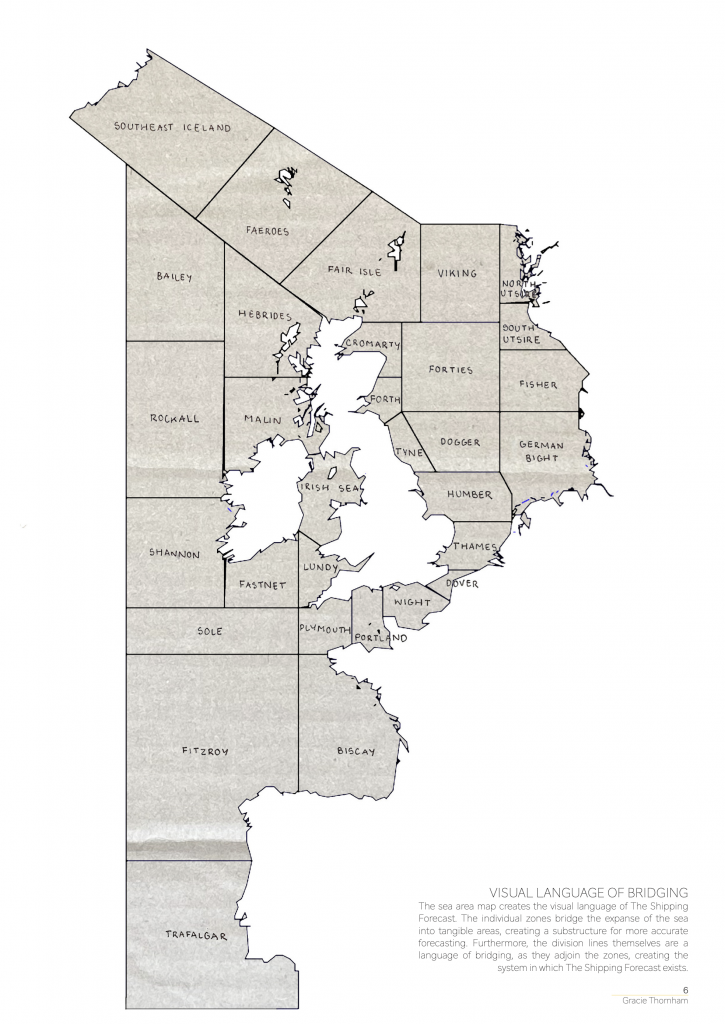
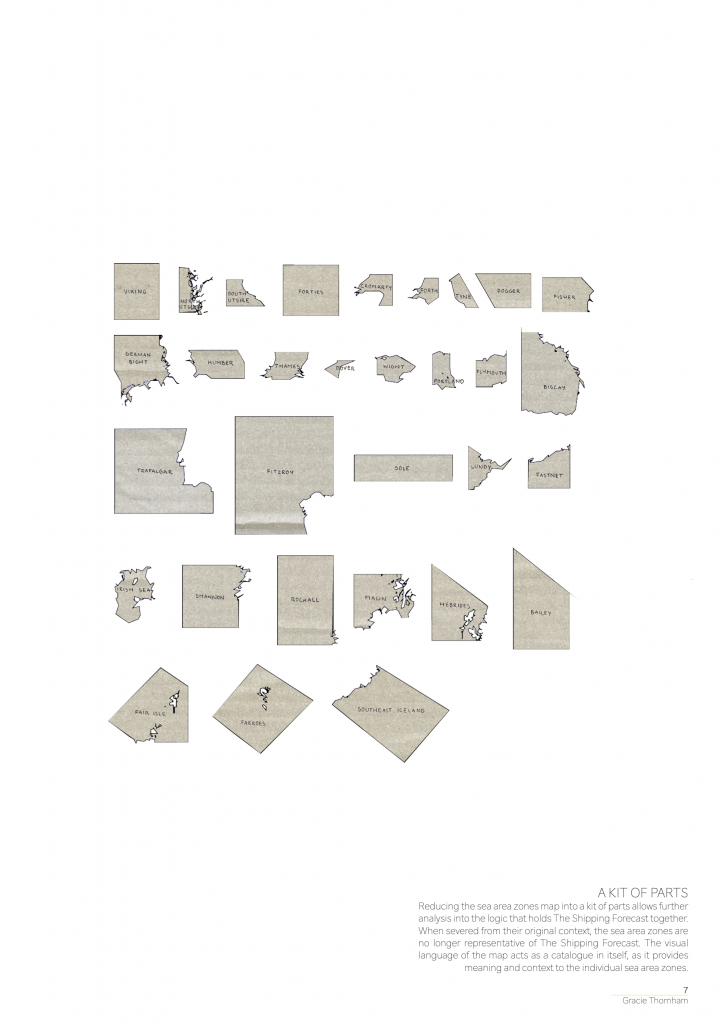
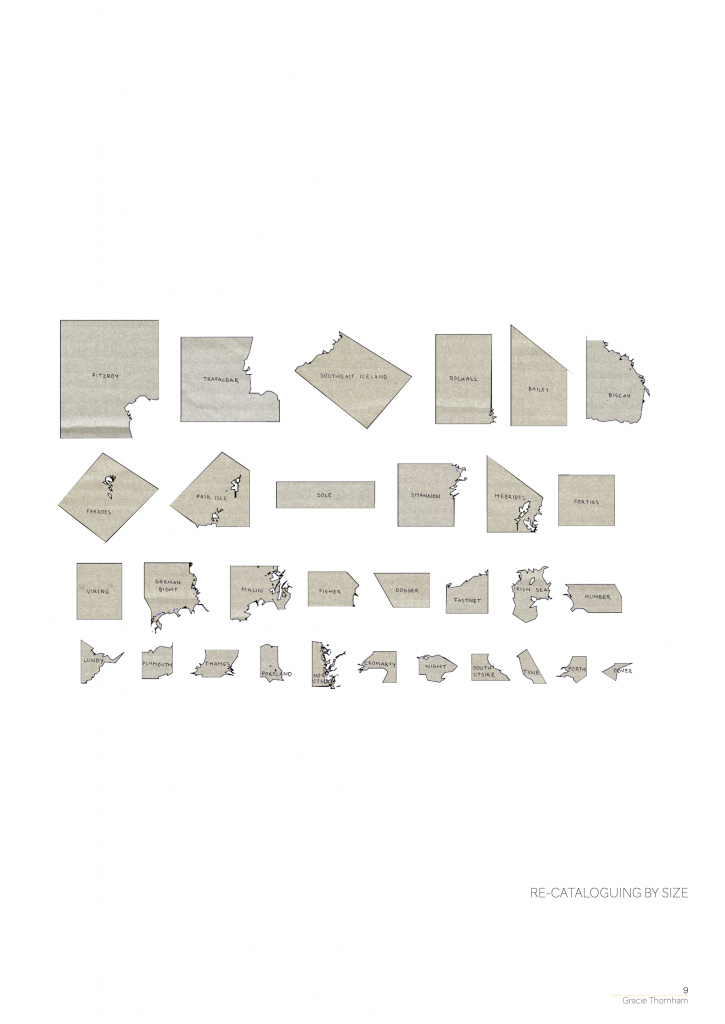
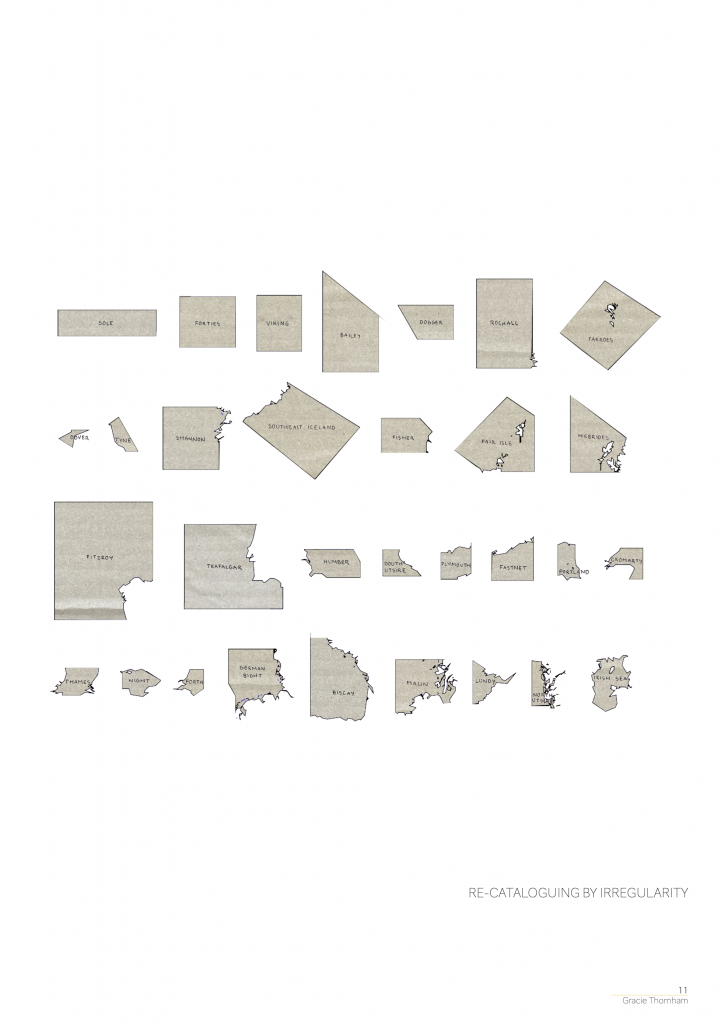
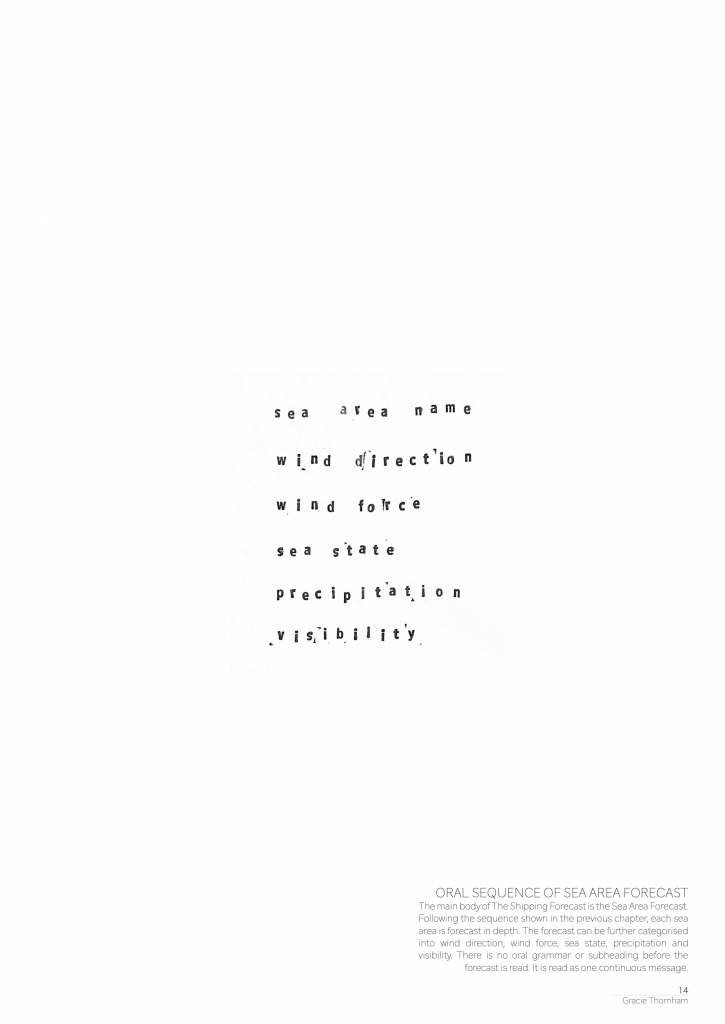
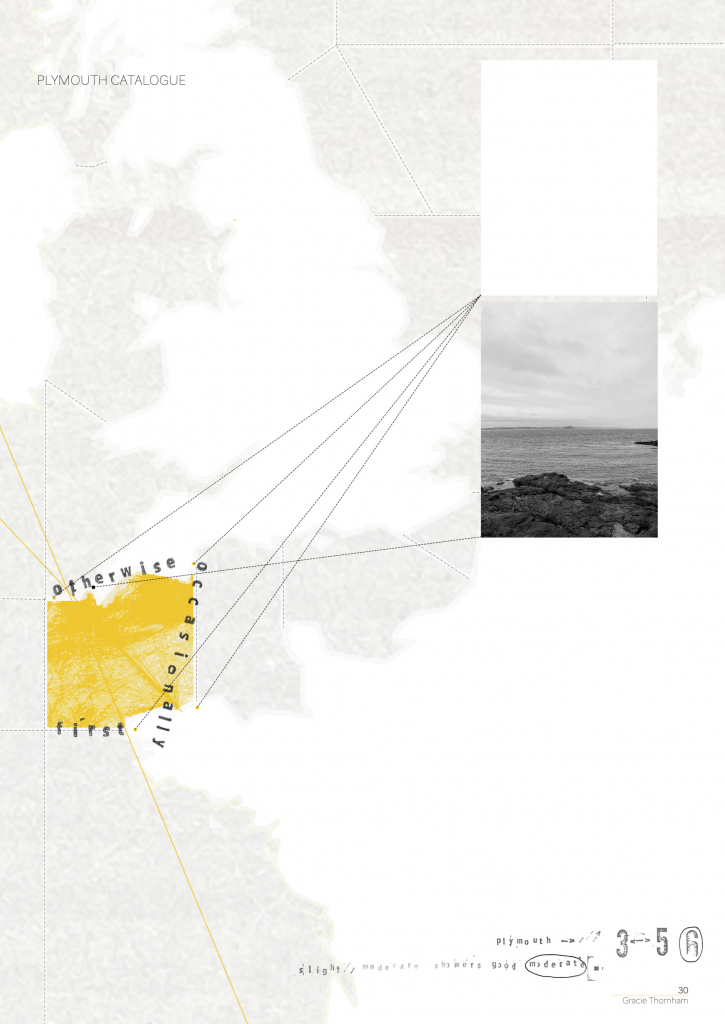
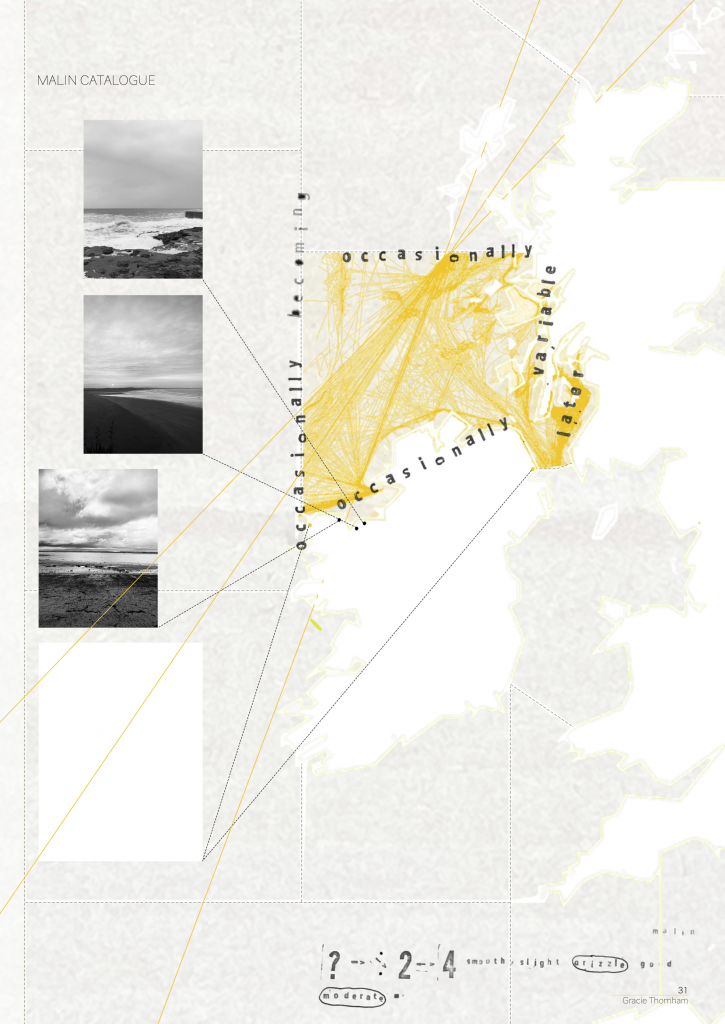
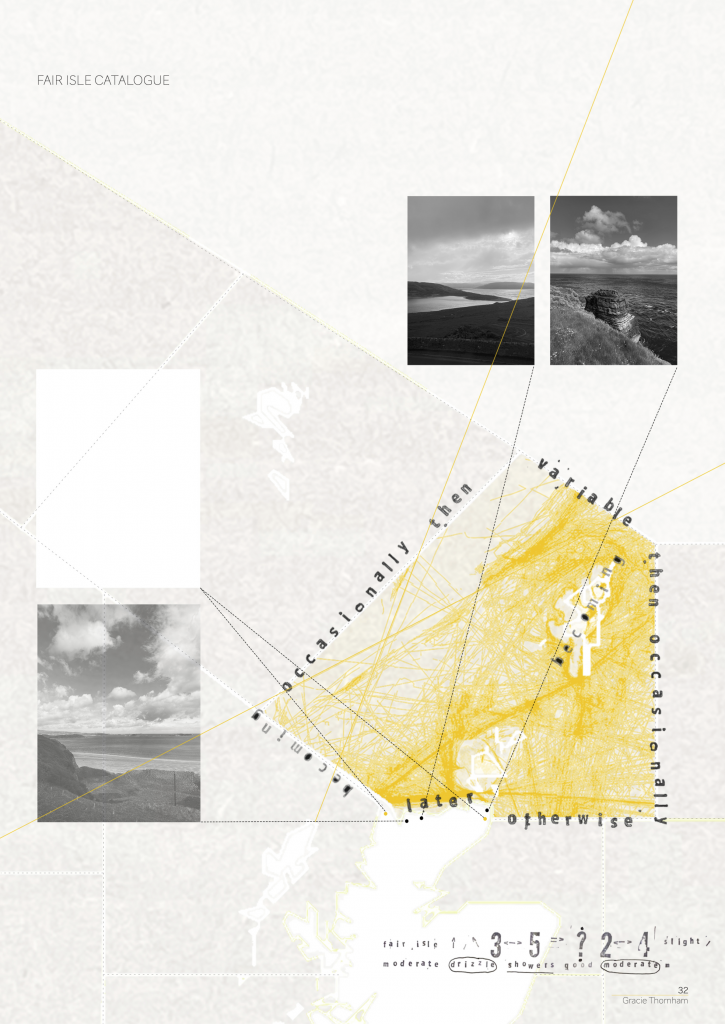
    During the first week of Brief 2, Methods of Cataloguing, I explored the temporality of The Shipping Forecast. Historically the forecast was only circulated via the radio. Initially, I tried to capture the transient nature of the forecast using animation. 


    There is a defined sequence in which the sea area zones are forecast, starting from the top right and moving clockwise. This pattern remains consistent across every forecast. The Shipping Forecast is broadcasted every 6 hours, due to the rate at which the sea state changes. The rapid speed in which the forecast shifts and changes is mirrored in the speed of the animation. 

    Fig. 1. Sequencing the sea area zones in The Shipping Forecast.


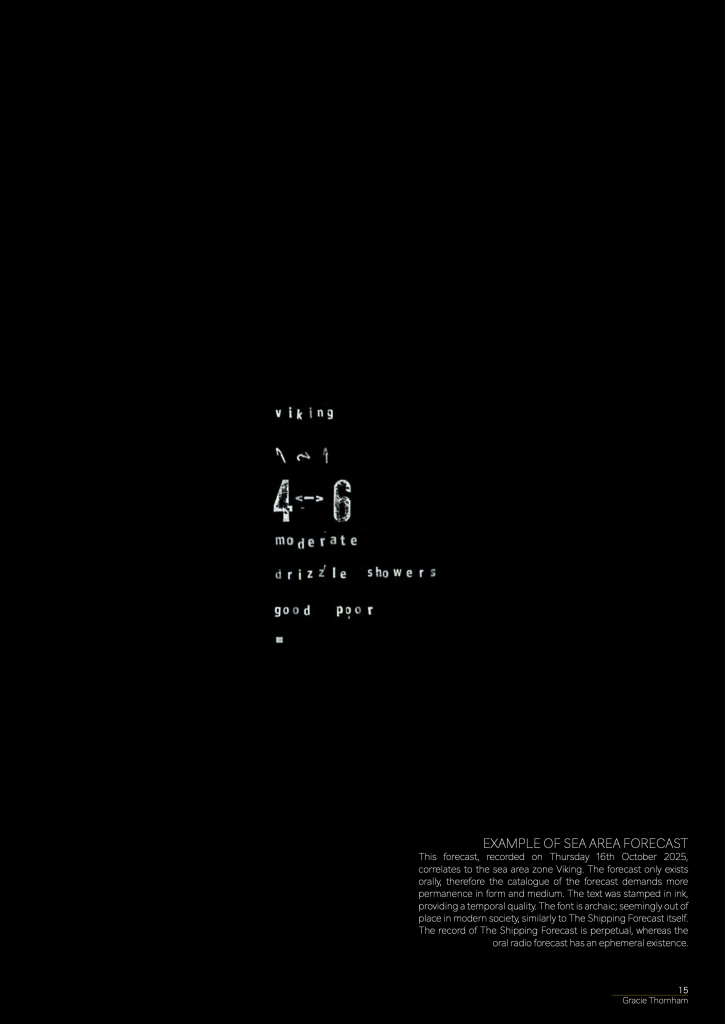
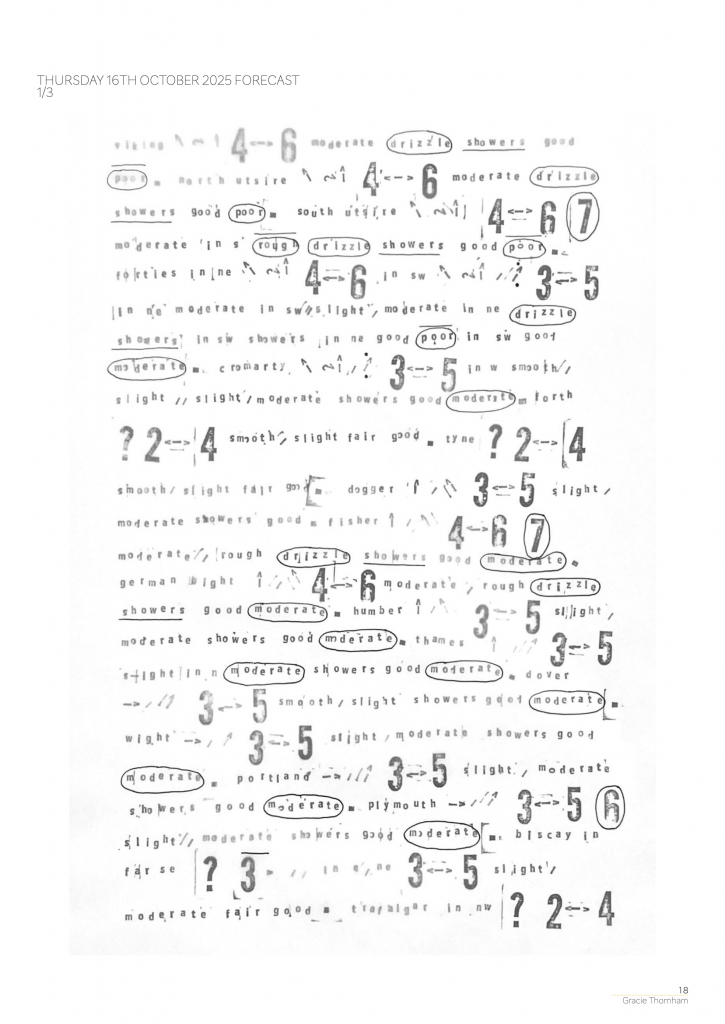
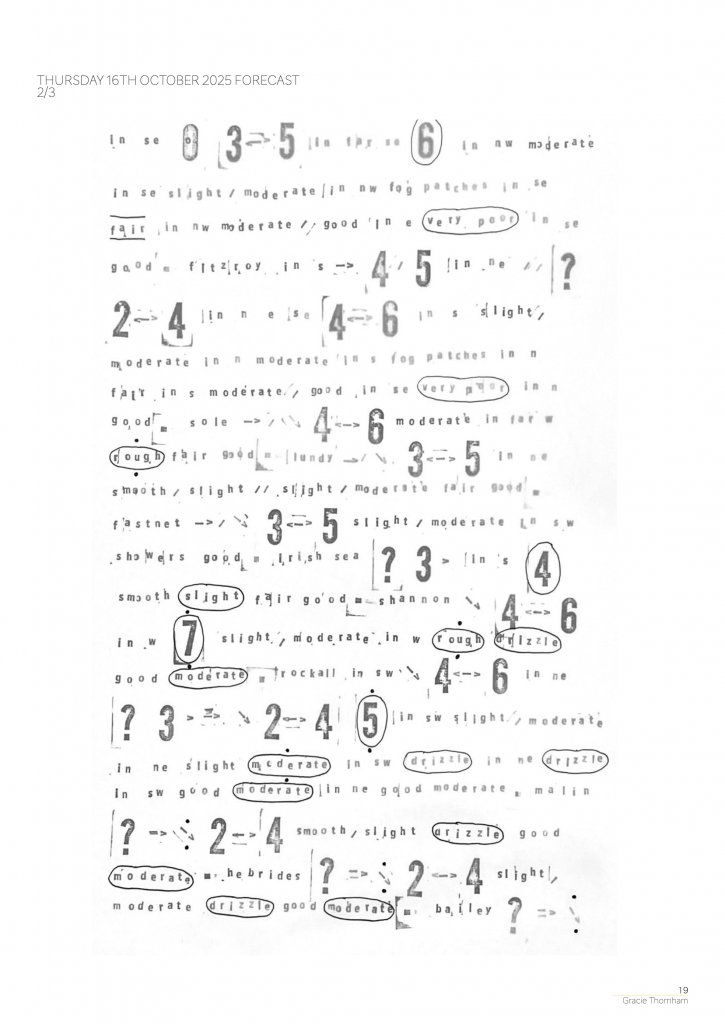
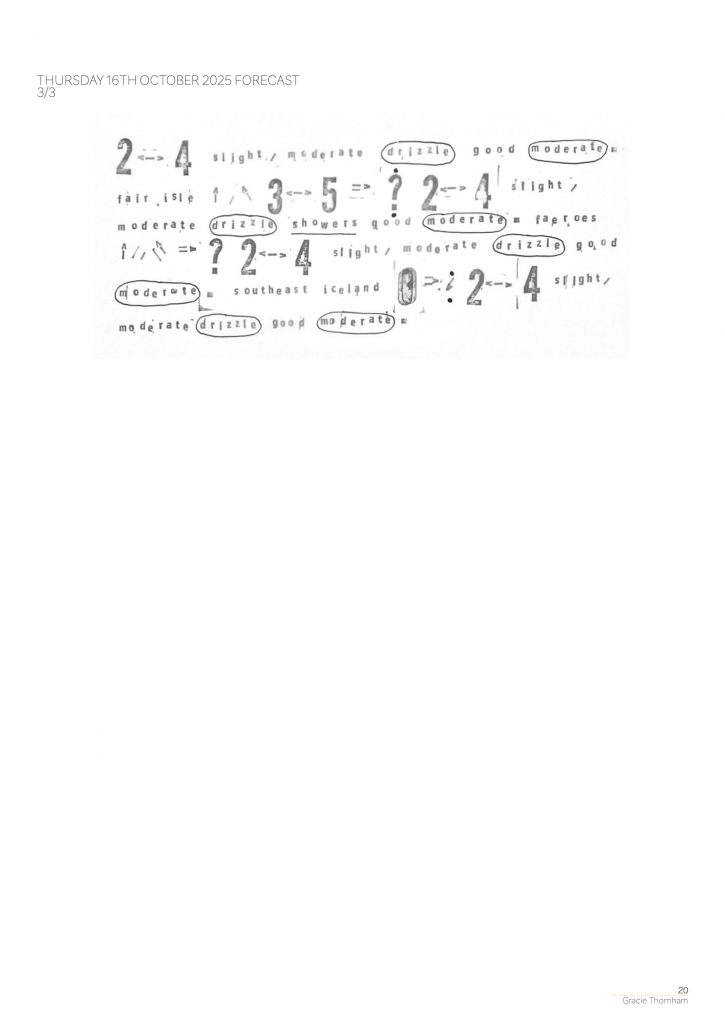
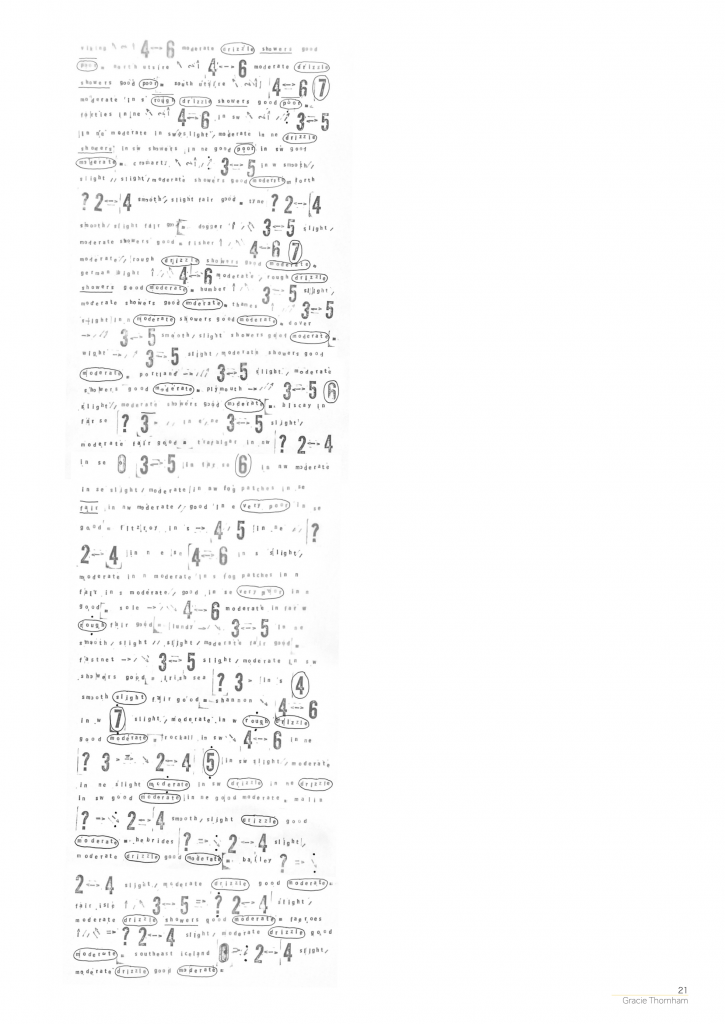
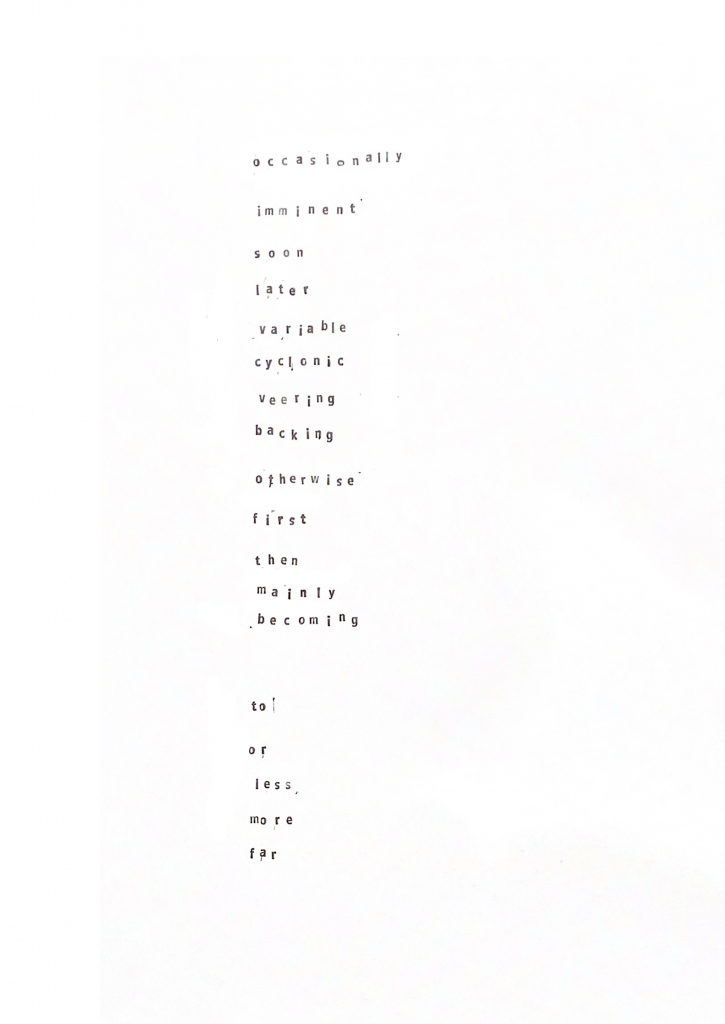
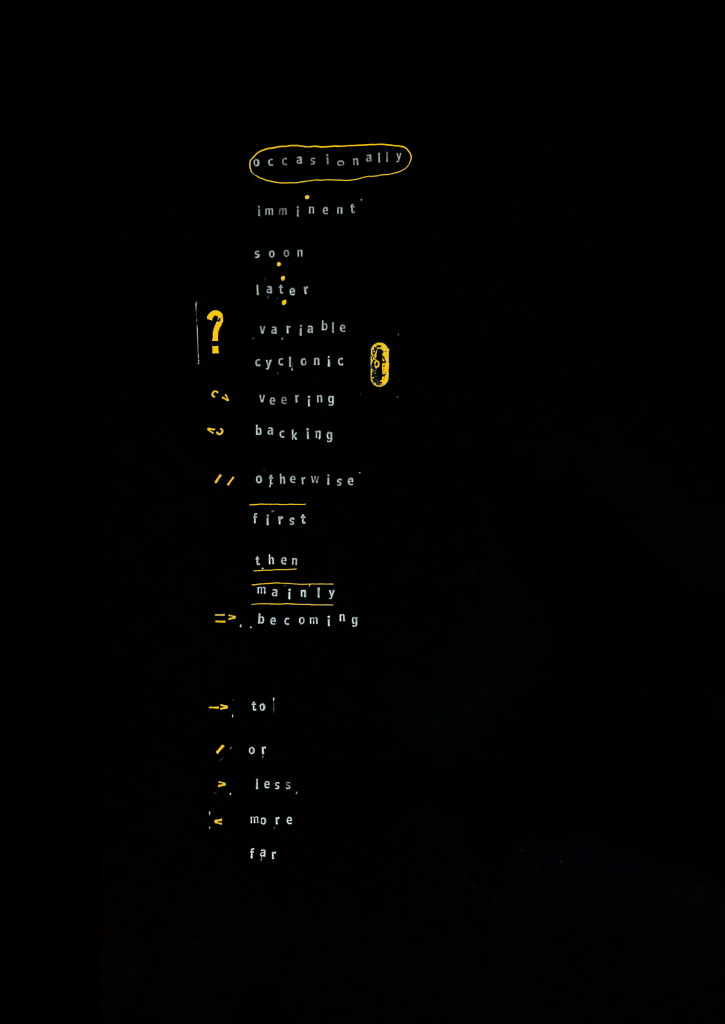
    The forecast only exists orally, therefore the catalogue of the forecast demanded more permanence in form and medium. The text was stamped in ink, providing a temporal quality. The font is archaic; seemly out of place in modern society, similar to The Shipping Forecast itself. The record of The Shipping Forecast is perpetual, whereas the oral radio forecast has an ephemeral existence. 

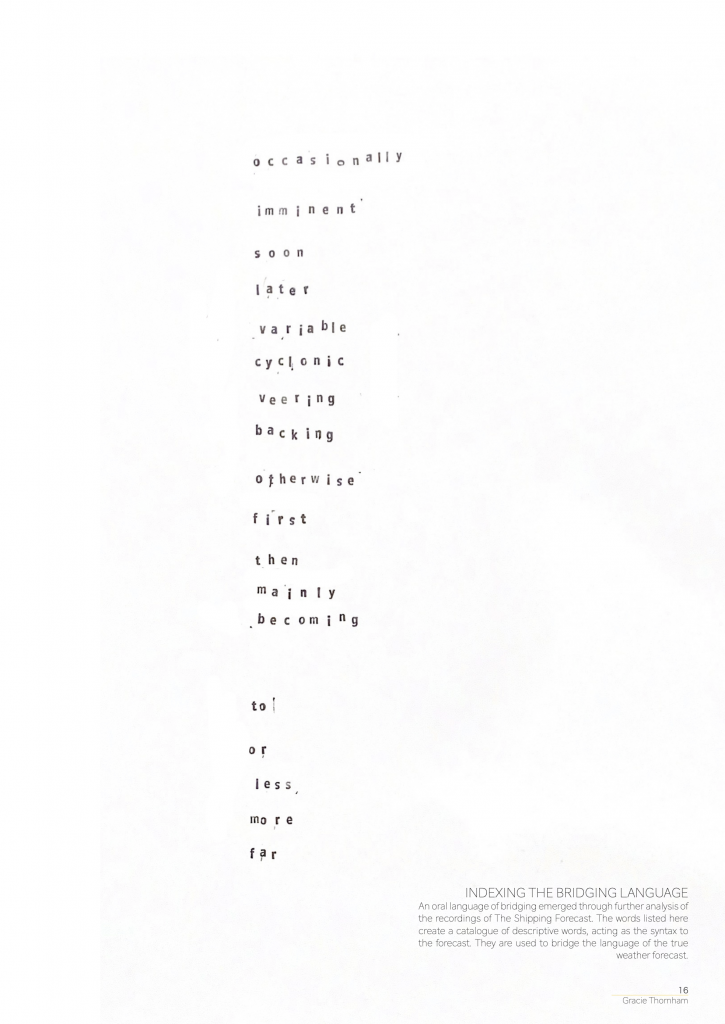
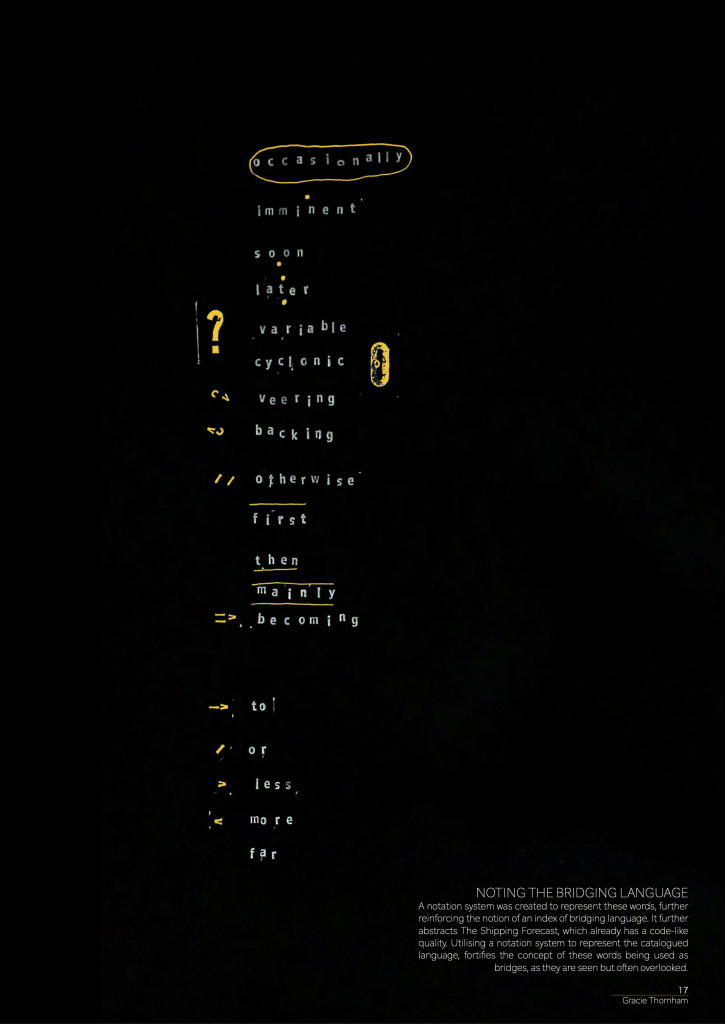
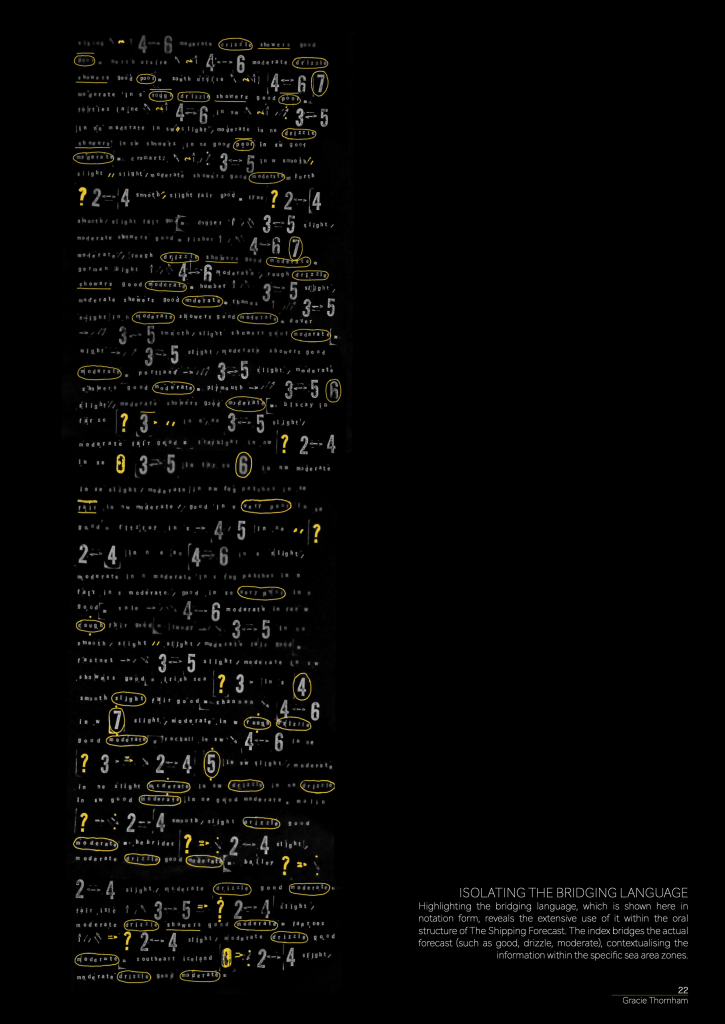
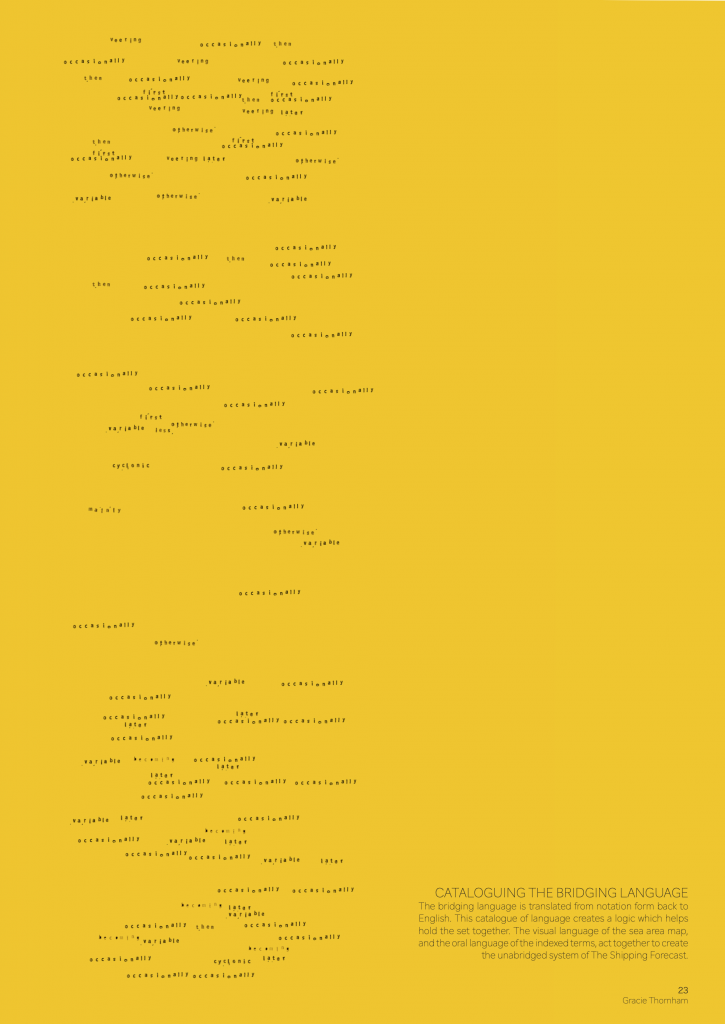
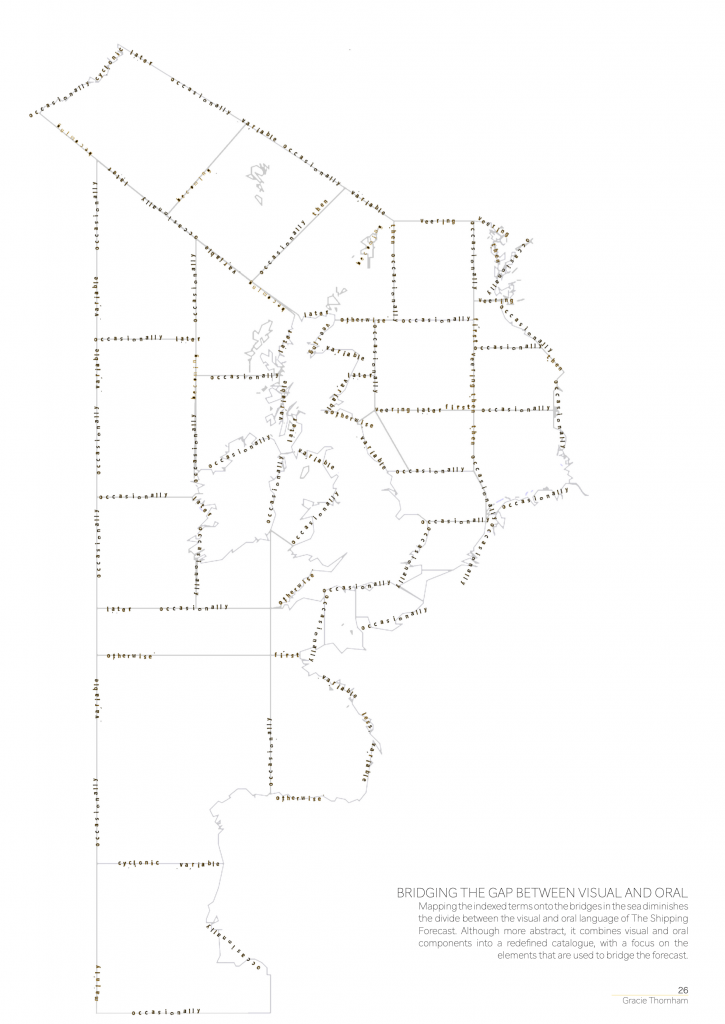
    Fig. 2. Index of terms which are used to bridge the forecast, providing further context to the weather conditions. They are often overlooked, but are the true descriptors of the forecast. I created a notation system to both conceal them within the monotony of the forecast, as well as reveal their importance in holding the oral language of The Shipping Forecast together.


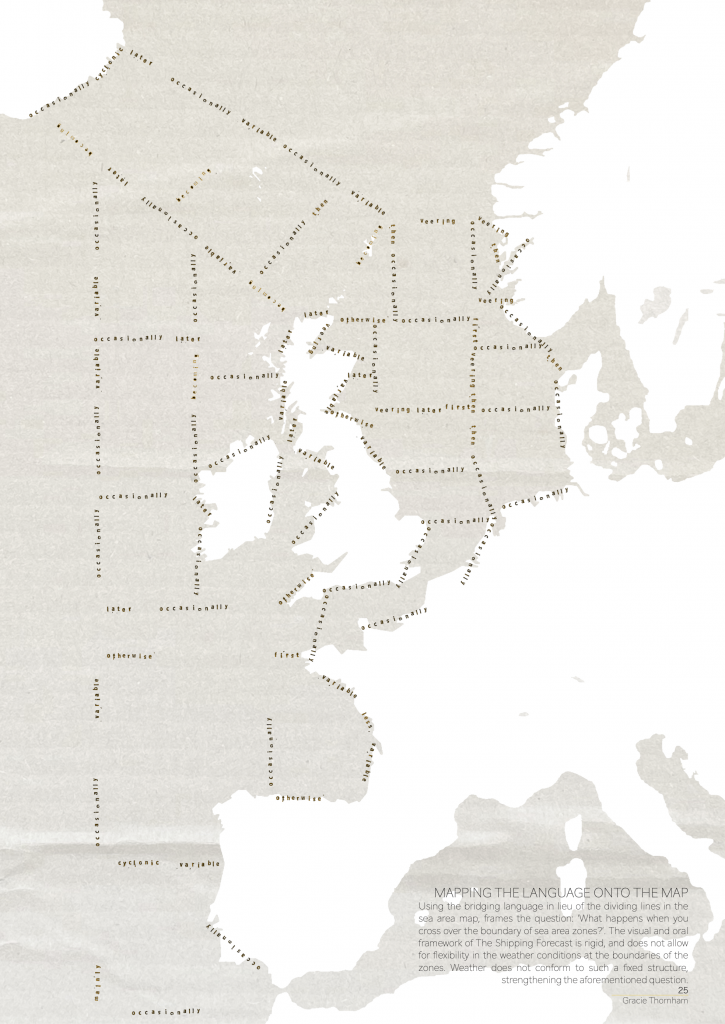
    Discussions during the week one tutorial helped focus my method of cataloguing. Bridging was a key theme that arose in both methods of cataloguing. The defined lines in the sea area map bridged the expanse of the sea, and my index of the oral language acts as a bridge to contextualise the forecast. Bridging was the line of enquiry that guided my subsequent investigation.